One of my most memorable experiences comes from Kamlang, a little-known tiger reserve in Eastern Arunachal Pradesh. In 2020, when the COVID pandemic stranded me there, I found myself birding constantly. During early summer, I witnessed something incredible – huge flocks of swifts and needletails zooming overhead, most often right before thunderstorms, when termite swarms erupted into the air. It was quite the spectacle! The flocks often contained up to 100 individuals, composed mostly of the Blyth’s Swift, a few Silver-backed Needletails, and the occasional Asian and Nepal House Martins.
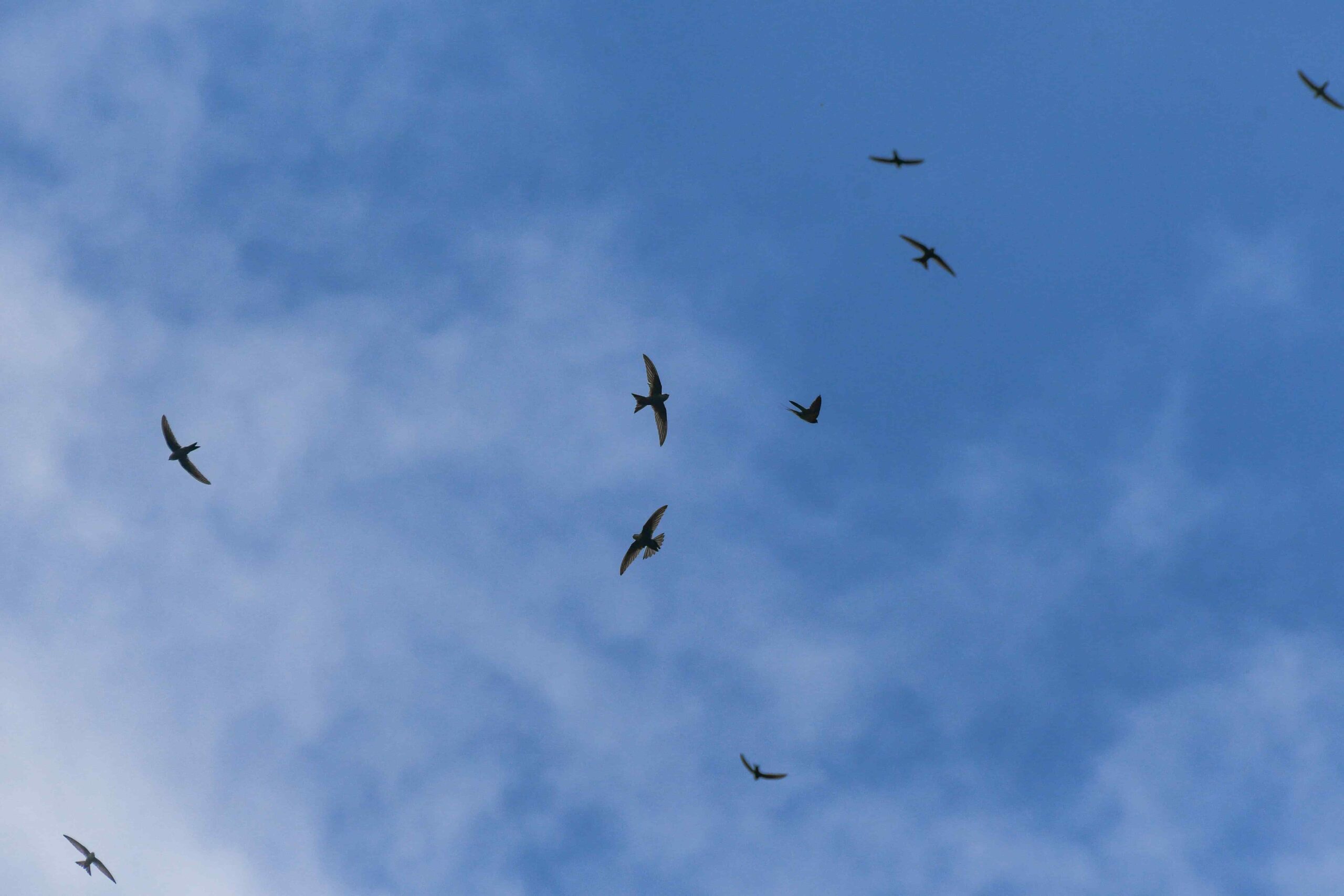 A flock of Blyth’s Swifts zooming overhead in Kamlang Tiger Reserve, Arunachal Pradesh
More often than not, they would come right above the ground, shooting past me, sometimes barely a few inches away! One swift almost smashed into my camera! All of this happened in a span of minutes – one minute there was a huge flock swirling overhead, and the next minute, they were gone! The experience of being surrounded by high-speed birds taking sharp turns and twists was exhilarating, and I feel fortunate to have experienced it. A close second experience would be being right in the middle of huge mixed-species bird flocks in the forests of the same region. I wouldn’t trade either experience for anything!
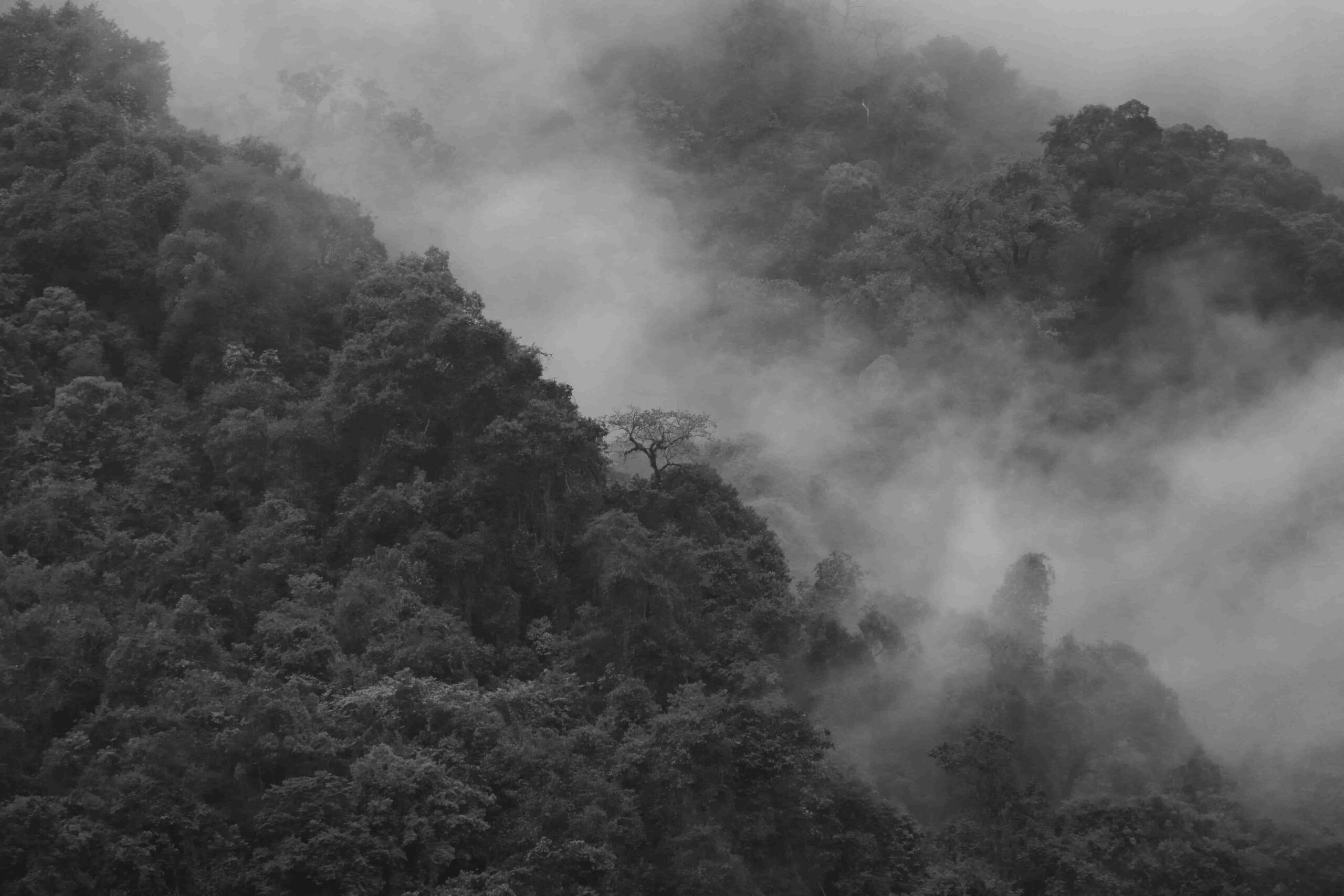 The Eastern Himalaya
This is how my love for birds and nature took shape…
I think I was always interested in the natural world, though growing up in a city meant that nature often felt distant and mysterious, yet fascinating. This fascination first took shape through astronomy. As an astronomy enthusiast, I had the privilege of travelling to areas away from the light-polluted skies of cities. This inevitably brought me closer to a forest (because they usually have the darkest skies). After spending nights peering through telescopes at distant galaxies, I would hear a myriad of bird sounds at dawn. My interest piqued as I wondered what they were. The more I watched birds, the more I was drawn to them. I also started enjoying taking pictures of them.
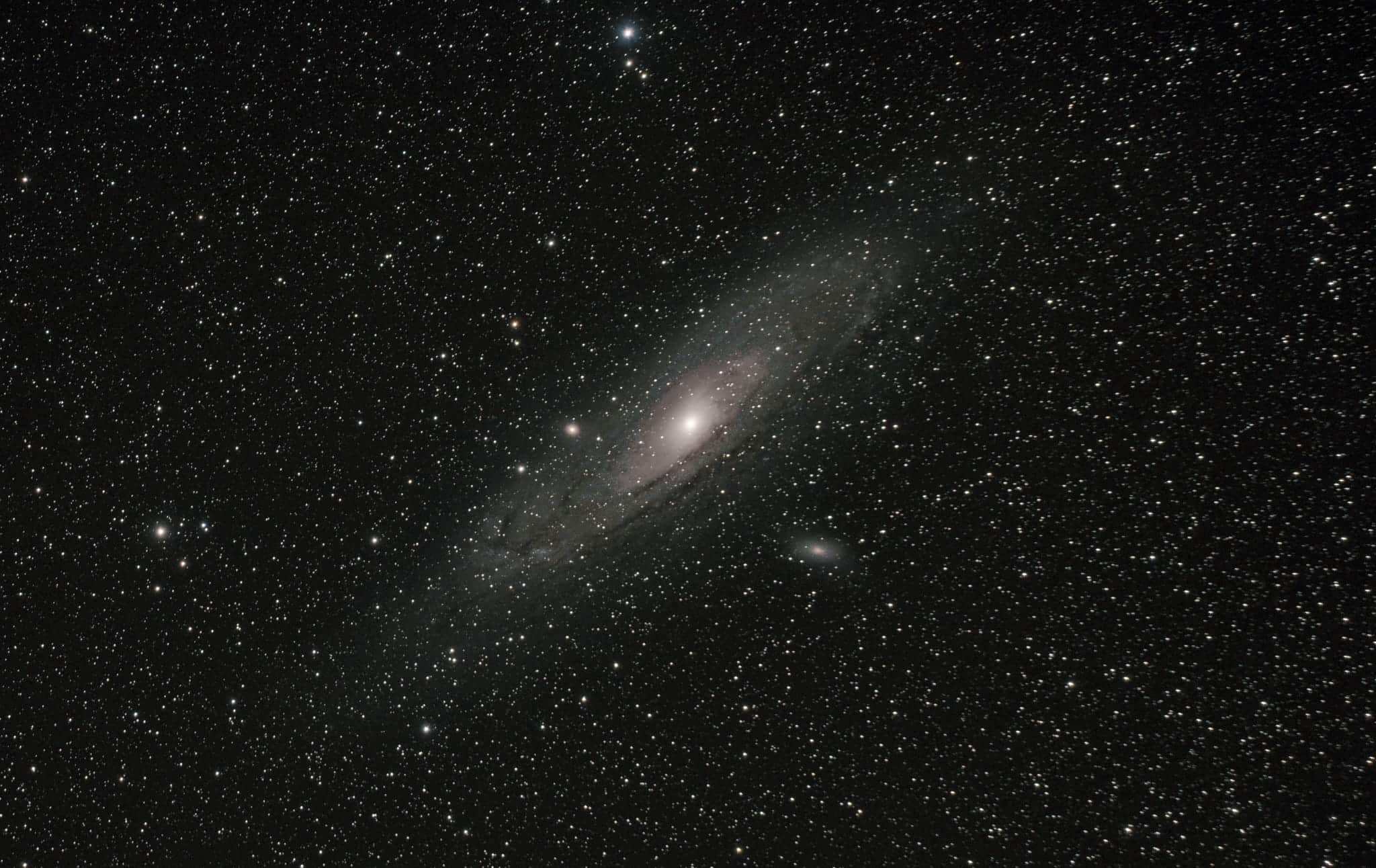 The Andromeda Galaxy, Photo taken during an Astronomy Session
Very soon, I started noticing patterns – I observed some species in forests but never near my home in the city. These observations sparked an interest in birds beyond just knowing what species they were – I wanted to know why some species occurred in one place while others didn’t. I learnt about biogeography, took online courses (NPTEL, Wildlife Conservation and Forest Biometry) to get a grasp of ecology, and practically slept with the Birds of the Indian Subcontinent field guide by Grimmett and others.
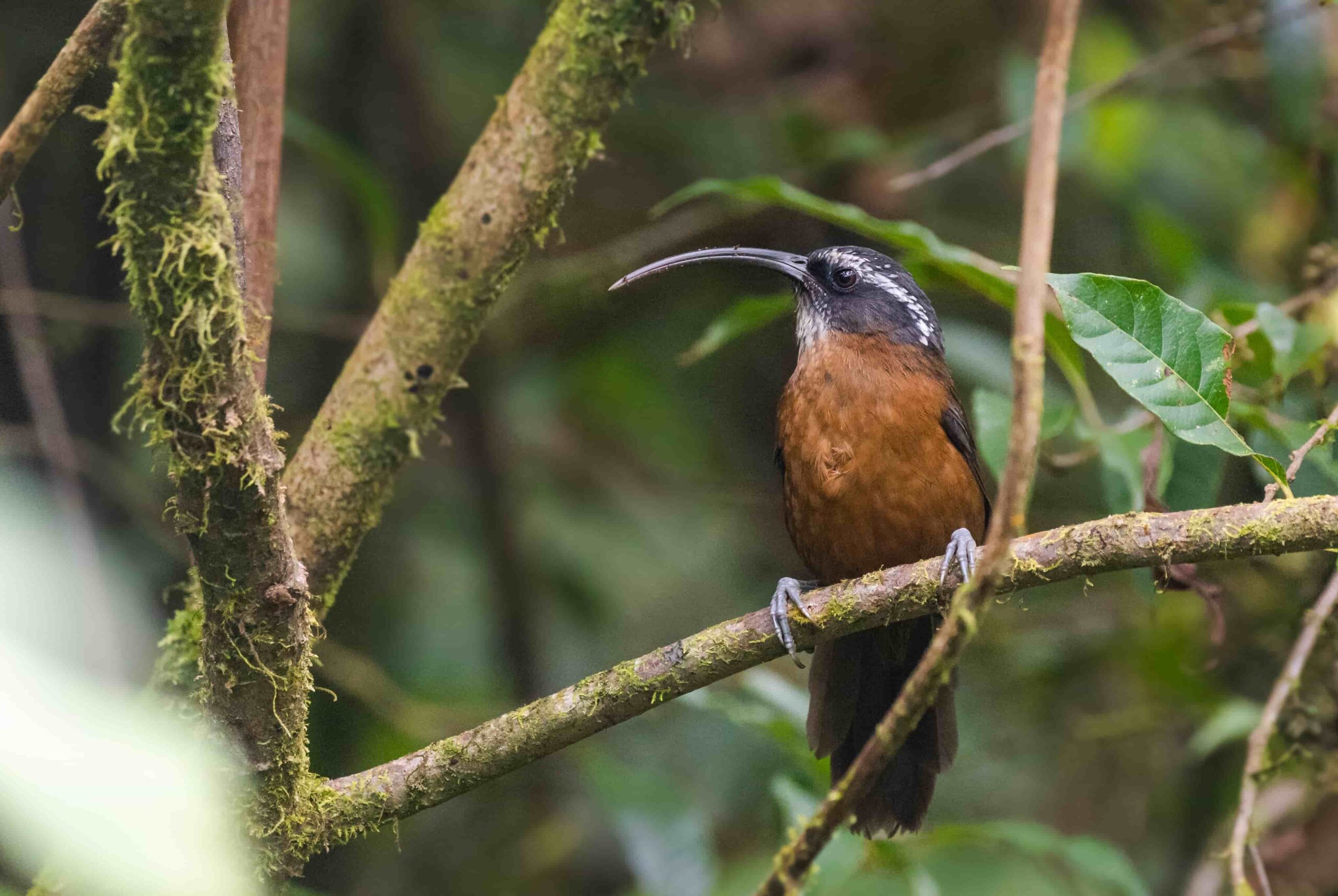 One of my favourite birds – the Slender-billed Scimitar-Babbler. Look at that magnificent bill!
At this point in my life, I was finishing a bachelor’s in computer science engineering. I decided to do something scary and unconventional – switch careers. Not because I hated computer science engineering (I still love to code) but because I found watching birds to be more fulfilling. I took a break and started volunteering/interning in field projects by applying to adverts on the YETI (Young Ecologists Talk and Interact) emails. After a year, I was fortunate to work as a Project Assistant at the Wildlife Institute of India, under Dr. Gopi G.V, on a project documenting the presence of and developing a conservation plan for the Bengal Tiger in the eastern parts of Arunachal Pradesh. This experience was transformative, both professionally and personally.
The following year, I joined the Wildlife Biology and Conservation Master’s Programme at the National Centre of Biological Sciences. For my dissertation, I pursued a question that was built on an observation from my fieldwork in Arunachal Pradesh. I noticed that certain bird species (like the Pale-billed Parrotbill) were almost exclusively present in bamboo-dominated areas, while remaining conspicuously absent from other habitats.
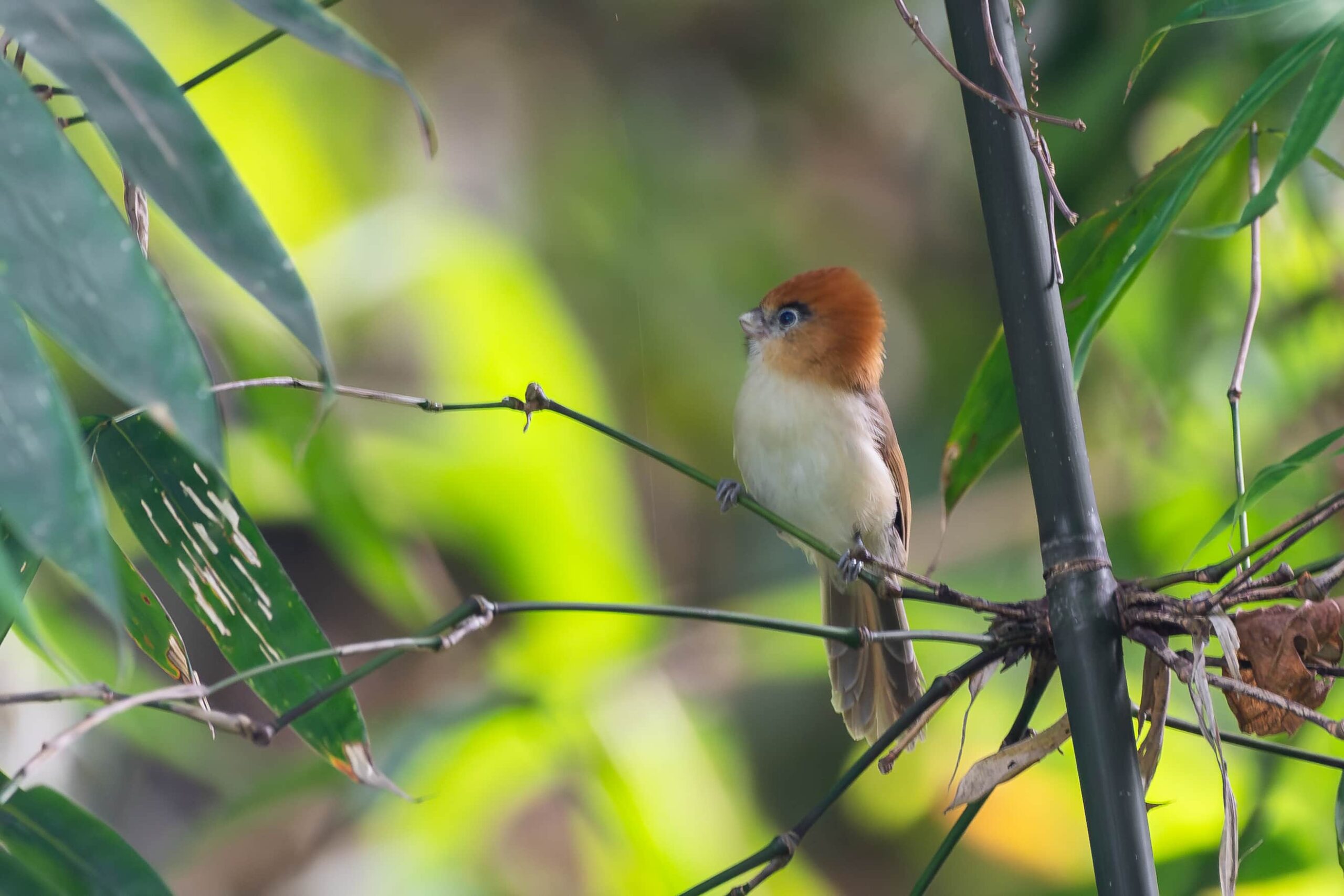 The Pale-billed Parrotbill, a bamboo specialist species
This led me to investigate how bamboo structures bird communities and to explore the mechanisms driving bamboo specialisation, under Dr. Umesh Srinivasan. After my Master’s, I worked in the Western Himalaya under Dr. Kulbhushansingh Suryavanshi at the Nature Conservation Foundation, setting up a long-term raptor monitoring project in Ladakh and studying the long-term impacts of land use change on birds in Spiti Valley, Himachal Pradesh.
I am currently a PhD student at the Georgia Institute of Technology, working under Dr. Benjamin Freeman. While I am figuring out the specifics, my PhD revolves around understanding what limits bird species’ ranges on mountains, including the Himalayas and how this might be affected by climate change.
I love what I do because…
It’s tough to pick out one specific aspect – I enjoy all parts of the research process. I love the process of noticing patterns and asking why the world works the way it does – and I believe the best insights come from being outside, in the field. I also enjoy the methodical process of collecting data and writing code to analyse it. I also believe that research is more fun when it is a collaborative process, right from working together with people on the ground. I am fortunate to have worked with and learned from some of the best field teams in the country, without whom my research would not have been possible.
Challenges I’ve faced…
The biggest challenge has been imposter syndrome – coming from a different background, I feel like I do not belong in a room full of ecologists and that my opinions count for less. However, I am fortunate to have wonderful mentors, peers, friends, and family who have wholeheartedly supported me in my career and personal life. I also want to acknowledge my position of privilege – being a male from an upper-caste community means I haven’t faced obstacles others in this field encounter. The ornithology and ecology community has been warm and welcoming, and I strive to be a supportive peer to others as well.
My advice to young researchers is…
Being an early-career researcher, I don’t think I have sufficient expertise to offer advice, but here’s what I have learnt so far:
- It is never too late to pursue your passion.
- Stay curious. Research works best when you are curious and wonder why the world works the way it does.
- Own your experiences. Nobody can take away your experiences – don’t let anyone make you feel otherwise.
- Be kind, honest, respectful and supportive
Sidharth Srinivasan
Ph.D. student, Mountain Bird Lab
Georgia Institute of Technology, Atlanta, USA
[email protected]
This is an amazing article about your life journey so far, following your passion which am sure few people do, more so a passion in ornithology which calls for immense patience, endurance and hardships I believe. Living in a deep forest in the far east of India and in the Himalayan ranges day & night to study about birds and their habitats and how bamboo is special to a certain species is soul searching efforts!! Best wishes to you on successful completion of your Doctrate in Georgia tech, Atlanta ( incidentally my daughter did her Masters there!!)
Would love to catch up with you !! May God shower his choicest blessings upon you!
What a sincere and thought provoking article by Siddharth on his personal journey in taking up Ornithology driven by his own passion. While we know about the contributions of the legendary Dr. Salim Ali, it is so inspiring to see so many from the younger generation take this up driven by their own interest & guided by their passion.
Best wishes to Siddharth on his onward journey as he finishes his Ph.D. at the Yellow Jackets institution and may his ilk grow in the future.
Ganesh Narayanswami
Hi Siddharth, way to go. Appreciated your honest and passionate description of how you landed into ornithology
Ganesh Narayanswami