
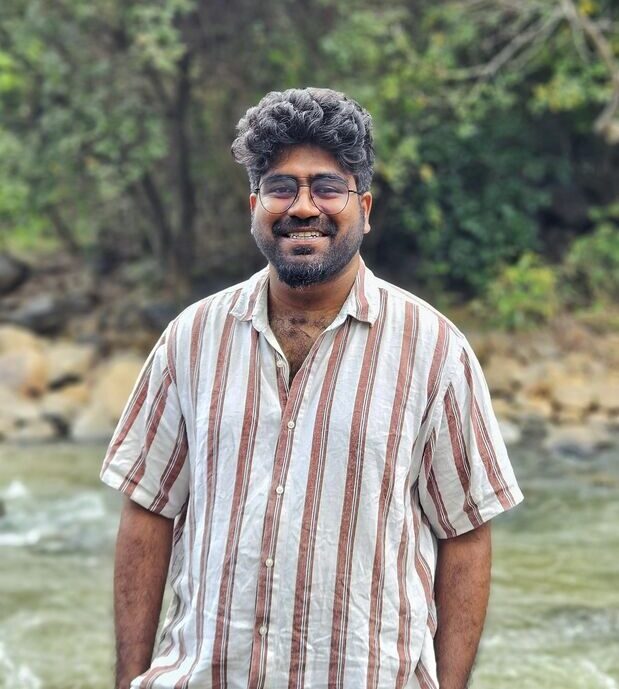
I once had the opportunity to visit Kolhu Chaur in the Lansdowne Forest Division of Kotdwar, Uttarakhand, along with a group of nature enthusiasts. We spent four days trekking through the wilderness, primarily looking for signs of tigers and elephants. Each day, we walked around 10 kilometres, and it was my first real exposure to the rich wildlife of Uttarakhand.
On the final day, as we were nearing the end of our trek, I noticed a fully flowering Bombax ceiba tree in the distance, glowing bright red against the forest landscape. From afar, it looked as though something on the tree was constantly moving. As I got closer, it felt almost as if the red flowers themselves were flying, detaching and reattaching to different parts of the tree.
When I observed more carefully, I realised that it was a flock of Scarlet Minivets. Around 15-20 individuals were moving through the tree and feeding on insects visiting the flowers. The sight was surreal. Standing there, watching those flashes of red in motion, I felt an overwhelming sense of euphoria, and goosebumps ran through my body.
That moment remains deeply etched in my memory and is one of the most beautiful field experiences I have had.
This is how my love for birds and nature took shape…
I was born and brought up in a lush green village near Poovar backwaters in southern Trivandrum of Kerala. Since childhood, my father regularly watched Animal Planet and Discovery Channel, and I grew up watching these programmes with him. Sir David Attenborough was like a superhero to me during those days. Watching nature documentaries with my father had a strong influence on me and made me curious about the natural world. The lush green surroundings in which I grew up further nurtured this curiosity.
I was fascinated by small creatures around me – click beetles, grasshoppers, and other insects which I often caught and observed out of sheer curiosity. This early exposure gradually shaped my interest in nature.
After school, I chose Zoology for both my Bachelor’s and Master’s degrees. I completed my Bachelor’s degree in Zoology at Mar Ivanios College, Thiruvananthapuram. For my Master’s dissertation, I worked on the Greater Short-nosed Fruit Bat and its food preferences under the supervision of Dr. H. Raghuram at The American College, Madurai. Although this gave me valuable exposure to field-based research, I still did not initially see myself pursuing wildlife research as a career. At that time, wildlife research felt distant and almost “fancy” to me.
The turning point came after my Master’s degree, when I received an opportunity to do an internship at the Wildlife Institute of India under Dr. R. Suresh Kumar as part of the Amur Falcon Project in Nagaland. My first task involved collecting regurgitated pellets of Amur Falcons from multiple roosting sites across different parts of Nagaland. Travelling from a small village in Kerala to the North-East of India in search of Amur Falcons was a transformative experience.
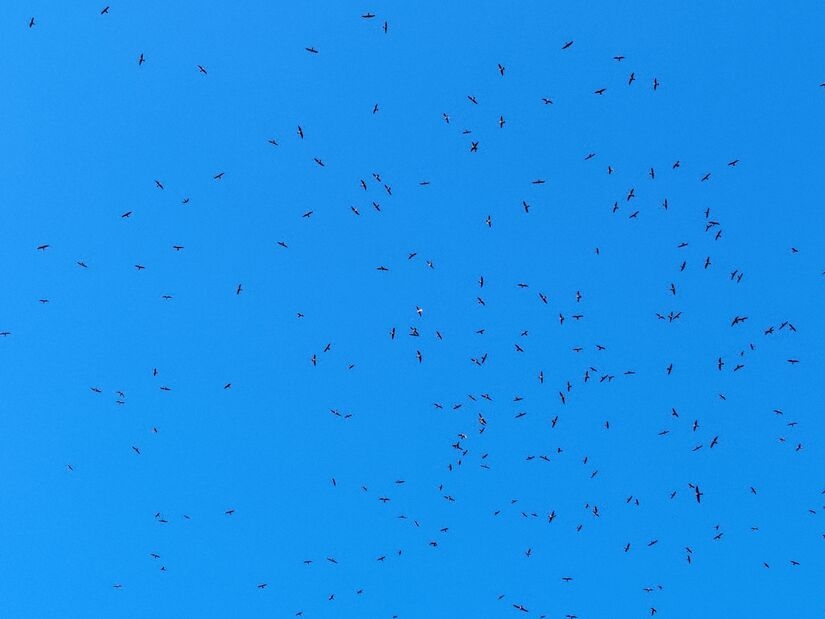 A group of Amur Falcons hovering over their stopover site in Nagaland (Photo Credit: Alex Jacob)
Seeing thousands of Amur Falcons gathered at a single site, feeding on termite alates and roosting together, was truly overwhelming. I witnessed trees collapsing under the combined weight of these small birds roosting in such massive numbers. Their highly synchronised arrival in Nagaland during the emergence of termite alates, followed by their remarkable long-distance migration to the African continent, deeply struck me and ignited something within me.
That experience completely shaped my passion for birds and wildlife research and played a major role in defining the path I follow today.
Like many raptors, Amur Falcons regurgitate undigested body parts of their prey in the form of pellets. During my internship, I examined these pellets to identify the insects consumed and estimate the number of insects present in each pellet. The broader objective was to understand insect consumption by Amur Falcons at their stopover sites in North-East India during migration.
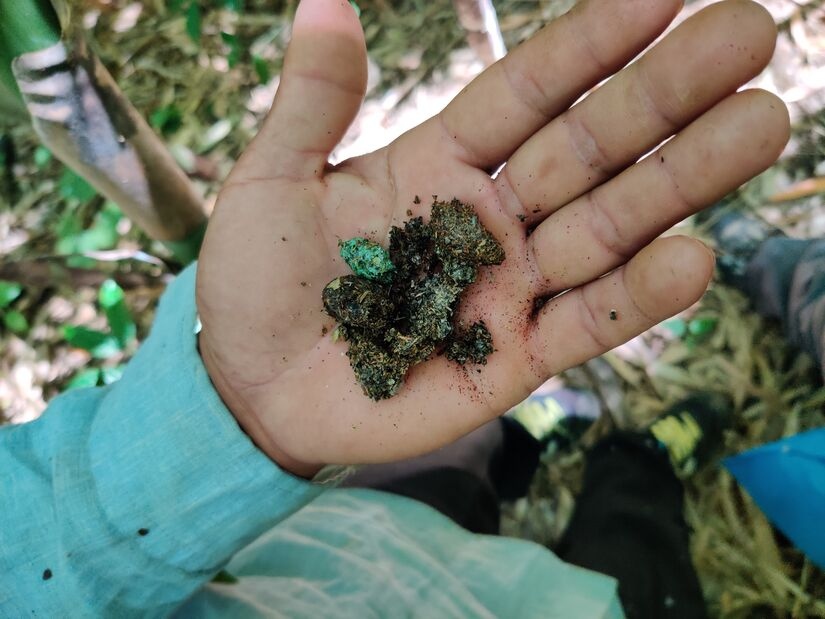 Regurgitated pellets of Amur Falcon collected from the field (Photo Credit: Alex Jacob)
While analysing the pellets, we found that nearly 90% of the contents consisted of termite alates. This finding immediately highlighted the importance of termite emergence events for the survival and migration success of Amur Falcons. Field observations made this connection even more striking. Birds arriving at the stopover sites often appeared lean, but within a short span of time, they rapidly fattened up by feeding intensively on these insects. This fat accumulation is crucial, as it allows them to undertake their long migratory journey all the way to South Africa, including crossing vast stretches such as the Arabian Sea, where they have no opportunity to stop and refuel. See this migration map to see the route they take to migrate.
Witnessing this close link between insect emergence, bird behaviour, and long-distance migration deeply fascinated me. It made me realise how tightly ecological processes are interconnected and how small organisms can play a critical role in supporting extraordinary migratory journeys.
During this period, my fellow researchers Amarjeet Kaur, Sarabjeet Kaur, Vignesh Chandran, and Rohit Jha played an important role in shaping my development as a field researcher. They helped me sharpen my birding skills, especially in identifying birds through calls and behaviour. This combination of hands-on fieldwork, ecological insights, and mentorship gradually transformed my general interest in birds into a clear research direction focused on avian ecology and migration.
I am currently pursuing my PhD under the supervision of Dr. Gopi G. V. at the Wildlife Institute of India, through the AcSIR-WII PhD programme. My research focuses on Colonial Nesting Waterbirds and their role in nutrient dynamics of wetlands during the breeding season. I also study farmers’ perceptions at select wetlands in Tamil Nadu.
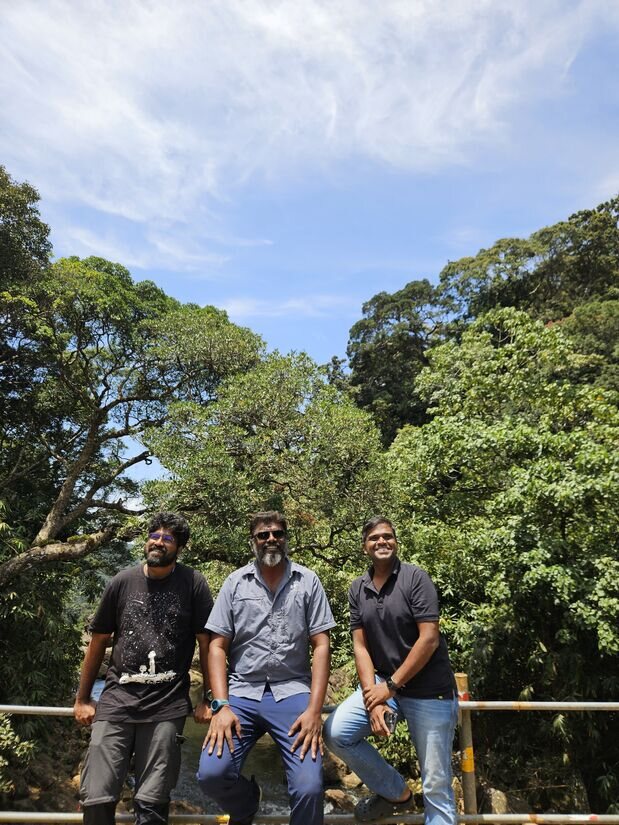 During PhD fieldwork in Tamil Nadu with Dr. Gopi G. V. and Dr. Frank S. J. D.
Many wetlands in Tamil Nadu are traditional irrigation tanks that have long been used for storing water for agriculture. Over time, several of these tanks have also become important nesting sites for colonial waterbirds, and some have even been declared as Protected Areas. At present, Tamil Nadu supports nesting populations of 19 species of colonial nesting waterbirds, which breed in large numbers across wetlands, forming either single species or multiple species colonies. This breeding activity coincides with the North-East monsoon in the region.
Interestingly, colonial nesting waterbirds produce large amounts of droppings that are rich in essential macronutrients important for plant growth. Although accumulated bird droppings (guano) have been used as a natural fertiliser for centuries in many parts of the world, studies on droppings from colonial nesting waterbirds have largely focused on their negative impacts on wetland ecosystems.
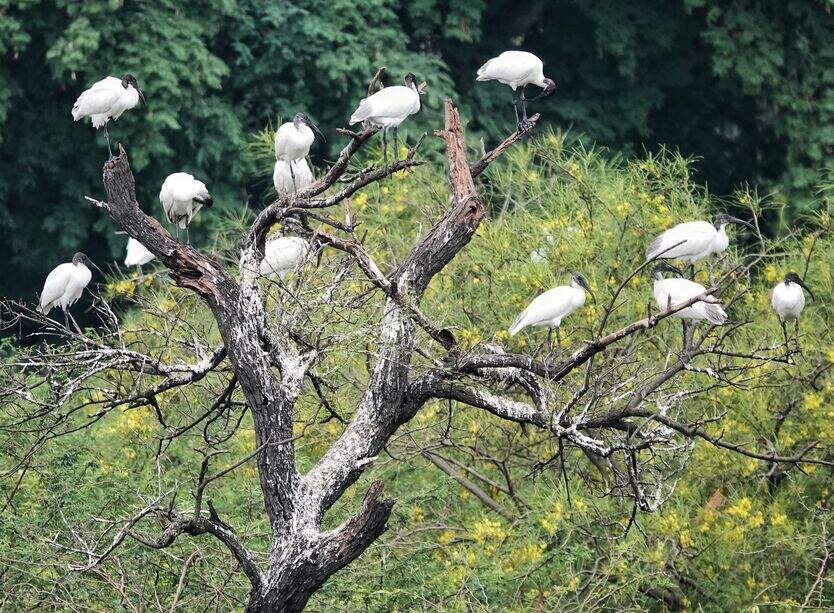 A group of Black-headed Ibis perched on a dried tree with visible accumulation of bird droppings (Photo Credit: Alex Jacob)
In contrast, my research explores the potential positive effects of these nutrient inputs. Since water from irrigation tanks is released to surrounding farmlands through outlets and used for agriculture, I examine whether bird-derived nutrients increase nutrient concentrations in the water leaving wetlands, how much nutrient deposition occurs within the wetlands, and whether the use of this nutrient-enriched water enhances agricultural productivity, particularly in paddy fields.
I love what I do because…
There are many aspects of my life for which I feel deeply grateful for and privileged about, and birds have played a major role in shaping that feeling. Observing and understanding birds gives me a heightened sense of our surroundings and a deeper appreciation of the places we live in. When you begin listening to birds, your ears are always tuned to the environment around you. Even if you do not consciously try to listen, bird calls become a part of your awareness.
Over time, your perception of the seasons also begins to change. For example, on an autumn morning, you might wake up and hear the call of a Hume’s Warbler and instantly know that winter is approaching. There are also moments that are difficult to put into words, like the tears that come when you finally see a “lifer,” a bird you have long hoped to see and encounter for the first time. These emotions and experiences, which are hard to explain, have all come into my life because of birds.
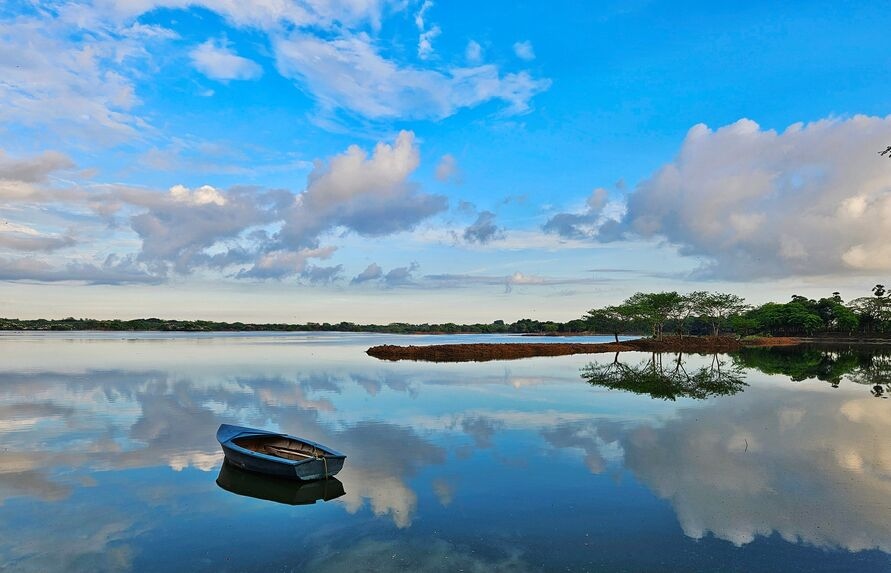 A serene morning at Vaduvur Bird Sanctuary, Tamil Nadu (Photo Credit: Alex Jacob)
Another important aspect of my gratitude comes from research. The places I have visited through my work are places I never imagined I would see as a child. The landscapes where I have lived and worked, the local communities I have interacted with, and the different perspectives on life I have encountered have all shaped me deeply. Long conversations late into the night, shared experiences in the field, and the strong bonds formed with fellow researchers are all a part of this journey. All of these meaningful experiences have come to me because of research.
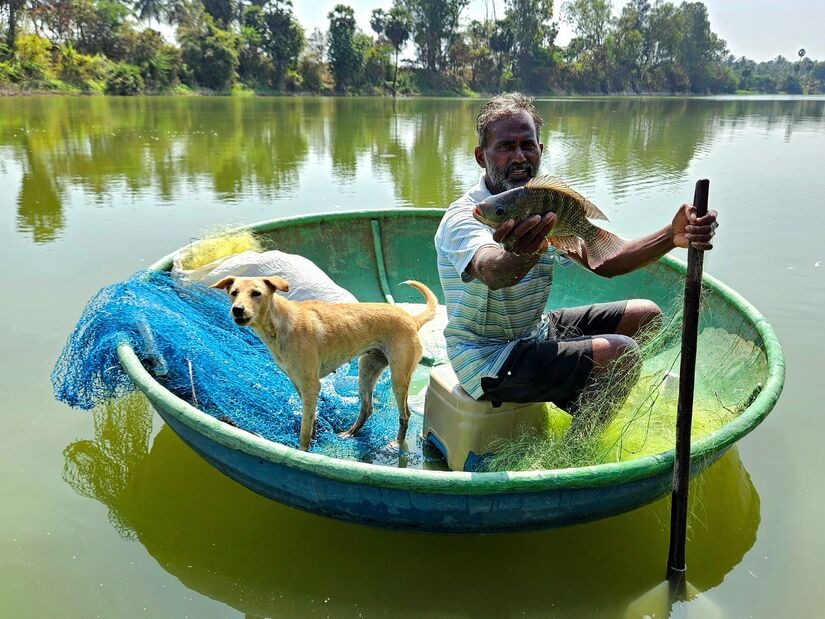 A fisherman displaying his catch in Vellode, Erode district, Tamil Nadu (Photo Credit: Alex Jacob)
Challenges I have faced…
The challenges I have faced during my work vary greatly from place to place. In some locations, they are very basic, such as limited availability of food or accommodation, while in others they involve long and risky travel, sometimes riding kilometres on difficult roads on a motorbike to reach remote field sites.
One of the most significant challenges during fieldwork is maintaining mental health. Field sessions can be long and demanding, and there are times when you have to stay in remote areas for months without meeting your family or close friends. The isolation, physical exhaustion, and unpredictable nature of field conditions can take a toll over time.
During such periods, it becomes especially important to stay connected with loved ones, even if only through phone calls or messages whenever possible. Equally important is recognising the need to take care of one’s mental well-being, to take breaks when needed, and to support one another within the research team. Acknowledging these challenges and learning how to manage them has been an important part of my journey as a field researcher.
My advice to young researchers is…
Spend as much time birding as possible. Before committing to long-term research, take time to explore the field and understand what truly interests you. Work on small projects, internships, or short-term studies to gain experience and clarity about the kind of questions you want to pursue.
Focus on building your skills, whether in field methods, identification, data collection, analysis, or writing. These skills form a strong foundation for any research career. Before committing to a PhD or other long-term programme, make sure you are well connected with your potential principal investigator.
One often encounters researchers and birders who have been engaged with birds since childhood and seem far ahead. Rather than feeling discouraged, it is important to remember that research develops through time, experience, and persistence. Every journey is distinct, what matters is staying curious, motivated, and committed to your research.
Alex Jacob
[email protected]
PhD Scholar
Wildlife Institute of India, Dehradun
Instagram handle
❤️
I am very proud you are my best friend.
Inspiring Alex!