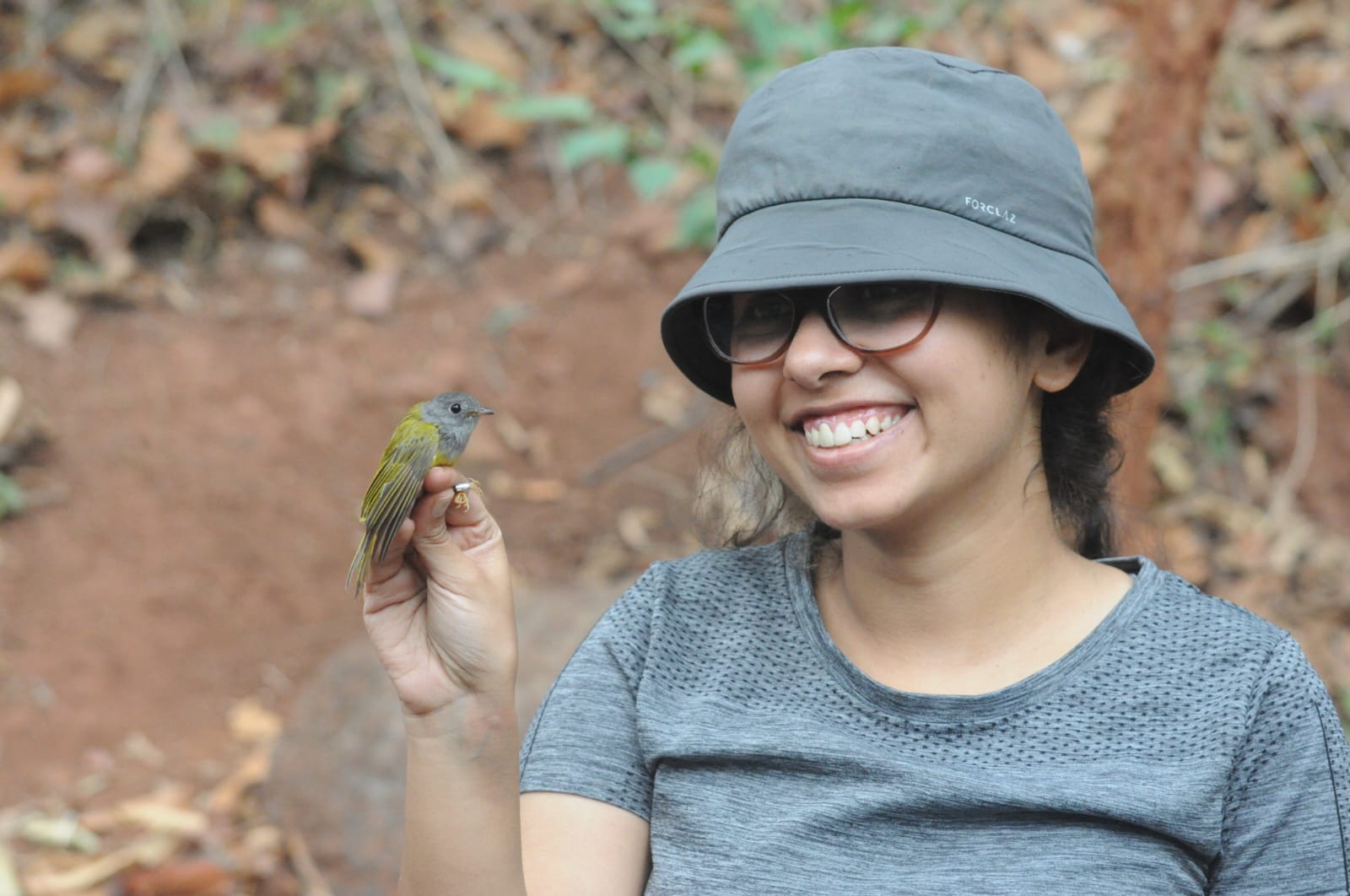
If I were to go back, I would return to the misty winter of 2020, when I started learning mist-netting and bird banding in Kodaikanal. One of the first birds that I ever held in my hands and banded was the Indian Yellow Tit—a round, fluffy little bird in black and yellow, rocking a punk hairstyle in the form of a crest. It is endemic to Peninsular India. This tiny bird’s cute, fluffy appearance successfully fooled me. The Indian Yellow Tit was ready for a brawl. As I held it and tried to take the body measurements with a caliper, the bird kept pecking at my hand. It was unbearable and frustrating. It was sad to realize that I wasn’t a bird whisperer at first. But slowly, with practice and guidance, I got better. It was here, in the forests of Kodaikanal, that I found both confidence and joy in bird handling. I am grateful to have been mentored by Chiti Arvind and Ashwin Warudkar, who were incredibly patient and fantastic teachers. During this fieldwork, I got to band some stunning birds, including Square-tailed Bulbul, Black-and-orange Flycatcher, Nilgiri Flycatcher, Malabar Whistling Thrush, and many more. While banding all combinations of birds—chunky and tiny, bright and dull, bold and shy, feisty and calm, I learned more about birds and their personalities up close. I also shared this story in detail during the American Ornithological Society Conference (AOS SCO 2021 virtual edition) storytelling event.
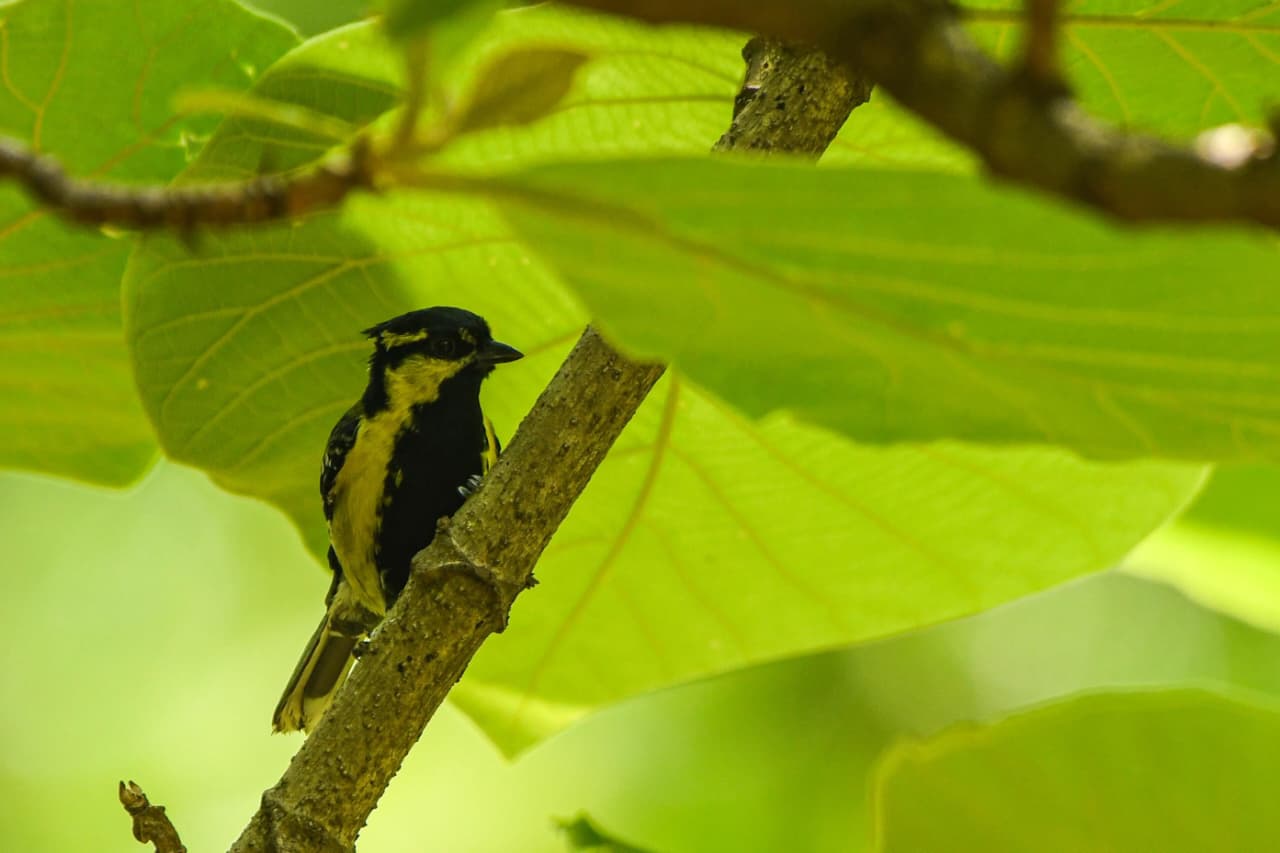 Indian Yellow Tit (Photo: Dhyey Shah)
This is how my love for birds and nature took shape…
I wasn’t a birder. As a matter of fact, I was oblivious to birds for the first 20 years of my life. While pursuing M.Sc. in Environmental Studies at the University of Delhi (2016-2018), I volunteered for a study examining the genetic connectivity of jungle cats in the central Indian landscape. The fieldwork was carried out in Mowgli’s land, which I had read about as a kid. This ten-day volunteering experience in the dry-deciduous forested landscape, which involved collecting scat samples, was instrumental in helping a city girl like me (to touch grass) pick up wildlife science. For my master’s thesis at Delhi University, I worked on toads, studying phylogenetics and evolution in Dr. S. D. Biju’s lab. Shortly after, I worked as a field assistant on a project led by Dr. Prachi Thatte (then at National Centre for Biological Sciences, Bangalore) to estimate sloth bear population density in Mount Abu Wildlife Sanctuary. I was lucky to have Prachi as a mentor early in my research career. She helped me a lot whenever I was in doubt and was also the first person with whom I made my first birding checklist. During fieldwork in Mount Abu, I managed logistics, volunteers, field expenses, and conducted exciting field sampling across the landscape. On most trails, I would usually look down on the path to find sloth bear scat samples. But on one particular day, as the trail I was following dipped towards a stream, birdsongs and calls grew louder from within the thick understorey ahead. I saw flashes of green with a patchwork of black and white in the understory. The forest guard walking with me exclaimed, “Green Munia!” It was a flock of rare, range-endemic green munias. From that moment on, I started birding more frequently, and my eBird lifelist grew steadily, thanks to shared checklists.
My core research interests are biogeography and phylogenetics. Birds are a great system to work with if you are interested in spatio-temporal patterns in species distributions and the evolutionary mechanisms that underlie these patterns. During an internship in the WWF-Delhi office, I came across a book titled ‘Speciation and Biogeography of Birds’ by Ian Newton in the library. That sparked my interest, and I started thinking about pursuing a PhD focused on birds and biogeography. In 2020, I reached out to Dr. V. V. Robin at Indian Institute of Science Education and Research (IISER), Tirupati and secured an internship, which was the start of my research journey in ornithology. My labmates also really helped me develop my interest and critical thinking skills. Additionally, going birding with them helped me transition from just identifying birds to observing their behaviour and traits.
For my PhD project (which started in August 2021), I am currently studying evolution and cryptic speciation patterns in forest birds of Peninsular India in Dr. V. V. Robin’s lab at IISER, Tirupati. My work combines mist-netting and fieldwork with labwork, genomics, acoustics, and morphological analyses to quantify geographic variation at the subspecies scale. I am also working to build a morphometric and plumage database by examining the skin specimens stored in natural history collections of Indian birds at the Bombay Natural History Society (BNHS), Bombay, and the American Museum of Natural History (AMNH), New York. I received the Frank M. Chapman Study Grant to support my research visit to AMNH in New York and collect data for my PhD research. Additionally, I have also helped with a study examining phylogenetic diversity metrics and the spatial patterns of bird diversity in Peninsular India.
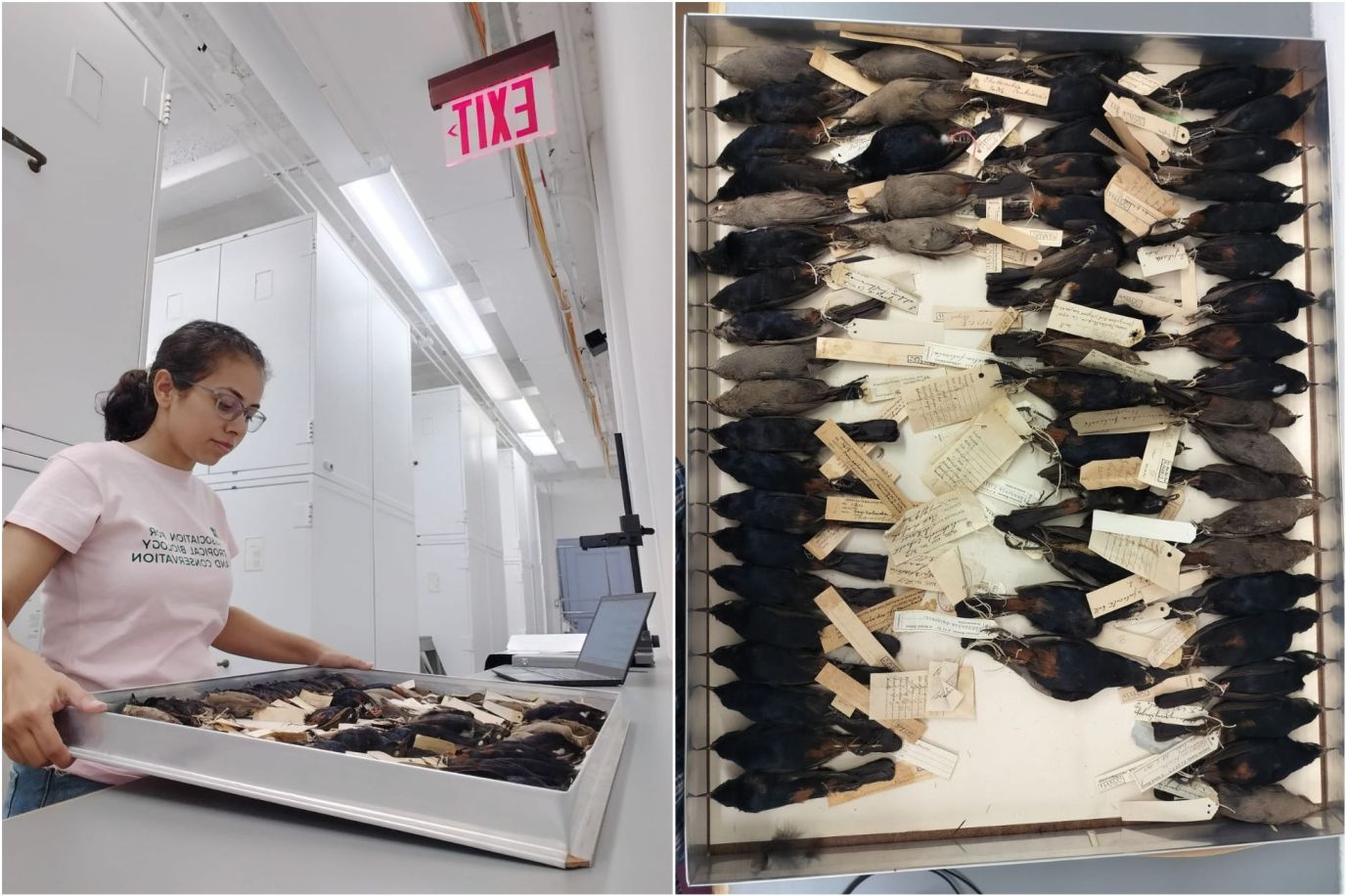 Indian Robin skin specimen collection at AMNH Museum, New York
I love what I do because…
I enjoy mist-netting and bird banding/ringing as well as building phylogenetic trees and conducting analyses in general. I also enjoy teaching and have held several teaching assistantships during my PhD. Recently, I have discovered that I am fascinated by natural history collections. They are a treasure trove of morphological and distributional data and can be explored to answer many scientific questions. Lastly, I really enjoy birding; I now do it while trekking and even during conferences and workshops. My friends and colleagues have always offered invaluable help and buoyed my spirits when I have struggled, and their support system has helped me love what I do.
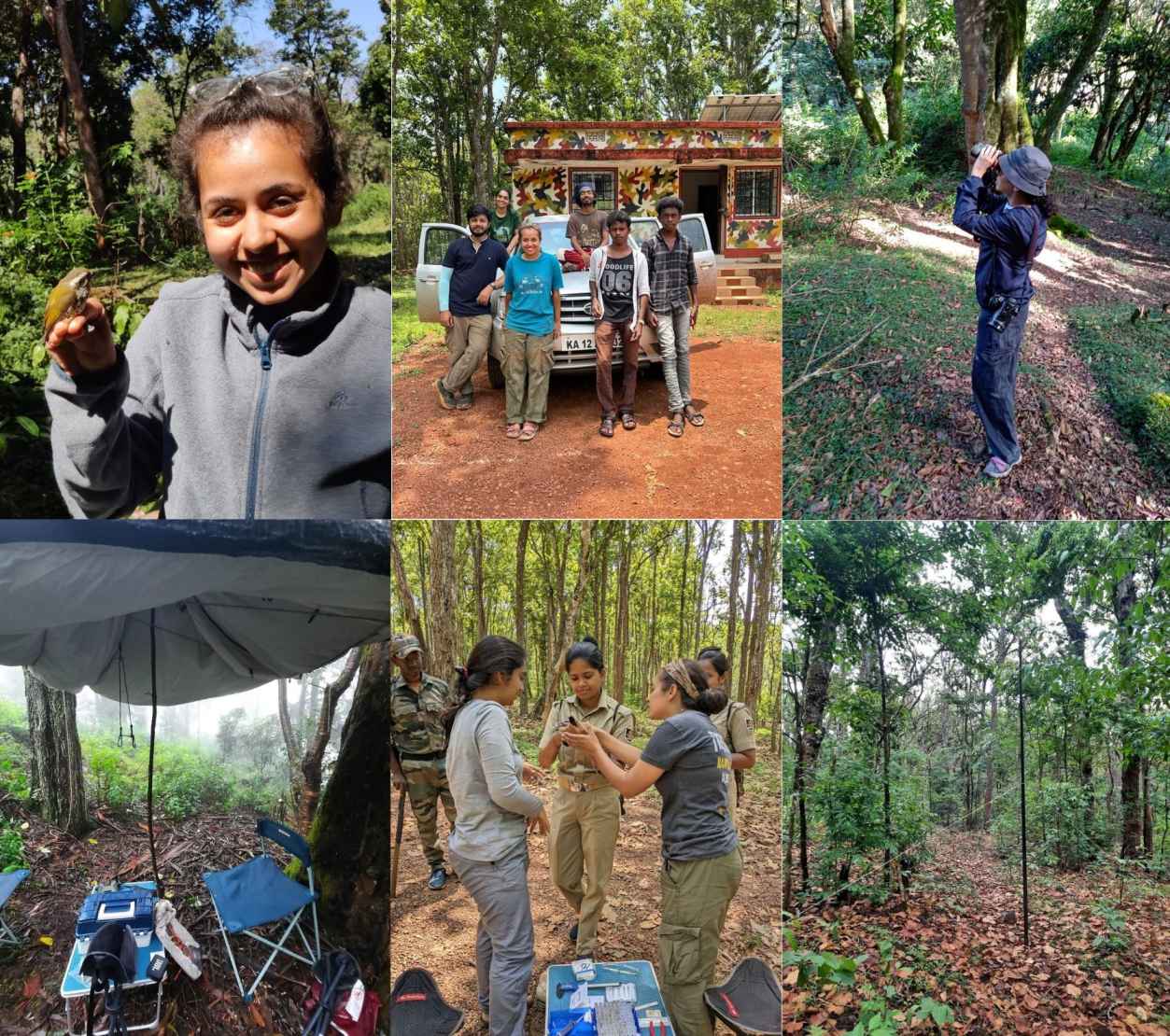 Fieldwork photos from Karnataka, Odisha and Tamil Nadu (Photos: Akshay Herur, Harsha Kumar, Vinay KL)
Challenges I have faced…
One particular challenge was learning mist-netting for my PhD fieldwork—understanding where to put the nets, when to change netting locations, and which habitat patches work best—while also managing finances, logistics, forest department communications, and working with a diverse team. Although it was challenging at first, it’s also gratifying. Another challenge would be learning the art of networking; I am still not very good at it. It is important to learn how to network, especially at conferences and workshops, understanding others’ research, talking about your own work and building connections. This is one aspect I am actively working on.
My advice to young researchers is…
What you should not do: Do not underestimate yourself. You may be starting in this field like an amateur birder like me. If that is the case, remember that you do not have to be a seasoned birder to start a career in ornithology. My PhD journey has been tied to my birding journey.
What you should do: Look out for opportunities on the YETI email list (Young Ecologists Talk and Interact) and on social media platforms (Bluesky, X). Sometimes you have to create the opportunity for yourself. Write emails to potential labs/mentors and seek internships/project positions. You can also get independent funding if you already have a project in mind.
P.S. If you are a teen birding enthusiast, I highly recommend keeping an eye out for the next edition of Young Birder’s Camp, which provides a scientific perspective to observe nature and teaches ornithology and ecology with hands-on exercises.
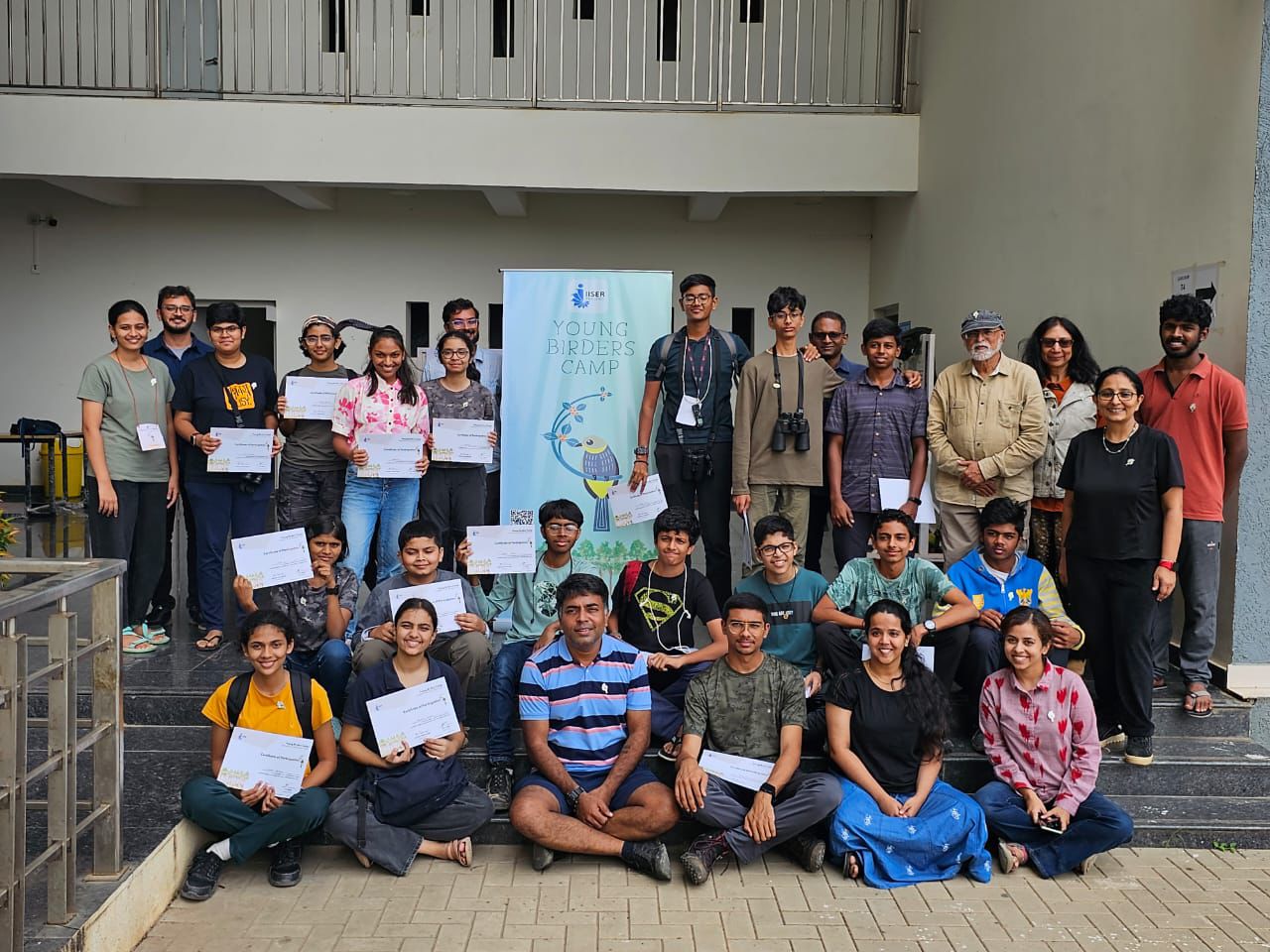 Young Birder’s Camp 2023 at IISER Tirupati, Andhra Pradesh, India
Note: Reading popular science books also helps me stay engaged in ornithology. I would recommend ‘Raptor: A Journey Through Birds’ by James Macdonald Lockhart. I am currently reading ‘The Genius of Birds’ by Jennifer Ackerman. This book is a brilliant account of the intelligence of birds. I was particularly fascinated by a section on chickadees, which the book describes as bold and inquisitive, possessing ‘deep-rooted self-confidence’, a trait I have experienced firsthand with their close relatives in India, the Indian Yellow Tit.
Archita Sharma
[email protected] / [email protected]
PhD student, IISER Tirupati
Lab Webpage
eBird Profile