An accidental date where I found/lost “blue”…
With each breath, I get intoxicated by the fragrance you emanate, a symphony of scents enveloping my being, like lazy Sunday moments. I am transported to those blissful mornings, where time unfurls into an endless euphoria, leaving behind traces that evoke the longing for a forgotten essence.
One such morning etched in my memory is of the 3rd of March, 2017. It was during my fourth semester at Indian Institute of Science Education and Research (IISER), Mohali that I was first introduced to the enchanting realm of bird watching. Alone, without the aid of camera or binoculars, I embarked on my morning avian escapades, spending the remainder of each day on Google, seeking to unravel the mysteries of the feathered beings. For days prior, a small, elusive bird, clad in hues of grey and white, darted through the air. Every other day, I would catch a fleeting glimpse of it, only to have it vanish in the blink of an eye. And then, on that fateful Friday, I found myself standing on my hostel balcony, yearning for another glimpse. And there it was, like a whisper carried by the wind. Without a moment’s hesitation, I rushed beseeching a friend for his camera, my slippers slapping against the wet pavement as I pursued the bird’s ethereal path. Yet, alas, it slipped away again, vanishing within the verdant embrace of the dense jungle before me. An utterance of caution passed through my mind, for a guard had recently encountered a Russell’s viper in this very locale. But driven by an insatiable curiosity, I cast my doubts aside and pressed onward, my feet sinking into the mire with every step. Finally, I found myself and my borrowed camera amidst the marshy ground. Hours had slipped away, and disappointment weighed heavy upon my spirit. Breakfast had been forsaken, the tantalising aroma of omelettes vanishing into the recesses of memory. Even the prospect of missing my first class loomed ominously. Dejected, I found solace in the embrace of the mud, my gaze fixated upon the spot where the bird had disappeared. At regular intervals, the bird would grace a small puddle with its presence, dipping gracefully before taking flight once more. It moved in ceaseless circles, cycles that seemed too swift for my camera to capture. Thus, I gloomily stood there, yearning to freeze the little Sandpiper within a single frame. It was in this melancholic reverie that a silhouette caught my eye from a distance. Its shape mirrored that of a Myna and though my enthusiasm remained tempered, I instinctively clicked the camera’s shutter. The sun’s rays bore down upon me, obscuring my vision, but I persisted. And then, as if unveiling a hidden secret, the magnificent hue of bright blue unfurled before me, eclipsing my blues. Were you, perchance, an observer of my arduous journey, waiting to bestow upon me this resplendent spectacle? “Neelkanth,” they call you, though your throat carries no trace of blue. Yet, your serene presence enthralls, playing effortlessly with the fickle minds of humanity.
This was my first encounter with “Indian Roller”, one of the many core memories which I can never forget and is very close to my heart (hence the blog-like tone 🙂).
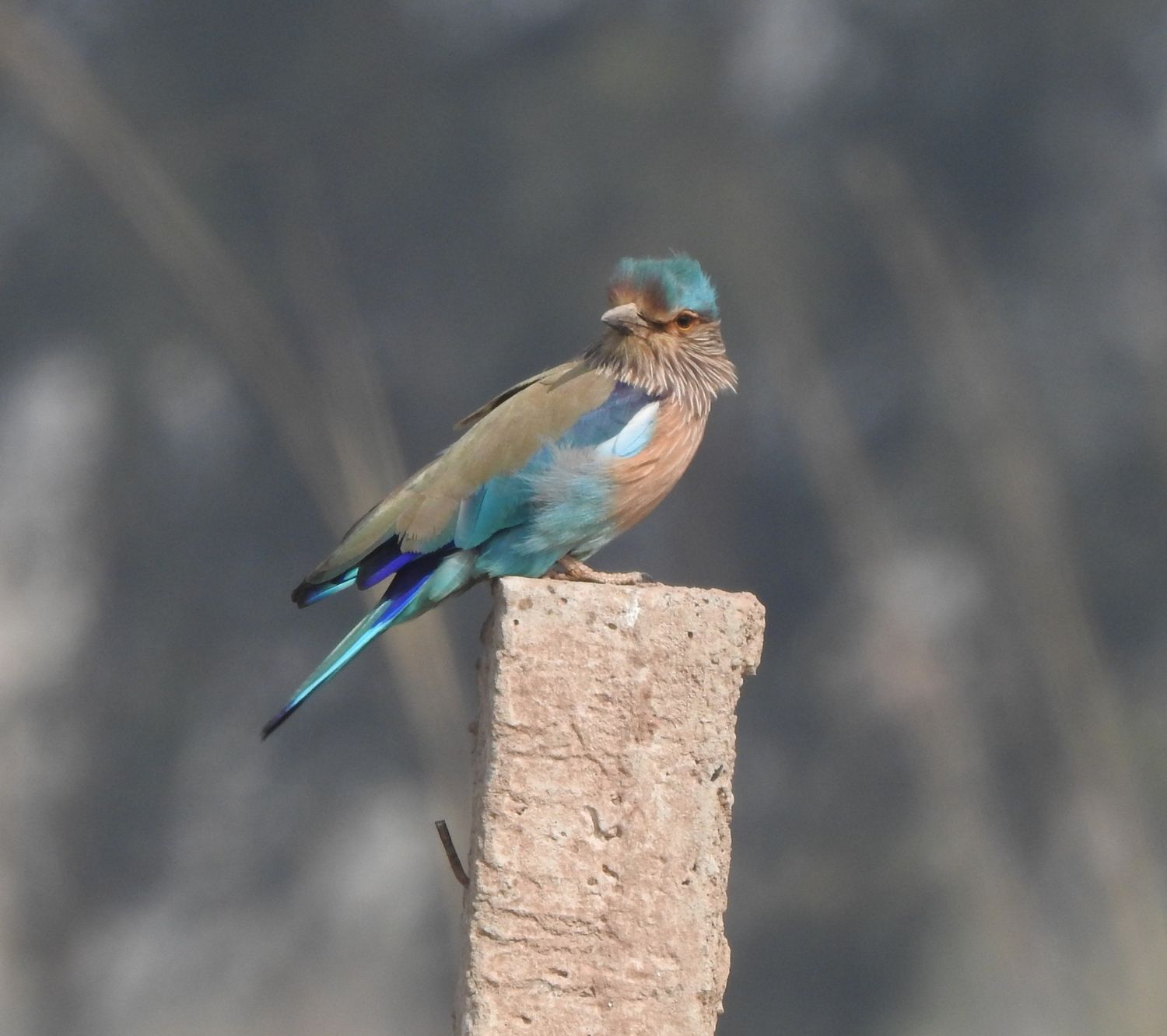 “Neelkanth” they call you, though your throat carries no traces of blue
From equations to echoes: How a physicist learned to listen 🙂
There’s a particular kind of silence that comes after you’ve been searching for something with your bare eyes for hours. No binoculars. No camera. Just you, the forest and the possibility of seeing a bird you’ve never seen before. For me, this silence became a language. It started in an unexpected place: Behaviour and ecology (back then Animal Behaviour), a core course at IISER Mohali during my second year of the Integrated BS-MS program (2015-2020). I was a physics major actually. I loved equations, symmetry, the crystalline logic of how the universe worked. Biology felt distant to me, never liked it much, never had any background also. But still that one course taken by Dr. Manjari Jain during my core years got stuck to me. I don’t remember the exact lecture. But I remember the feeling – the awakening of a hobby I didn’t know I had.
After that course ended, I should have returned to my particle physics textbooks. Instead, I found myself on the IISER campus at dawn, watching birds with nothing but my eyes, hours and hours, in the mornings before classes and in the evenings when I should’ve been solving differential equations. My friends would ask me to identify birds for them and I became the unofficial birder of my friend circle. “Hey Gaurav, what’s that yellow one with the black beak?” I’d spend the rest of my day on Google, scrolling through bird pictures from across India, piecing together the puzzle from observation alone. Somehow, I never used a field guidebook and I still don’t. There’s something about opening a book that fractures your attention from the bird itself. When you have a guide, you’re looking for confirmation. Instead, I want to feel the bird – its behaviour, quirks, and the way it moves through space or just rests in silence. That’s all.
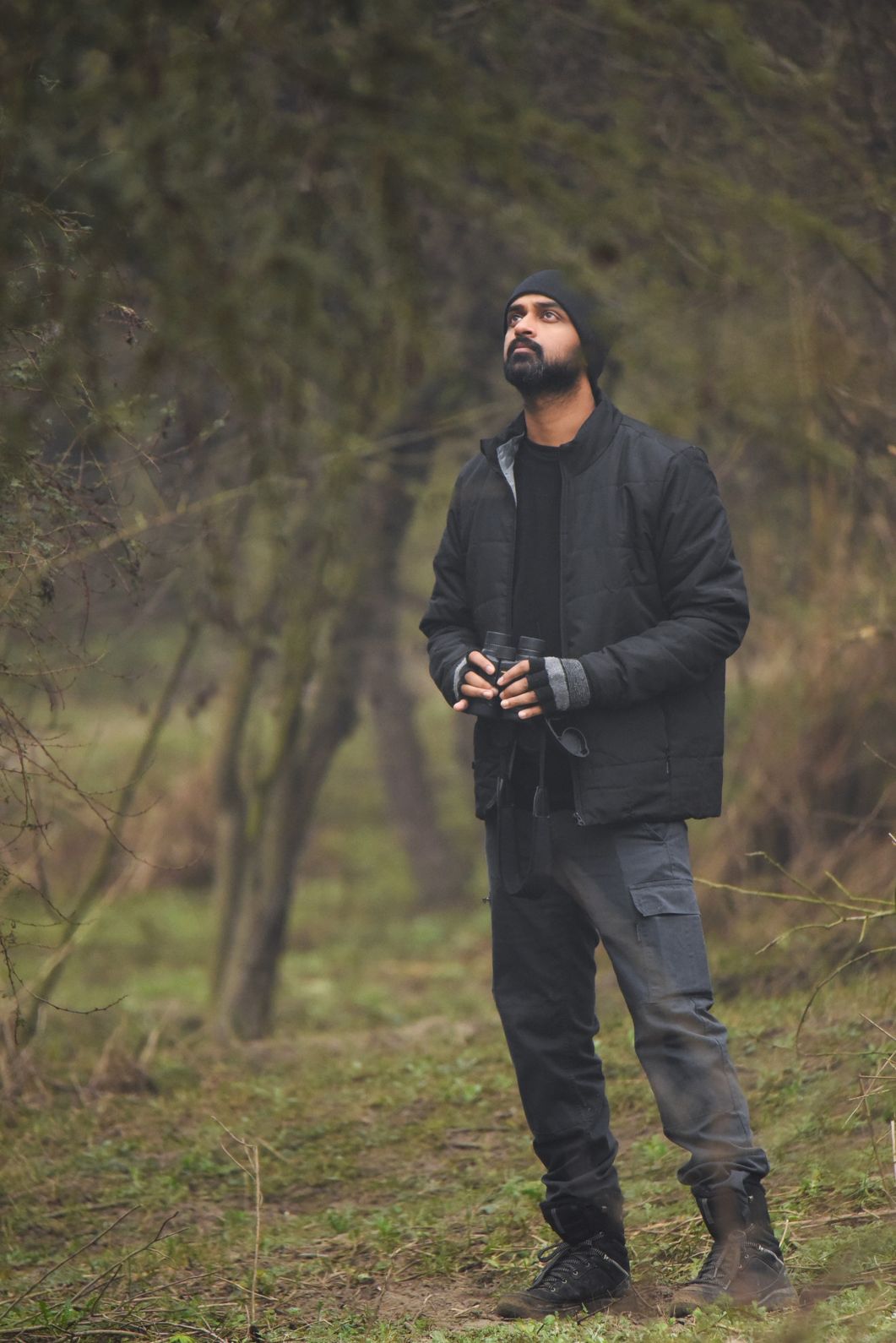 On my daily quest for finding a new Lifer (PC – Aryjit Satapathy)
My MS thesis in physics was on scattering amplitudes, calculating how particles collide and how energy redistributes at the quantum level. Beautiful mathematics! But during those final months of intense theoretical work, I stopped birding entirely. No dawn walks. No Google searches. Just equations. I didn’t realise I was grieving until I finished. The absence was loud. Or maybe, more accurately, I realised I had been running from something. Physics had given me the intellectual rigor I craved, but it had also given me a kind of deafness; I was so focused on the abstract that I’d forgotten to listen. So when Dr. Jain, who deserves much of the credit for me still being in this field and who is now not just my guide but also a dear friend, offered me a PhD position in her Behavioural Ecology Lab (BEL) in 2020, exploring how we could use sound to understand birds, I didn’t overthink it. By my own admission, I’m a person who jumps into things without careful deliberation. My journey has always been a roller-coaster ride – interested in something and suddenly boom – full commitment. This time, it was bioacoustics. The self-doubt existed, sure. I was walking away from a field where I had expertise and entering one where I was essentially a beginner. Everyone in the lab had biology backgrounds. I had… well, I had Google searches and thousands of hours of birdwatching, hehe. But I had something else too, maybe a physicist’s instinct about patterns. And soon, I realised that bird calls weren’t chaos; they were physics made audible.
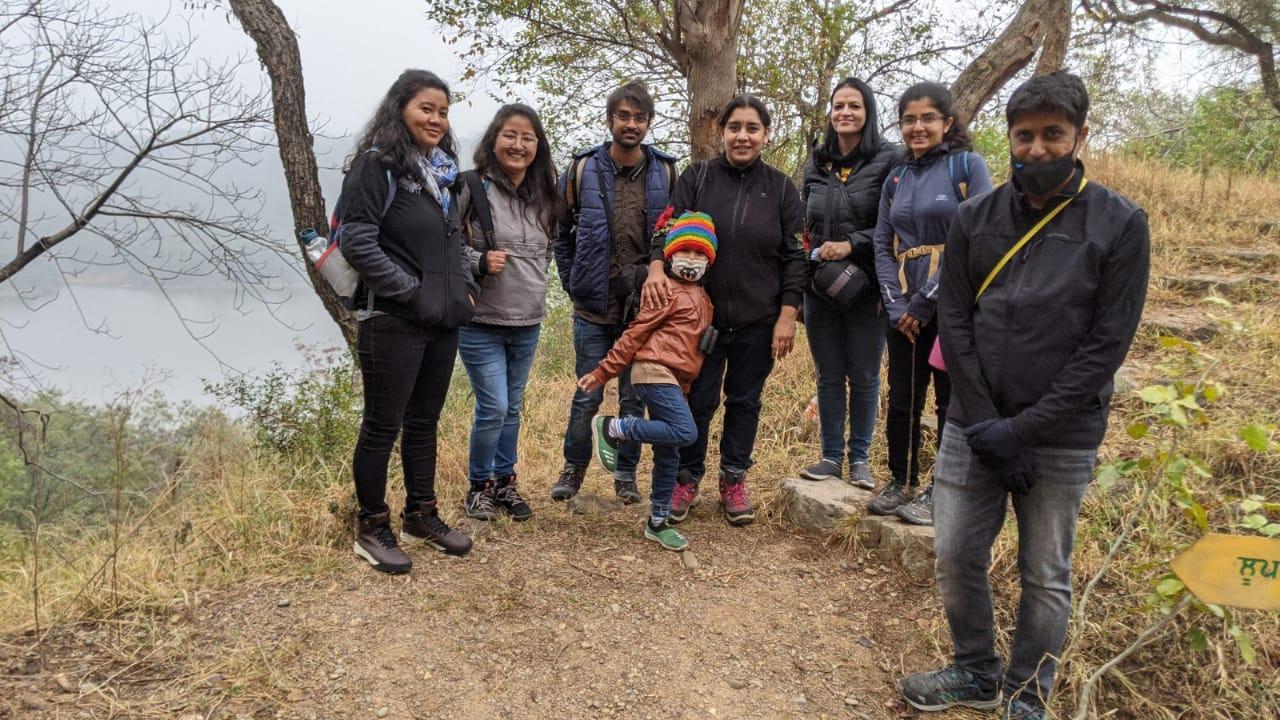 BEL team on a trek at Siswan Nature Trail Trek: Dr. Yambem Soniya, Dr. Sonam Chorol, Gaurav Singh (Me), Anu (the youngest member), Dr. Manjari Jain, Dr. Sujata Saini, Kanika Rajput and Mr. Jimmy Bahuleyan (PC – Dr. Parth R. Chauhan)
Here’s what nobody tells you when you switch from theoretical physics to bioacoustics; the fields aren’t as different as they seem. A scattering amplitude is a pattern of energy. A bird call is also a pattern of energy with its frequency, amplitude and temporal dynamics. A soundscape is simply a symphony of overlapping patterns, and machine learning is just a rigorous way of asking which ones repeat and which ones matter. I spent the early years of my PhD digging into acoustic indices, mathematical descriptors that quantify soundscape composition. Different Indices, each one a lens to see what we couldn’t see with ears alone. Suddenly, my background in physics and mathematics wasn’t a liability. It was a translation tool.
Currently, I’m in the final year of my PhD, writing up my thesis while also serving as the Scientific Lead at Darukaa.Earth, where I work on AI-driven nature-tech projects – from passive acoustic monitoring in elephant corridors to biodiversity assessments for agroforestry sites. Two very different worlds on paper, but in practice, the same question runs through all of it: what are the patterns, and what do they mean for the living world around us?
I love what I do because…
What I love most is the feeling of perpetual discovery – the sense that no matter how many models I build or datasets I analyse, the ecosystem always has something new to say.
One part of my work I find deeply thrilling is deploying acoustic recorders in the field – climbing trees, attaching sensors, knowing that the microphone will hear things my ears never could; the presence of birds I’ll never see, the acoustic texture of biodiversity itself. The data arrives as numbers and spreadsheets, but each pattern in it is a story. Physics taught me to see those patterns; ornithology taught me to care about what they mean.
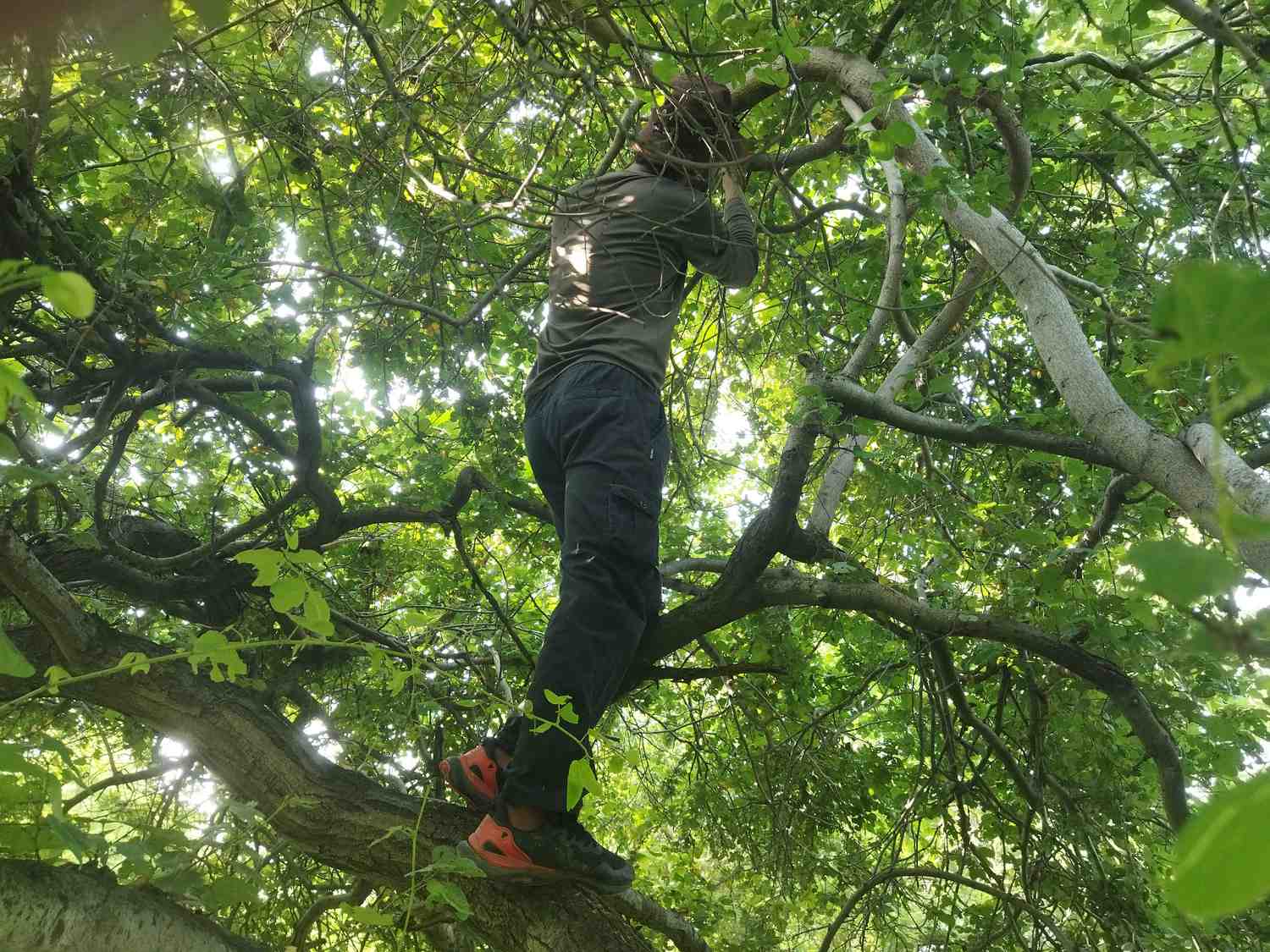
Turning arboreal – Deploying passive acoustic recorders in the field
Another aspect I love is searching for individual identity in bird calls, specifically, in the Jungle Babbler, a cooperatively breeding bird. I began spending days in the field with a parabolic microphone, recording call after call after call. It’s an intimate work. You’re not just collecting data; you’re listening to an individual bird express itself. Over hundreds of recordings, I started noticing things while my machine learning models kept giving me headaches. Somehow, I found it super thrilling. A couple of years into my PhD, I had pivoted again (as I tend to do) picking up something totally new to me. But this strange combination of bioacoustics and machine learning, two completely new realms in my life is something I started enjoying the most. So much to learn, so much to explore, the never-ending ocean of knowledge.
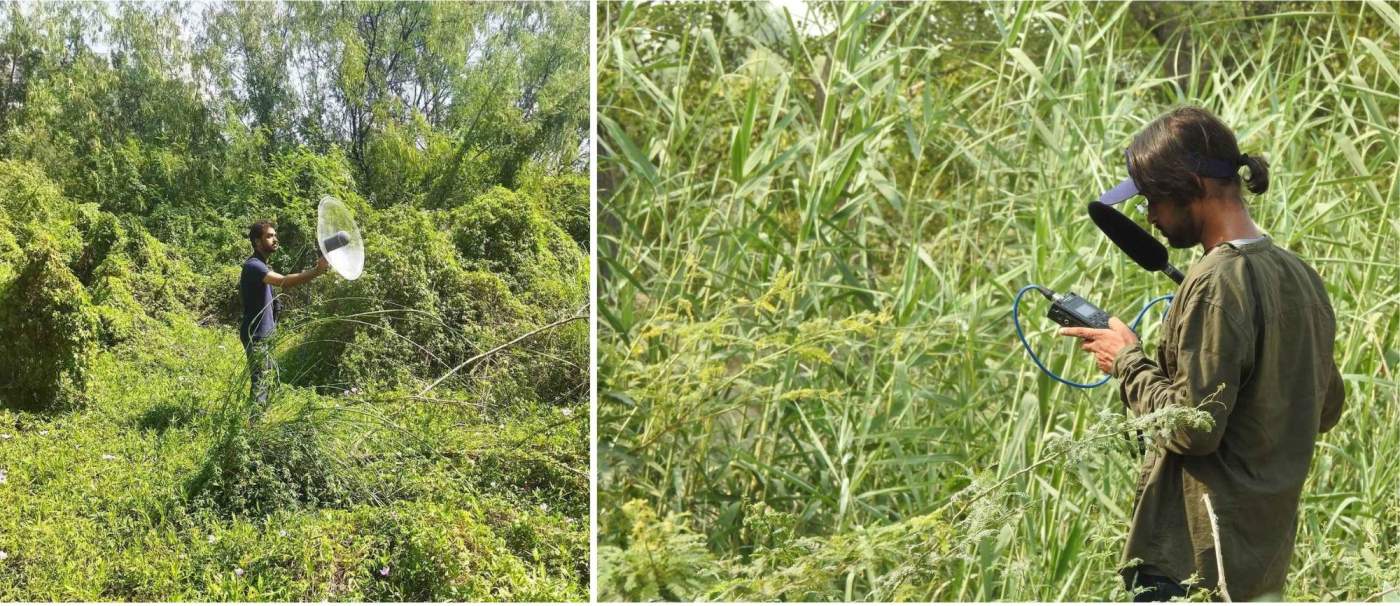 Spot me before I fade (left) – Me in the field recording Jungle Babbler using a parabolic microphone (PC – Aparna Kanwalia); Who finds whom first (right) – Me in the field recording birds using a hand-held recorder (PC – Dr. Yambem Soniya)
One more thing I can think of is passing by knowledge to others…
Last summer, I ran a bioacoustics workshop for our lab members and summer interns. I was standing in front of people who looked at me the way I once looked at Dr. Jain, curious, slightly overwhelmed, unsure if they belonged in this strange intersection of technology and wilderness. And I realised, this is what it means to be a bridge. A physicist teaching biologists machine learning. A birder explaining why the call of an individual matters as much as the species name. Someone who refused field guides in favor of deep observation, now building automated classifiers that could handle millions of observations. The workshops felt like coming full circle, not to where I started (I could never go back to pure physics), but to a place where I could share what I had learned, and the tools I had built. That rigor and reverence aren’t opposites.
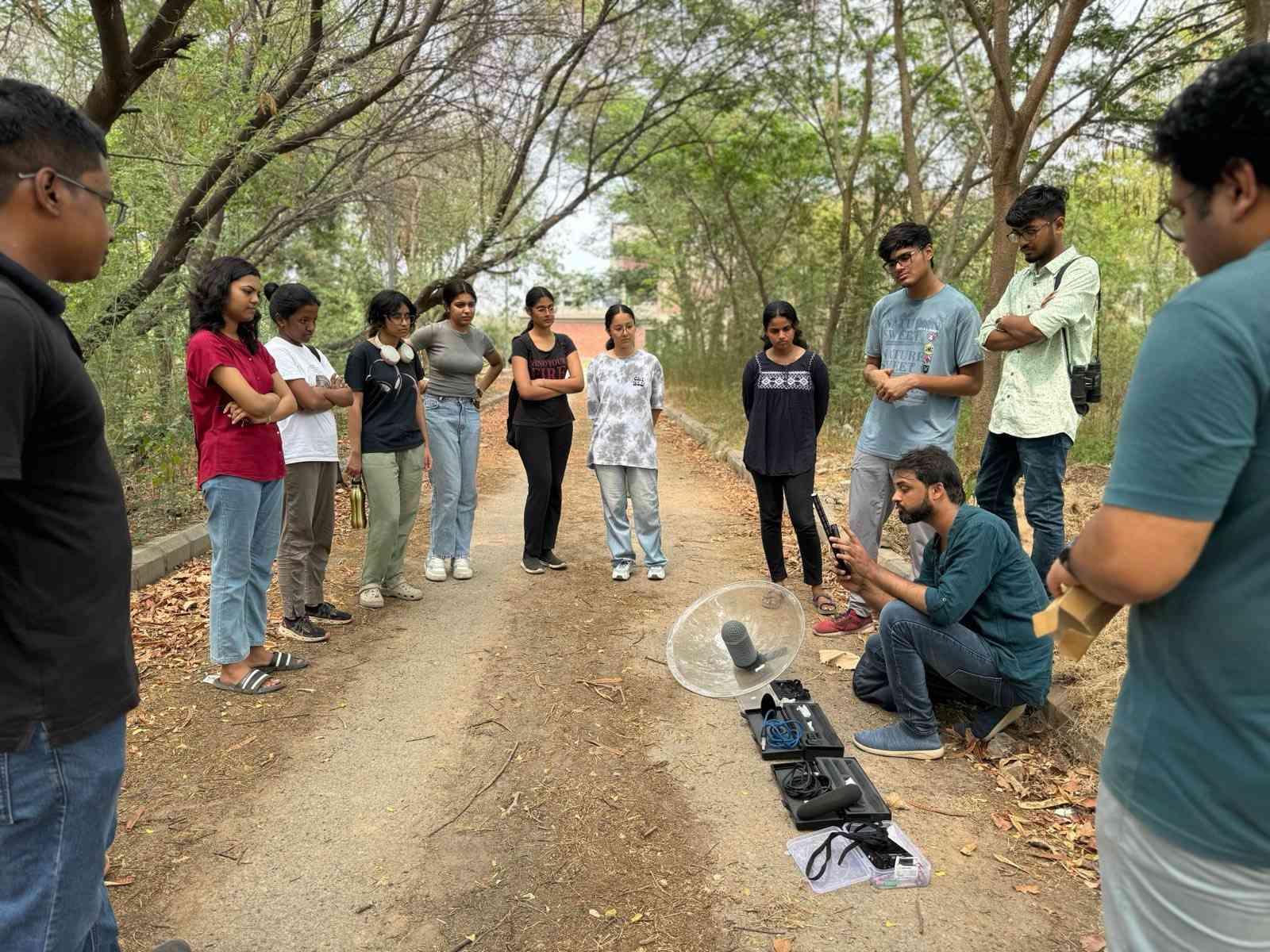
Knowledge Transfer – We are all here to learn. Bioacoustics Workshop being conducted for Summer Interns at BEL, IISERM
Challenges I have faced…
Challenges come in more forms than I can count. Field challenges alone could fill a separate article – recorders stolen, others surrendered to rain or termites, data lost along with them, gruelling 7 km hilly trails twice a week, remote areas with no way out, and the occasional human interference. The technical challenges? Those deserve their own confession entirely. 😉
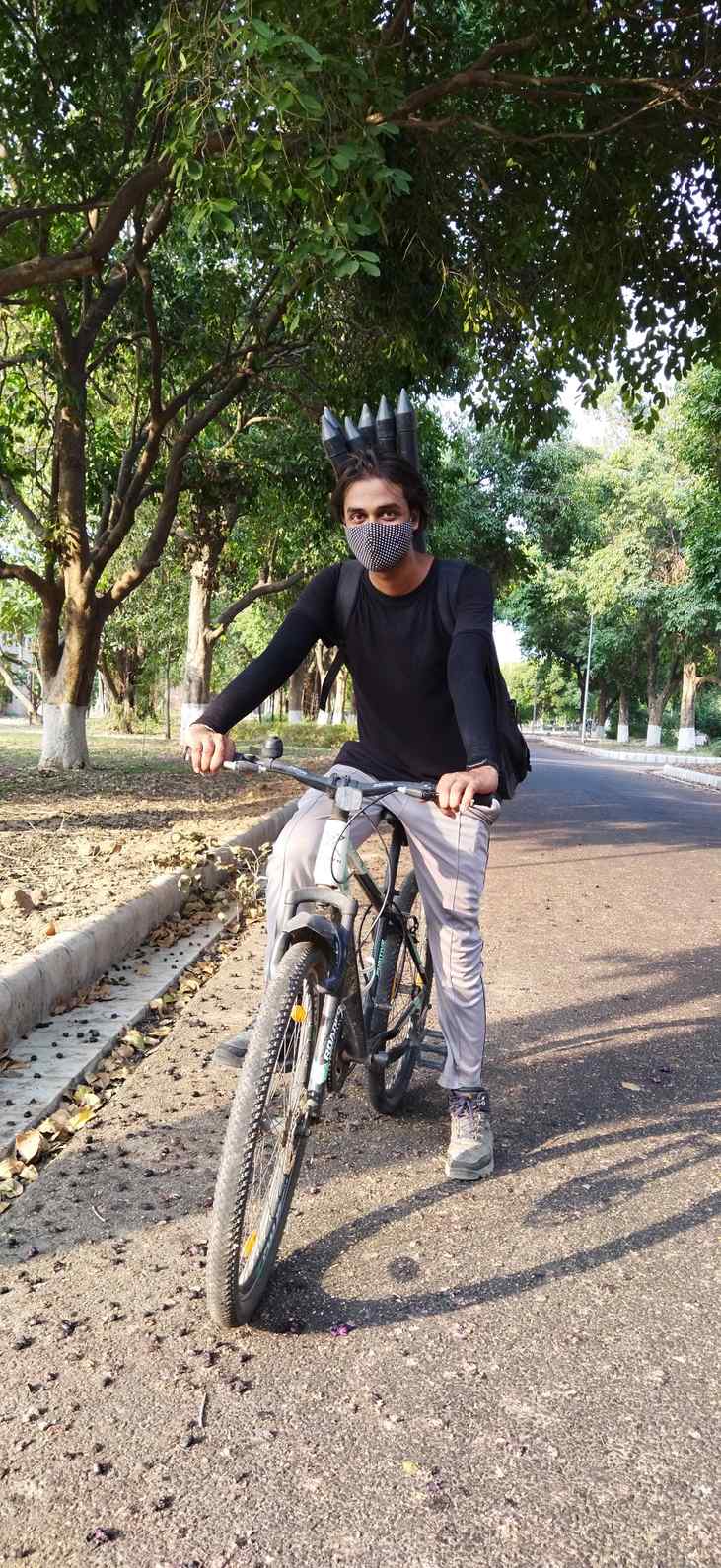 These are not nukes – Just a few Kgs of mistnetting poles that I used to carry to the National Institutes of Pharmaceutical Education and Research (3 km form IISER) for mistnetting (PC – Anway Sarkar)
There’s a moment I haven’t told many people about. I was deploying recorders at a significant height, about 3-4 meters up, when the branch beneath me cracked. The world tilted and I felt the wood give way. In that fraction of a second, I understood what I was willing to risk for this work. I didn’t fall, the branch held, but something inside me shifted. I was no longer a physicist playing ornithology; I was someone who would climb dangerous heights to hear what the forest was saying. Well, I have had muscle tears a couple of times since then, haha, but I have still survived each fall.
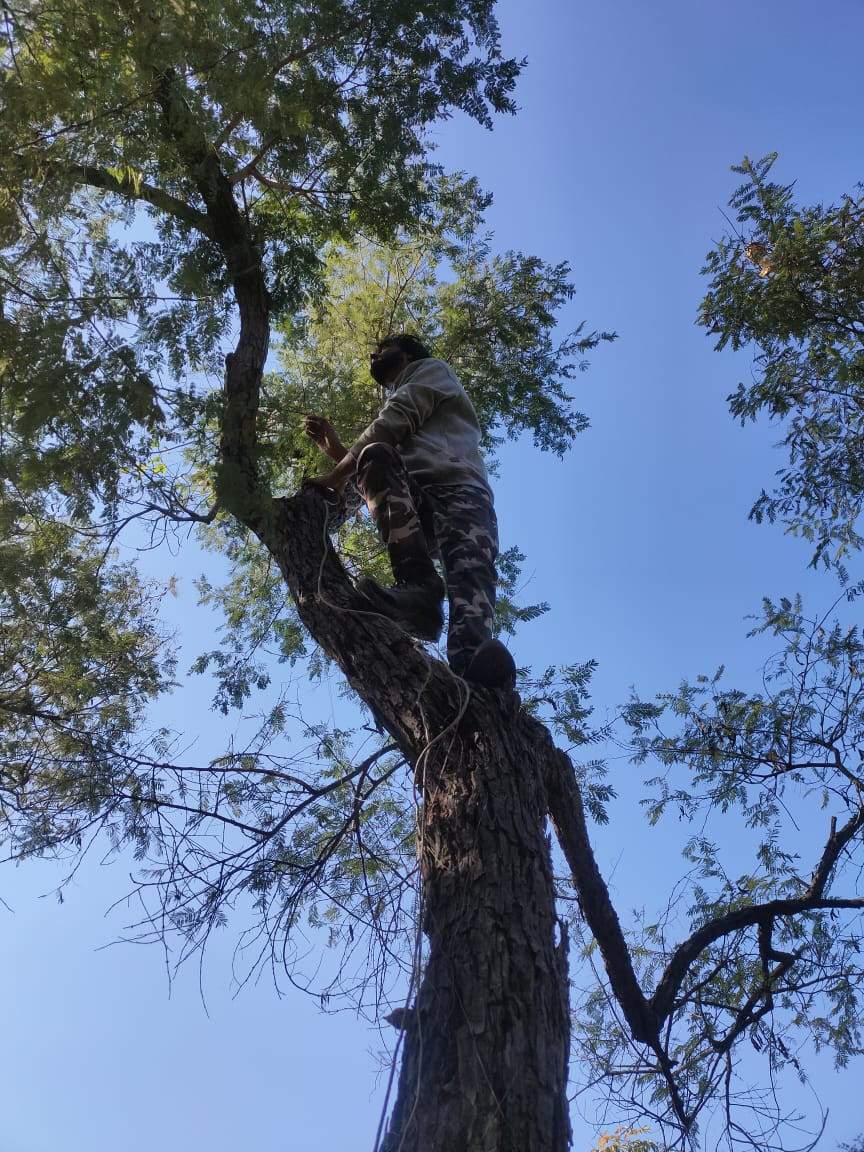 Moments before Disaster (PC – Aryjit Satapathy)
The Imposter Syndrome: Jumping from physics to biology meant walking into labs where everyone had read field guides as children. I felt and sometimes still feel like I’m playing at being a biologist, like someone who learned the language but doesn’t quite own it.
The Academic Skepticism: Not everyone believes that a physicist-poet has anything to contribute to ornithology. Some researchers questioned whether my ML models were “serious science” or just fancy statistics applied to birds. The answer I have realised is both and that’s actually the point.
My advice to young researchers is…
DO:
- Follow what makes you lose track of time. My breakthrough moment wasn’t in a lab, it was watching a bird for four hours and forgetting to eat breakfast. That quality of attention is irreplaceable. Find what summons it in you.
- Build your own field guides. Don’t accept others’ classifications uncritically. Spend time with the phenomenon until you understand why it’s classified that way, then feel free to disagree.
- Embrace your weird combination of skills. The field needs people who don’t fit neatly into existing categories. Your disability of coming from outside traditional ornithology might be your greatest asset.
- Climb the tree. Take the risks. Deploy the equipment. Sleep in the field. Get uncomfortable. The work that matters demands your presence, not just your analysis.
- Find mentors who truly see you. Dr. Jain didn’t just teach me ornithology, she saw that I needed both structure and freedom and she held space for both.
- Stay kind. Help others whenever you can, acknowledge even the smallest efforts, maintain honesty and be a team player.
DON’T:
- Mistake expertise for wisdom. You can know everything about bird taxonomy and miss the actual bird in front of you. Knowledge is useful; presence is sacred.
- Let others’ certainty intimidate you. Some people will insist there’s only one right way to do ornithology. Ignore them. The field advances when people try novel approaches, even failed experiments teach you something.
- Abandon the part of yourself that doesn’t fit. I almost turned my poetry into a secret hobby, something I kept separate from my scientific identity. I should have integrated it earlier. Your full self is your best research tool.
- Confuse career progression with calling. The PhD, the publications, the academic positions are markers, not destinations. What matters is whether your work serves something larger than your own achievement.
- Use others to climb the ladder. Neither create nor accept a toxic work culture.
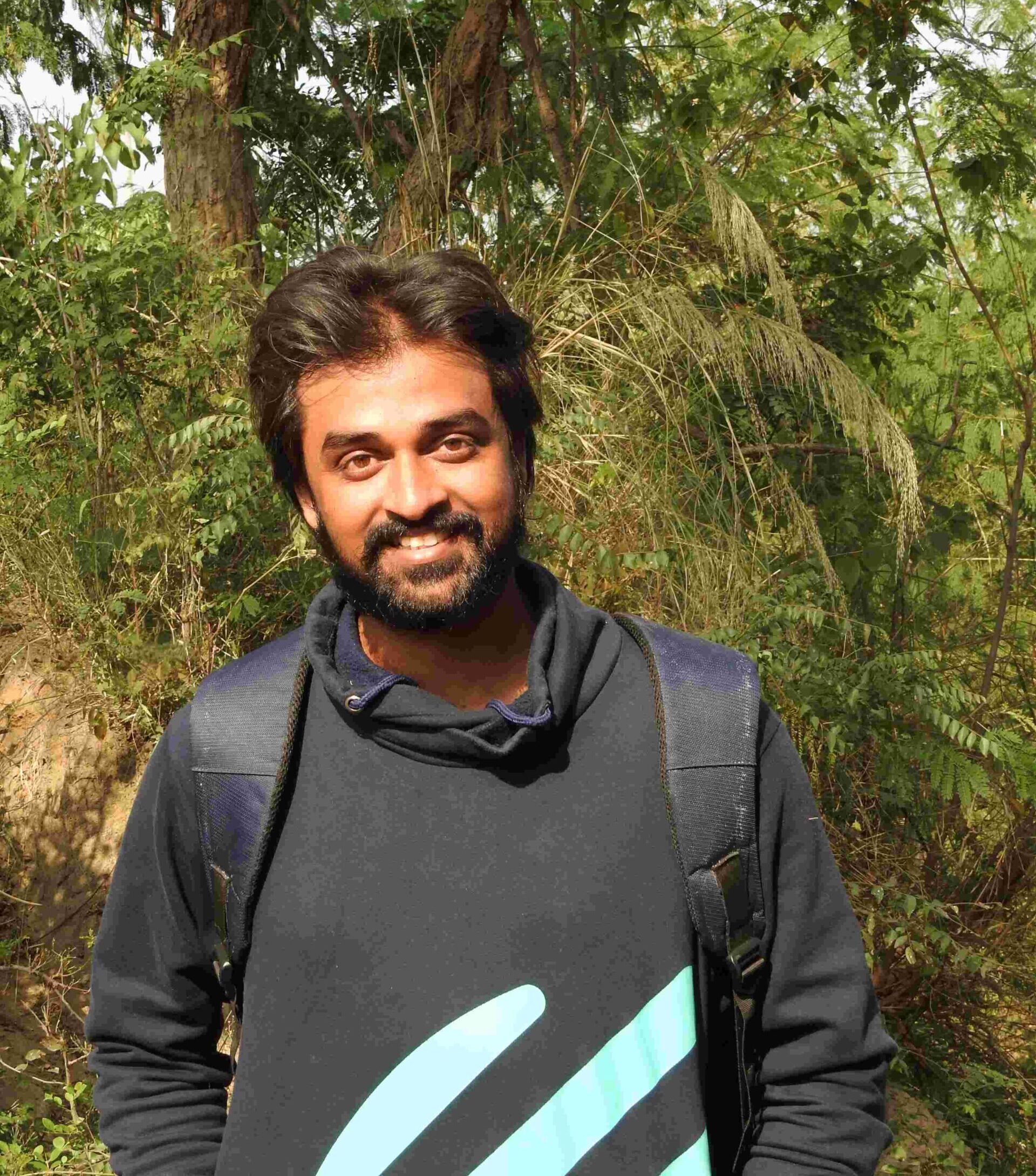
Gaurav Singh
[email protected]
PhD Student,
Behavioural Ecology Lab, IISER Mohali
Scientific Lead,
Darukaa ESG, IIT Bombay
LinkedIn
Twitter/X
Research Interests: Bioacoustics, Acoustic Ecology, AI/ML for Species Identification, Individual Identity, Human-Wildlife conflict mitigation, Biodiversity, Conservation
When not in the field: Writing poetry, sketching, eating, netsurfing, and (occasionally) sleeping.