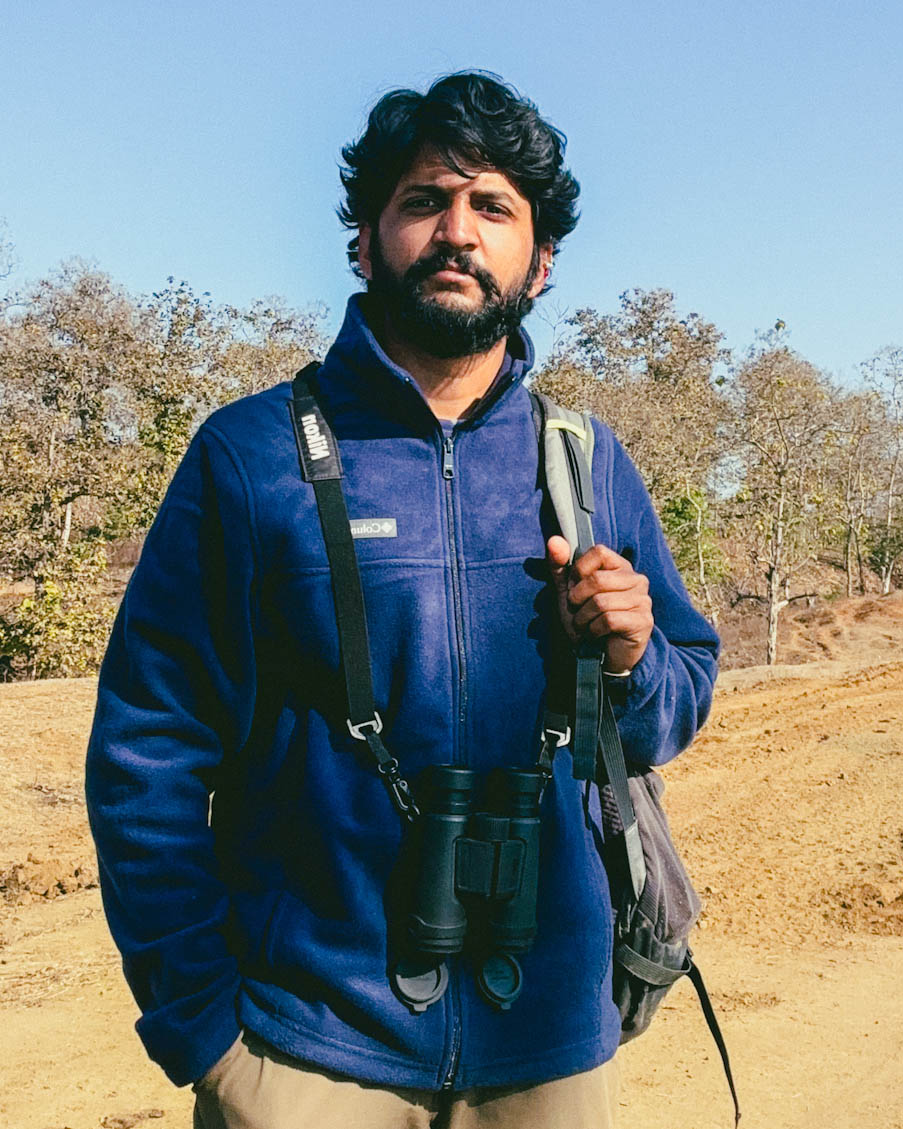
I was fourteen, and I almost didn’t go.
My mom and her friends had organised a day trip somewhere on the outskirts of the city. The kind of outing where the kids are mostly an accessory to the adults’ ‘chai pe charcha’ schedule. I had every intention of staying home, but the owner of the property changed that. “Bring Hrishi along,” he told my mom. “He likes birds, right?”
The man who hosted us had a killer moustache, a broken finger and the unhurried delivery of someone who had watched many city families discover his retirement house. At some point, almost in passing, he mentioned that there were a few dev rais nearby: sacred groves. I’d never heard the term before, and that was enough. My friend Archit and I asked where to find them. He pointed vaguely toward a horizon where two mountains met. “There’s a temple of Waghjai Devi up there,” he said. “The forest around it is the dev rai.”
So, we walked. Two kilometres in the heat, no water bottles, no thought given to the question of whether we’d find our way back. Two curious boys looking for a word they’d just learned.
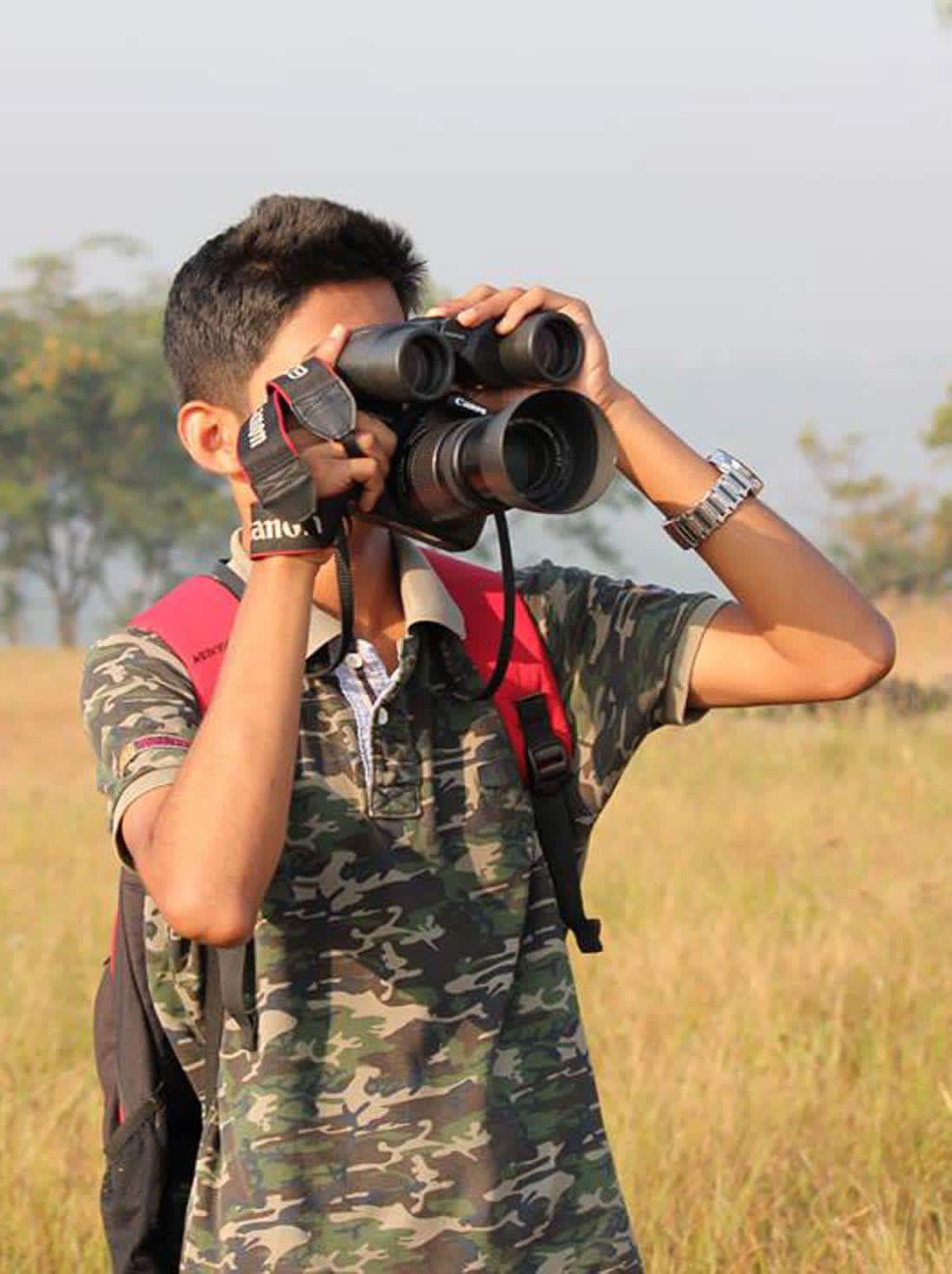 I call this- bird crazed! I’d just finished tenth standard.
The grove, when we found it, didn’t behave the way a forest is supposed to behave at 10 a.m. in the summer. Old-growth canopy doesn’t quieten down at midday; it just shifts registers. We walked under leaves that closed completely overhead, between trunks thick enough to lean a small house against, with lianas whose start and end were nowhere to be found. Within an hour, we’d seen four barking deer, a dozen lifers, and inflorescences I didn’t yet have the vocabulary to name.
Archit and I, with the unwavering confidence of two teenage boys with a good idea, suggested we climb a tree.
He picked one near a clearing and went up about ten feet. I picked one at the edge of a stream. A beautiful spot, with the additional feature that one slip would have dropped me twenty feet into a ditch. I wasn’t thinking about that. We sat with our cameras for nearly an hour, not speaking, listening to the forest do whatever it does when it forgets you’re there.
Then the langurs began alarm-calling.
If you’ve spent any time in Indian forests, you know what that sound rearranges in your chest. Suddenly, the dappled shade of the canopy felt less like dappled shade and more like a thing watching us through the gaps. A large shadow detached itself from the canopy and dropped, in one silent glide, onto a liana about ten feet from my face, at eye level, in the deep understorey shadow where I could only make out a shape. What I saw, what I genuinely saw in those first two seconds, was a human skull sitting on a body that didn’t make sense.
My eyes adjusted.
“BROWN WOOD OWL!” Archit half-screamed from his tree, nearly falling out of it. “BROWN WOOD OWL!”
I raised my camera (a Canon 1200D with a 55-250mm kit, the lens every beginner starts with) and the bird filled the entire frame. I took photos without checking my settings. I’d worry about exposure later; right now, I was busy not breathing. The owl had clearly clocked me, and from its perch ten feet away, it was looking directly back, doing none of the things owls in field guides are supposed to do. Its camouflage was, frankly, embarrassing at this range.
And then it did something I wasn’t ready for.
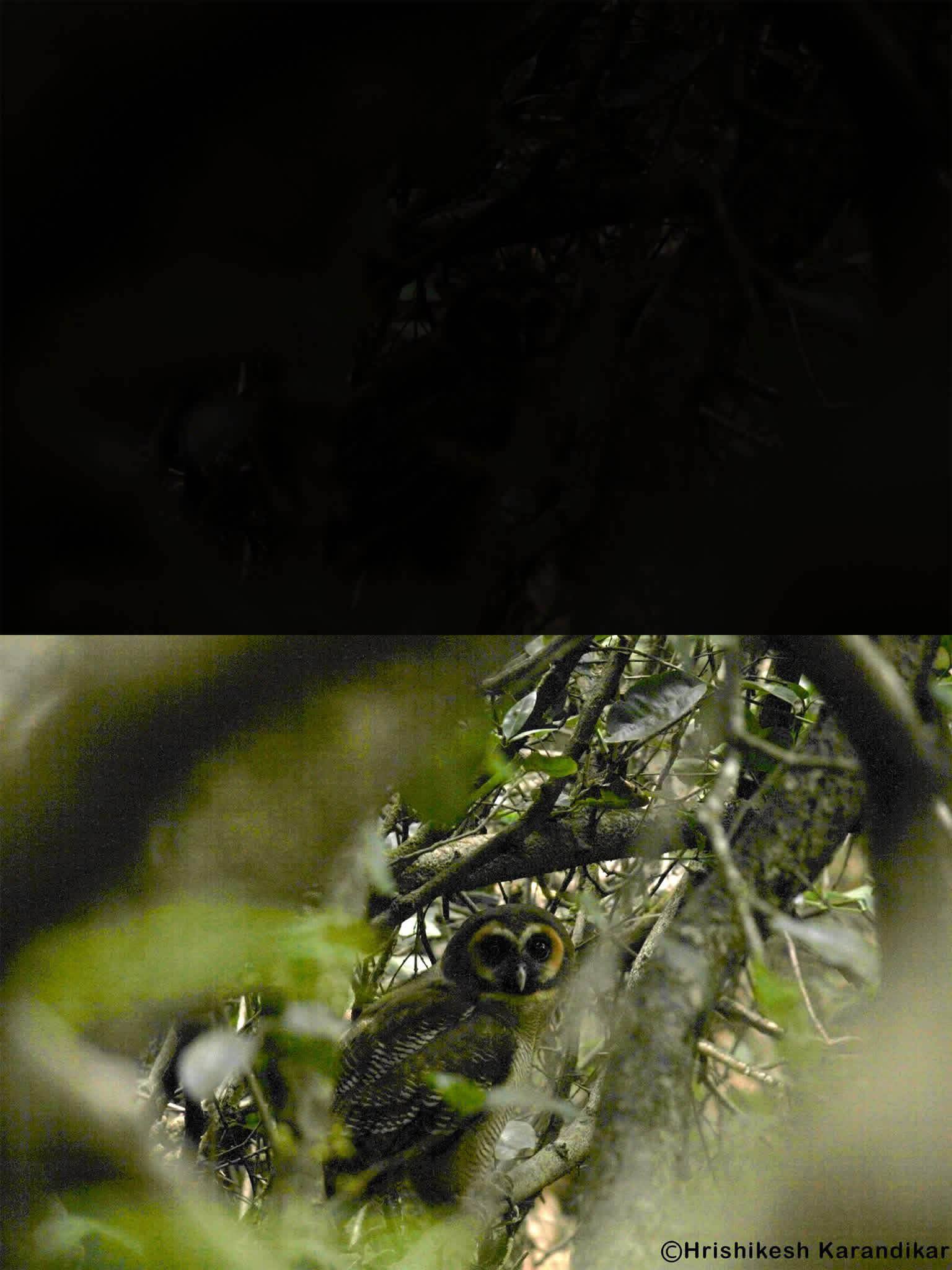 Top- the Brown Wood-Owl photo I shot when I had my encounter.
Bottom- recovered photo. Also from 2014. You can tell how bad I was at editing from this
It opened its wings, leaned forward, and fluffed every feather it had. A full threat display. The skull-head swivelled – left, right, up, down – and the beak began to click. Takk. Takk. Loud enough that the sound carried back through the trees as a small, sharp echo. My skin actually crawled. And then, just as suddenly, the bird lifted off the liana and vanished back into the upper canopy, as if the whole encounter had been hallucinated.
I came down from that tree a different person.
I still have the photograph from that day, badly underexposed, salvaged later in editing. And even in the recovered version, you can see what I saw: a shape in the shadow, looking back. Everything I’ve done with owls since has, in some way, traced back to that liana and that click.
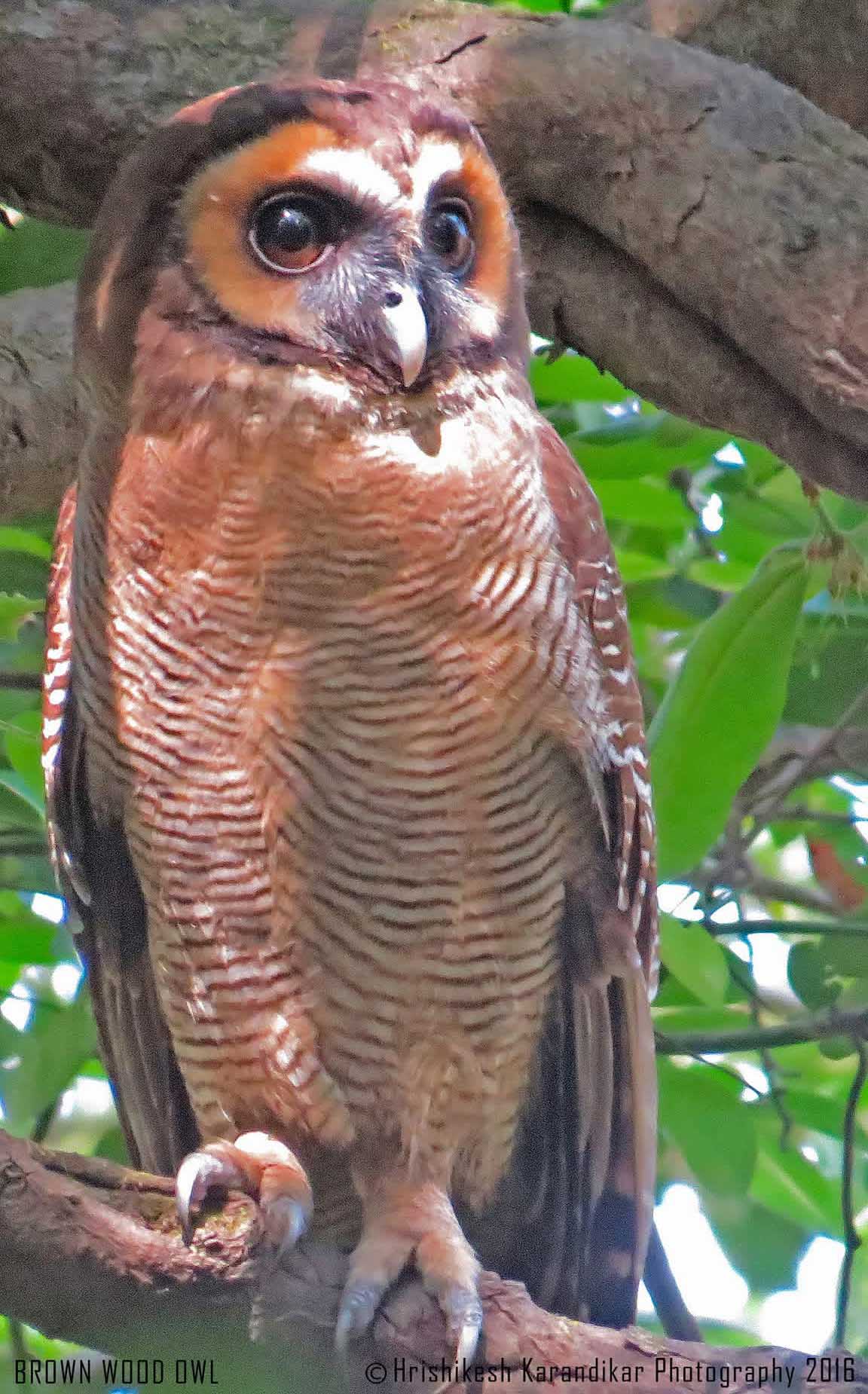 I’ve been visiting the same spot since 2014 and even today I see the Brown Wood-Owl, patiently waiting to be bothered by me after all these years. This is one of the best photos I’ve taken of it.
This is how my love for birds and nature took shape…
I was probably five when I figured out that wildlife documentaries were the best thing on television. Animal Planet, National Geographic, Discovery, BBC– whatever was playing, I’d watch it on loop. Birds were in there somewhere, but they weren’t the main draw. They were background, like leaves. The big cats and the sharks did the work.
The shift happened in eighth standard, and it happened because of a friend with a new camera. He’d just got a point-and-shoot. I don’t remember the model, but you know how it is when one kid in your class shows up with a piece of new tech and the next six months (or weeks) are shaped by it. He came over one afternoon and pulled up his photos: Rose-ringed Parakeet, Indian Gray Hornbill, Purple-rumped Sunbird. I didn’t know any of those names. He knew all of them. Then he told me about a Facebook group called Birds of Pune, where people uploaded photos and other people identified them, and mentioned in passing that there were apparently a lot more birds in our city than crows, pigeons, and sparrows. Of course, I knew that, thanks to the hundreds of hours spent watching documentaries.
I opened Facebook and scrolled through the group for what was probably hours. People were naming birds I’d been walking past my whole life. There was an itch I couldn’t quite explain. I had to know what was actually in my own garden.
So, I started clicking. We had a small Canon at home – a matchbox-sized point-and-shoot, six megapixels, three-times optical zoom, with a macro mode I used for everything I should not have used a macro mode for. Every bird I saw in the backyard went up on the group, an ID came back, and slowly, I stopped needing to ask. My parents took notice of this, and finally, after days of tapashcharya (basically begging with tear-filled eyes and a snotty face), they bought me an Olympus 8×40. I was now a “birder”, or at least I thought I was.
Then came Bird Race, and that’s where I went from a kid who took photos of birds (digiscoping the matchbox camera with my bins) to an actual birder.
For anyone who hasn’t done one, Bird Race was a yearly city-wide event in Pune. Teams go out from 6 a.m. to 6 p.m., log as many bird species as they can, then meet at sundown to compare lists. My friend and his group had done it before. I was the absolute beginner they were dragging along, and they took me through habitats I didn’t know existed inside the city. We ended that day with somewhere between 120 and 130 species. A pair of Mottled Wood-Owl and a Western Marsh Harrier were the two birds I couldn’t stop thinking about that night.
What followed those first couple of years was either beginner’s luck or something stranger. Common Grasshopper Warbler. Short-eared Owl. Red-necked Falcon. Eurasian Hobby. Amur Falcon. Pallid Harrier. Birds that more experienced birders had been chasing for years – most of them on a single hill in the middle of the city. I saw them all.
I can’t point to a single moment where birds became the thing for me. Looking back, it feels less like a decision and more like a current I was already in. The way the right birds keep showing up at the right times, it’s hard not to feel, quietly, that this was always going to happen.
For a long time, I thought tourism was the answer.
I’d done enough volunteering with wildlife camps and birding tours in places like Beyond Wild and Journeys Explore during my Bachelor’s (BSc Zoology from Modern College in Pune) to know I wanted to build a career in the field. The version I could see most clearly was naturalist work (leading tours, learning landscapes) and eventually maybe running my own wildlife tourism setup. I started taking it seriously: leading tours, building experience, planning the business in my head. I even failed six chemistry papers during my bachelor’s degree because of how invested I was in my job.
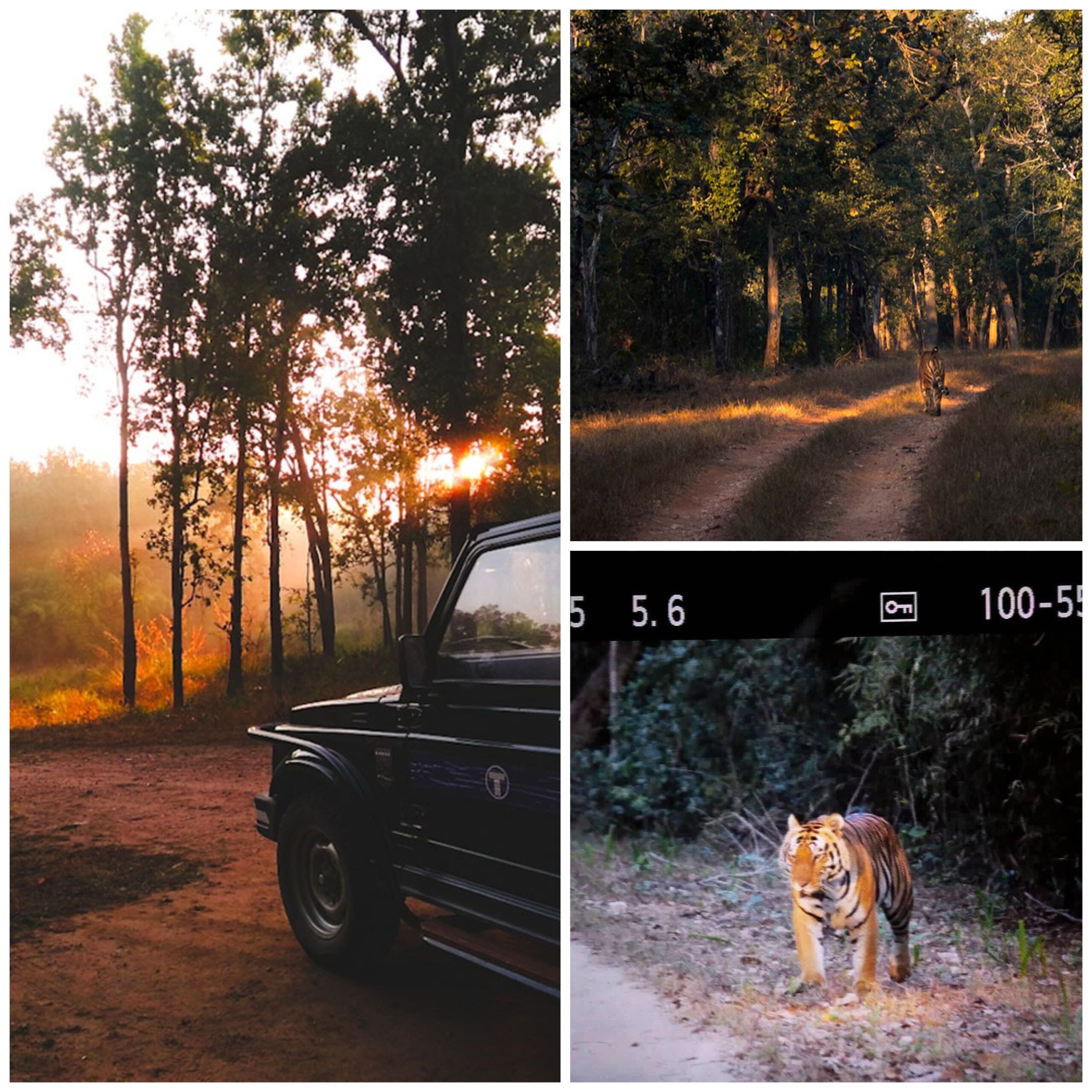 Clockwise from left to right: A snapshot from one of the safari tours I was leading; One of my favourite sightings as a naturalist; This one’s funny. I accidentally formatted my memory card which had photos of my first ever tiger sighting. This is the only photo I have of it- a screenshot of the back of my camera.
The shift came from one conversation.
At Journeys Explore, we had organised a short course for people who wanted to get into wildlife professionally, and one of the speakers was Mr. Girish Punjabi. He talked about his research in the Sahyadris – mapping wildlife corridors, tracking mammals across landscapes that don’t have neat boundaries between “protected” and “unprotected” forest. The way he described the work, and what it could actually do for the places he was studying, hit something in me that I hadn’t realised was already loaded. I think I almost cornered him after the lecture with what I can only describe as several thousand questions.
Until that day, I’d been thinking of researchers as people who did the studying so that people like me could lead the tours. After that conversation, I saw them differently. They were the ones spending the most time in the forest. They were the ones whose decisions actually moved the needle. They got paid to find animals, watch them, learn from them, and then change something on the ground because of what they’d learned. From the outside, that looked like the most extraordinary life available.
I know the other side of it now. The funding stress, the paperwork, the long stretches at a laptop trying to turn field notes into a paper. But, if I had to do it again, I still wouldn’t change a thing.
After I finished my bachelor’s, I stepped away from the naturalist work and applied to do a Master’s in Ecology from Pondicherry University. That was the actual fork in the road. Everything since has been on the other branch.
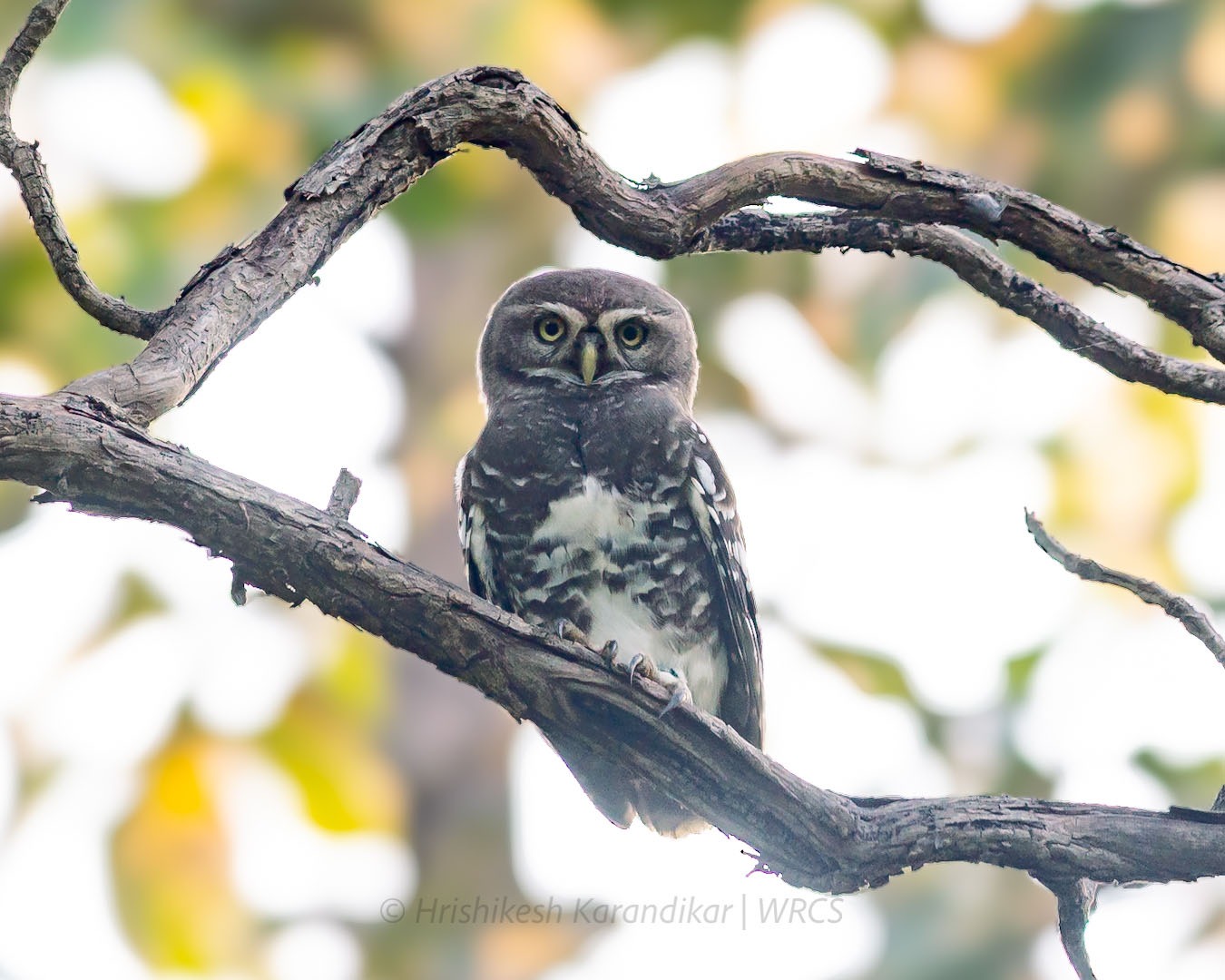 Forest Owlet – my current obsession
Currently, I’m a Research Biologist (Junior Research Fellow) on the Forest Owlet research and conservation project, based in Madhya Pradesh and run by the Wildlife Research and Conservation Society (WRCS), Pune. I’m also a registered PhD scholar at FLAME University, Pune, with Prof. Prasad Pathak as my guide and Dr Prachi Mehta from WRCS, Pune, as my Co-guide.
The Forest Owlet is a story in itself; endemic to central India, listed as endangered, and famously thought to be extinct for over a hundred years before being rediscovered in 1997. Getting to work on this bird every day is, frankly, still slightly absurd to me.
The work is a mix of everything I’d hoped fieldwork would involve. I do GPS-VHF telemetry to track individuals across their home ranges. I run camera traps to monitor nests and breeding success. I observe behaviour, which sounds glamorous and is mostly hours of watching an owl sleep on a branch until your eyes give up. I run awareness sessions for people living in and around Forest Owlet habitat. And our team at WRCS also works closely with the Forest Department on workshops about owl-friendly timber harvesting, translating what the bird actually needs into practices that stakeholders can use on the ground.
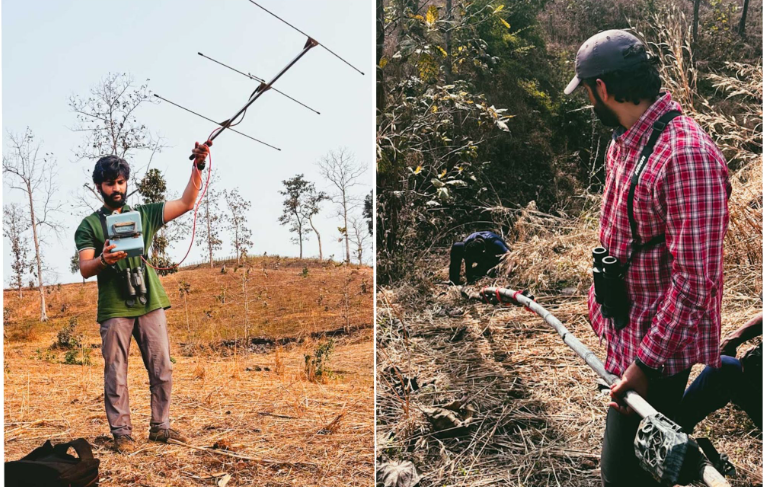 Left to Right: Tracking a tagged Forest Owlet with WRCS in MP, Setting up Camera traps for nest monitoring
It’s the full stack of conservation work, basically. Some days that means walking transects and measuring trees in the heat. Some days it means presenting to a room of foresters. Some days it means staring at an owl through binoculars and waiting for it to do something, anything, while the owl stares back, completely unbothered.
I’m very grateful to WRCS for the opportunity. After all those years of being obsessed with owls, I’ve somehow ended up working on one.
I love what I do because:
I get paid for my hobby. What more could I ask for? (Maybe the pay, but we’ll come back to that.)
If I try to answer this without sounding too ungrateful, what I love most is that this work has taken me to places I would never have visited otherwise. Not the Himalayas or the rainforests, everyone dreams of those. But the simpler, less photographed landscapes where local communities live, and most city-dwellers don’t know exist. The Open Natural Ecosystems (ONEs) of Maharashtra. The wetlands of Ujani. The evergreen valleys of the Koyna River. The dry deciduous forests of Madhya Pradesh, where I’m writing this from a field station with no electricity, 44°C outside, 40°C inside. The list is small for now. I figure I have about forty more years to add to it.
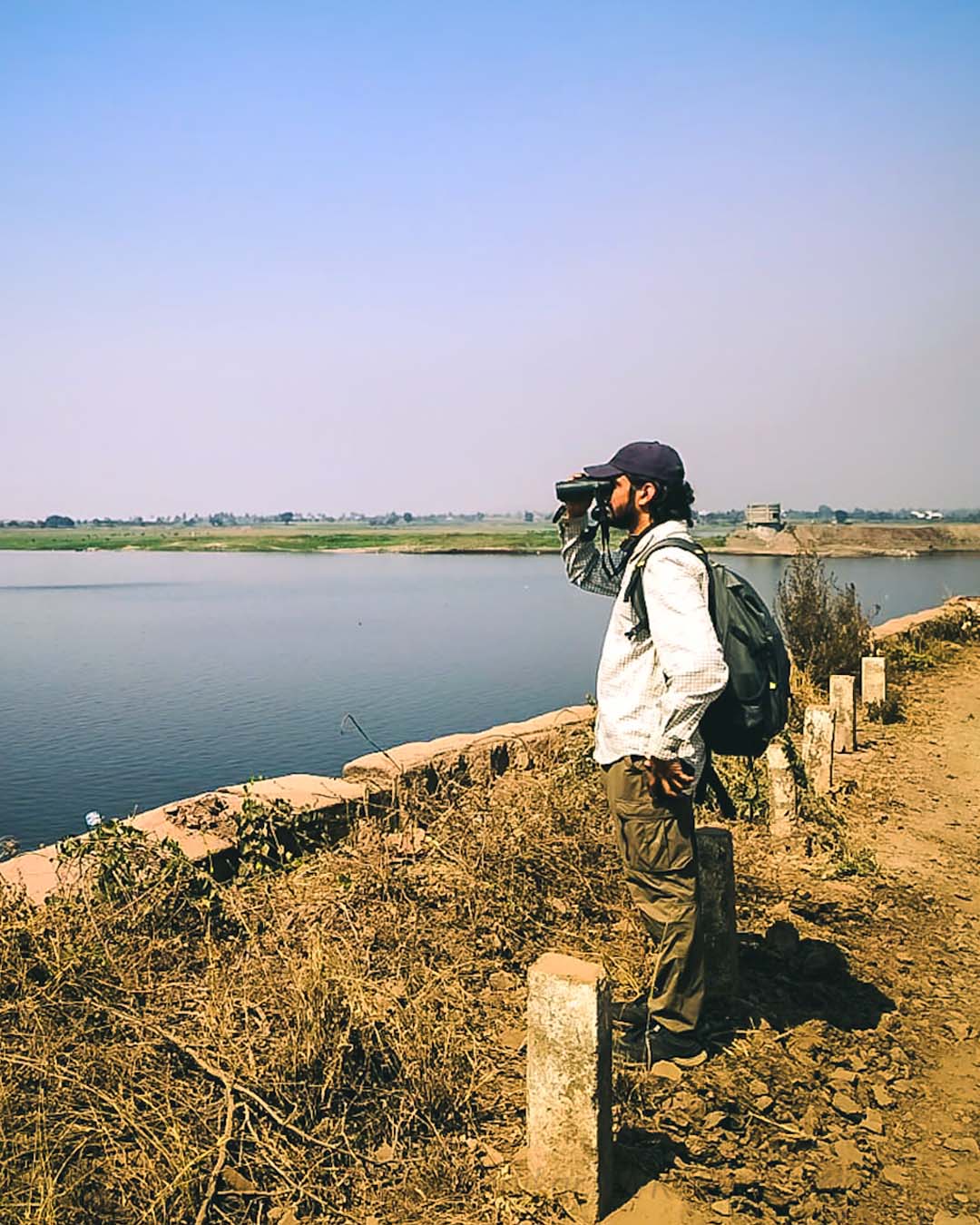 Conducting wetland bird census at Ujani backwaters
Each of these places carries its own people, culture, wildlife, sounds, and stories. The ONEs had wolves, hyenas, and shepherds with their flocks. The evergreen forests had dev rais and a temple that the Pandavas were said to have built. Here in Khandwa, the stories are about the British setting up the Forest Department, tribal conflict, Mahua, and owls. I try to enter every new place as an empty book, a dry sponge- and just absorb whatever the landscape will give me.
The other thing I love is the kind of life skills this work forces you to learn. I thought being an ecologist meant walking around in forests, looking at trees and birds, collecting the odd soil sample, and writing reports. I’ve since learned that it also means knowing how to cook for yourself, wash your own clothes, do basic first aid, fix an electrical board, repair broken plumbing, troubleshoot a car that won’t start, and most importantly, stay sane when you’re alone in the middle of nowhere on a random Sunday evening. I don’t know many other jobs that teach you so many things at once.
Some of the coolest people I know are wildlife biologists, ecologists, and birdwatchers. Few of us will admit it, but we’re all a little bit of a crackpot, and I mean that as a sincere compliment.
I love this job. Maybe the pay could be better, though.
Challenges I have faced…
Field ecology and research in general come with a lot of challenges. What surprised me, though, is that the physical ones haven’t been the hard part. The mental ones have. Maybe I’m just wired to overthink things; I won’t rule it out.
There’s the imposter syndrome, the constant low hum of “you don’t really belong here, and there are a thousand better researchers who’d take this position in a heartbeat.” There’s the anxiety: the pressure to perform well at all times, the worry that something will happen to you on field, the long stretches away from family and people you love. And there’s the slightly strange thing about feeling like an outsider in your own study area, where people stare because you dress differently, your phone is different, you carry binoculars and a notebook, and you look like you don’t belong even when you’re trying to.
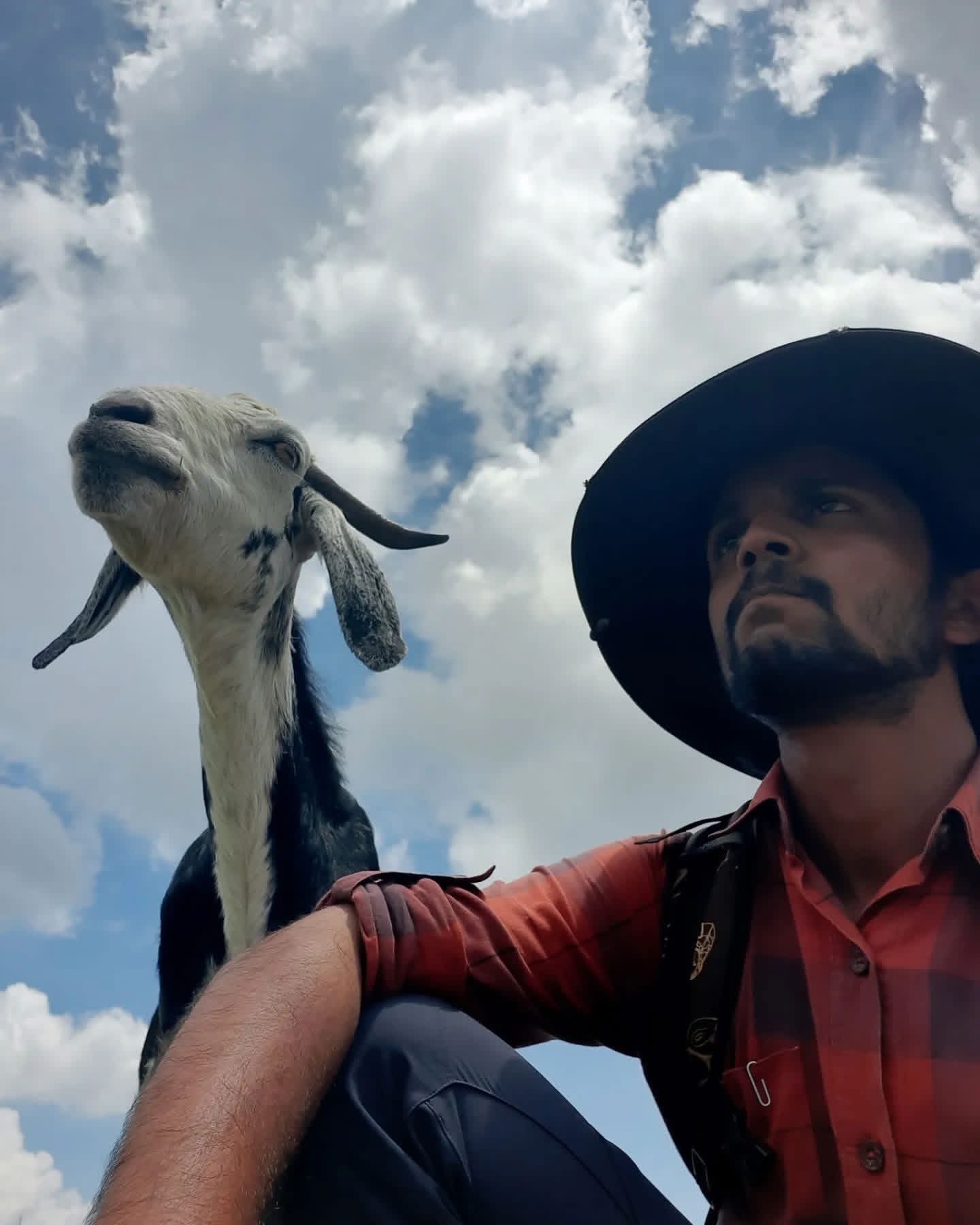 Hanging out with goats and sheep in ONEs of Maharashtra
The last four years since my master’s have shaped me. I’ve gotten stronger, mind and body both. I’m better at managing the stress of working in a field that quietly glorifies overwork.
I actually like that there are challenges now. You never know what’s going to happen on the field. Just being aware that things can happen makes them easier to handle.
But there’s one thing I cannot- rather will not, get over. Reading research papers.
My advice to young researchers is…
Education first. A bachelor’s and master’s in a relevant field will get you on the right track. Courses worth looking at: ecology, environmental science, wildlife biology, climate change and sustainability, biodiversity and conservation, ecology and evolution, and never underestimate good old zoology. Some of these will give you direct field exposure. Others take a longer route to it.
Read. Read constantly. I wish someone had pushed this on me when I was younger. The world of research is changing every week. New methods, new tools, new findings, and the only way to keep pace is by reading, and by getting better at reading. Learn to break down a paper. Take notes. Build the habit.
Create a system. I once looked at a friend’s Google Drive (Saumitra, you know who you are) and saw documents and spreadsheets for every paper he’d read, every project he’d done or was doing, every funding agency relevant to his field, every publication and its current stage of submission. I genuinely wondered if his grocery list was in there too. Jokes aside, that taught me how valuable it is to have one organised place where everything lives. Build yourself a second brain. Think of it as Zotero, but for your entire research life. I am still in the process of building one for myself.
Now, briefly, what not to do.
First: never, even if you’re being offered the chance to work on the Andean Condor, work for free. Especially after your master’s. The industry will love to hire you for the experience alone, and will tell you that the exposure is worth more than a cheque. It is not. There are enough opportunities in India and elsewhere that will both pay you and give you the experience you need. (A related frustration- the industry also wants to hire people fresh out of a master’s who also have one or two years of experience. I don’t fully understand how anyone is supposed to satisfy that brief, and if I could change one thing about this field, it would be this.)
Second (and I’m phrasing this carefully because I think it gets glossed over too often): don’t be greedy, unethical, or desperate with your data collection. Respect your protocols, even when the deadline is tight. Respect your study species, even when one rule-bend would give you the photograph or the sample you’ve been chasing. Don’t pad your checklists. Don’t quietly drop the data points that don’t fit your hypothesis. Publication pressure is real. So is the bird.
Third: don’t be shy. The field in India is slowly growing, and if you want to stand out, you need to put yourself out there. Be bold. Email the people you want to work with. Show up where they show up. Make connections shamelessly. Mentors, collaborators, and opportunities don’t usually find you sitting at home.
And then, my actual number one piece of advice: If you don’t like birds, fieldwork, trekking, walking long distances, standing for hours, going to remote places, meeting new people, giving yourself a constant intellectual workout, and putting in years of effort only to find your research locked behind a paywall you’ll have to pay to access… don’t come to this field. But if after reading all of that, you’re still in, then welcome. Send me an email. Let’s talk about birds!
Hrishikesh (Hrishi) Karandikar
[email protected]
PhD Student, Department of Physical and Natural Sciences, FLAME University, Pune, India
Research Biologist, WRCS, Pune
Instagram | Substack
Watching your journey from a curious child fascinated by birds and nature, to becoming a researcher student contributing to wildlife conservation has been a matter of great pride for our family. May your passion continue to guide you towards meaningful discoveries and impactful conservation work that creates milestones for the global society.
Blessings and best wishes !.
We shall be always with you to support and motivate from behind the scene in your ongoing and future endeavours.. !
Intresting journey as a curious student to phd researcher.. You are so strong and such a kind person. Spread your knowledge and help the people around you.. keep up the good work you are doing.I am proud of you as a parent . Sky is the limit for you. Be ready to get so many amazing , chalenging experiences in your carrier ahead.. Best wishes and Blessings to you…