
During the early years of my doctoral research, I accompanied my supervisor, Prof. Bhoj K. Acharya, for evening bird surveys in forest patches surrounding agropastoral landscapes of the northern part of Sikkim Himalaya. As dusk approached and bird activity gradually declined, I managed to photograph a bird quietly moving through the forest canopy. When I showed the image to my supervisor, he informed me that it was a shy and locally rare species- the Eurasian Jay (Garrulus glandarius bispecularis) and congratulated me for successfully spotting and photographing it. That brief moment of recognition significantly boosted my confidence and enthusiasm for field ornithology and remains a memorable experience that strengthened my commitment to studying birds in Himalayan socio-ecological landscapes.
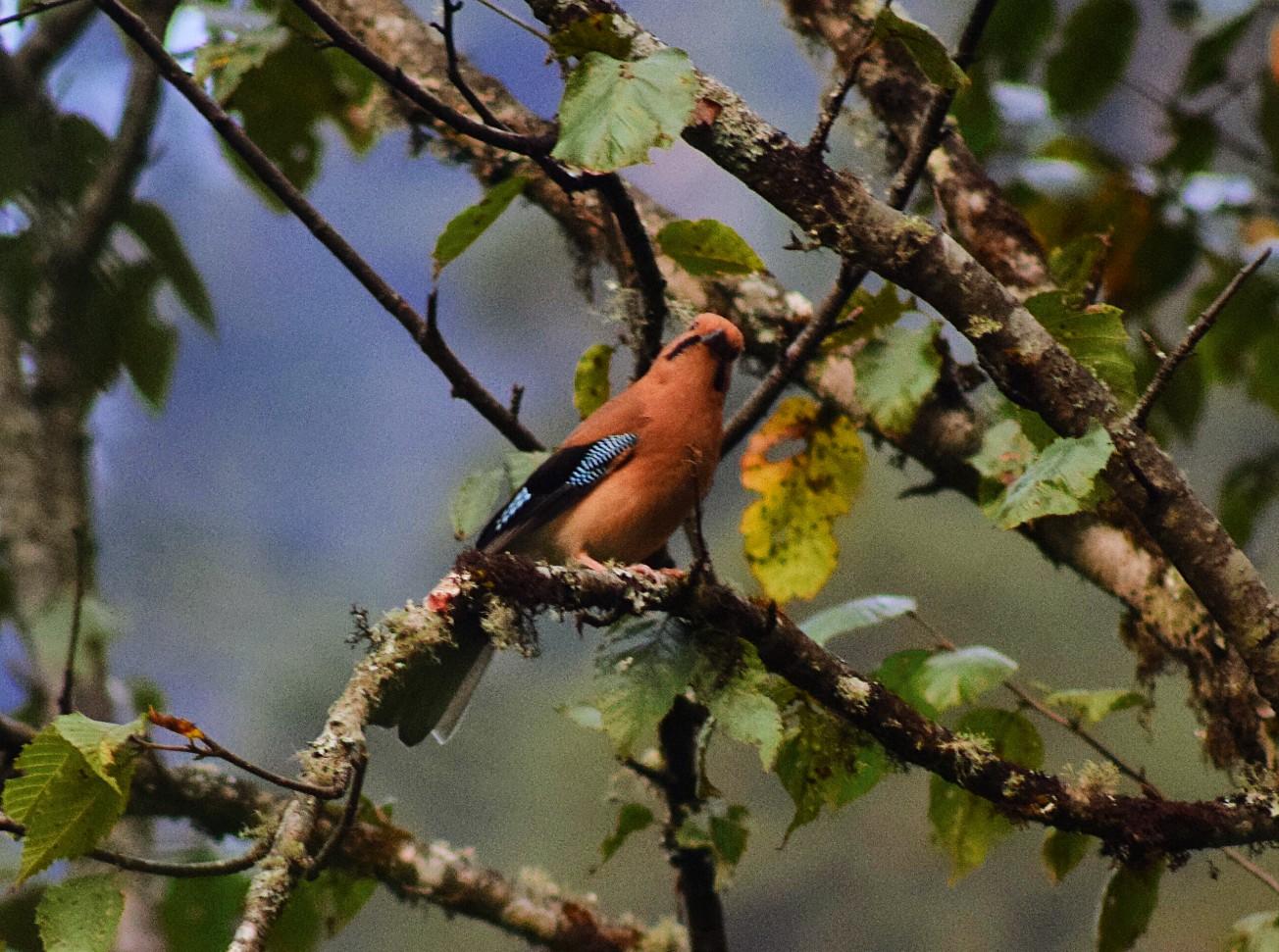 Eurasian Jay photographed during the evening survey in North Sikkim Himalaya
This is how my love for birds and nature took shape…
My earliest memories of birds are deeply personal and rooted in my childhood. My father used to lovingly tease me about the way the back of my hairline extended to the left and right, resembling the deeply forked tail of the “Chibey” (the Nepali name for the Drongo). As a child, I became fascinated by how closely my hair pattern mirrored the Drongo’s distinctive tail shape, and soon I began paying special attention to these birds whenever I saw them.
Around our home stood tall areca nut trees, and every year, Baya Weavers would return to weave their intricate nests on their fronds. My father would show me these nests and watching the birds weave such elaborate structures sparked a quiet curiosity in me—an early sense of wonder that would later define my life’s work.
Many years later, in 2016, during my M.Sc. days, this childhood fascination found an academic direction when I participated in the Great Backyard Bird Count (GBBC) organized by the Department of Zoology, Sikkim University under the guidance of Prof. Bhoj K. Acharya. That experience marked a turning point and it transformed my childhood admiration for birds into a scientific pursuit and introduced me to the world of ornithological research. Prof. Acharya later became my Ph.D. supervisor and continues to be a major source of inspiration.
Following my postgraduate studies in Zoology at Sikkim University, I enrolled in a Ph.D. program at the same university in 2017, focusing on the taxonomic and functional diversity of birds and their biocontrol roles in traditional agricultural systems of the Darjeeling-Sikkim Himalaya. My research examined how traditional systems such as large cardamom agroforestry, farm-based agroforestry, tea cultivation, terrace rice cultivation, and agropastoral systems support avian biodiversity and associated ecosystem services. A major component of my work involved seasonal bird monitoring, functional trait analysis, and experimental bird-exclosure studies to quantify natural pest-control services in tea plantations. This work was grounded in landscape ecology, agroecology, and conservation biology, aiming to bridge biodiversity conservation with sustainable mountain agriculture.
Between 2018 and 2021, I also served as a Junior Research Fellow and later as a Senior Research Fellow under the National Mission on Himalayan Studies (NMHS) funded project titled “Key ecosystem services and biodiversity components in the socio-ecological landscape of Darjeeling-Sikkim Himalaya”. During this period, I was actively involved in designing field protocols, conducting avifaunal surveys, preparing technical reports, organizing stakeholder consultations, and engaging with forest officials, NGOs, and policymakers.
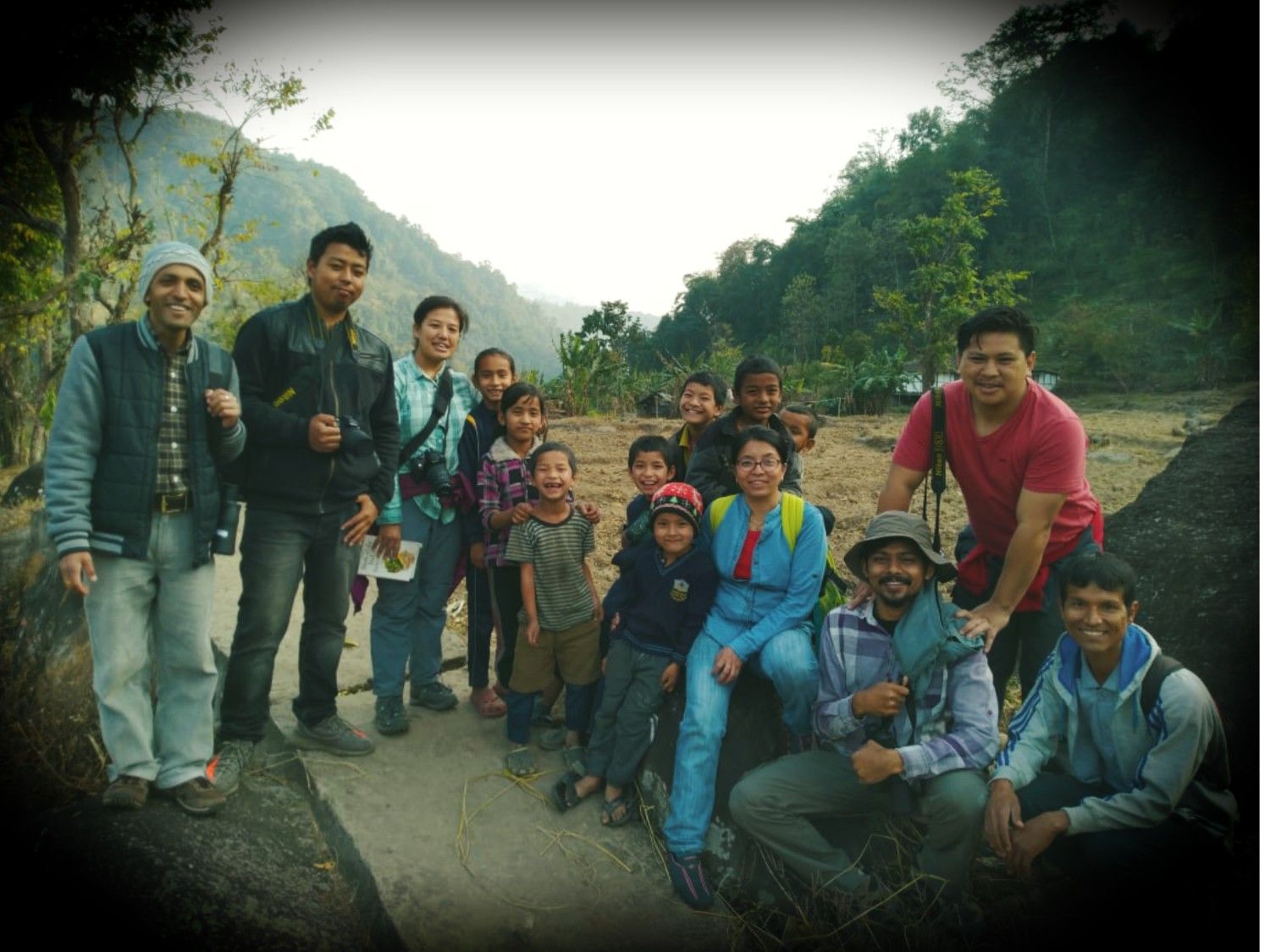 Field team during biodiversity surveys in the Darjeeling Himalaya as part of the NMHS-funded project (2018-2021) (Photo: Sonam W. Bhutia)
My long-term research (2016-present) has consistently focused on birds as ecological indicators, exploring how their diversity, distribution, and functional roles respond to habitat structure, elevation gradients, and land-use changes. I have also had the opportunity to contribute to citizen science initiatives such as the Great Backyard Bird Count and the Asian Waterbird Census, while actively engaging in biodiversity outreach and community-based conservation programs across Sikkim and Darjeeling Himalaya.
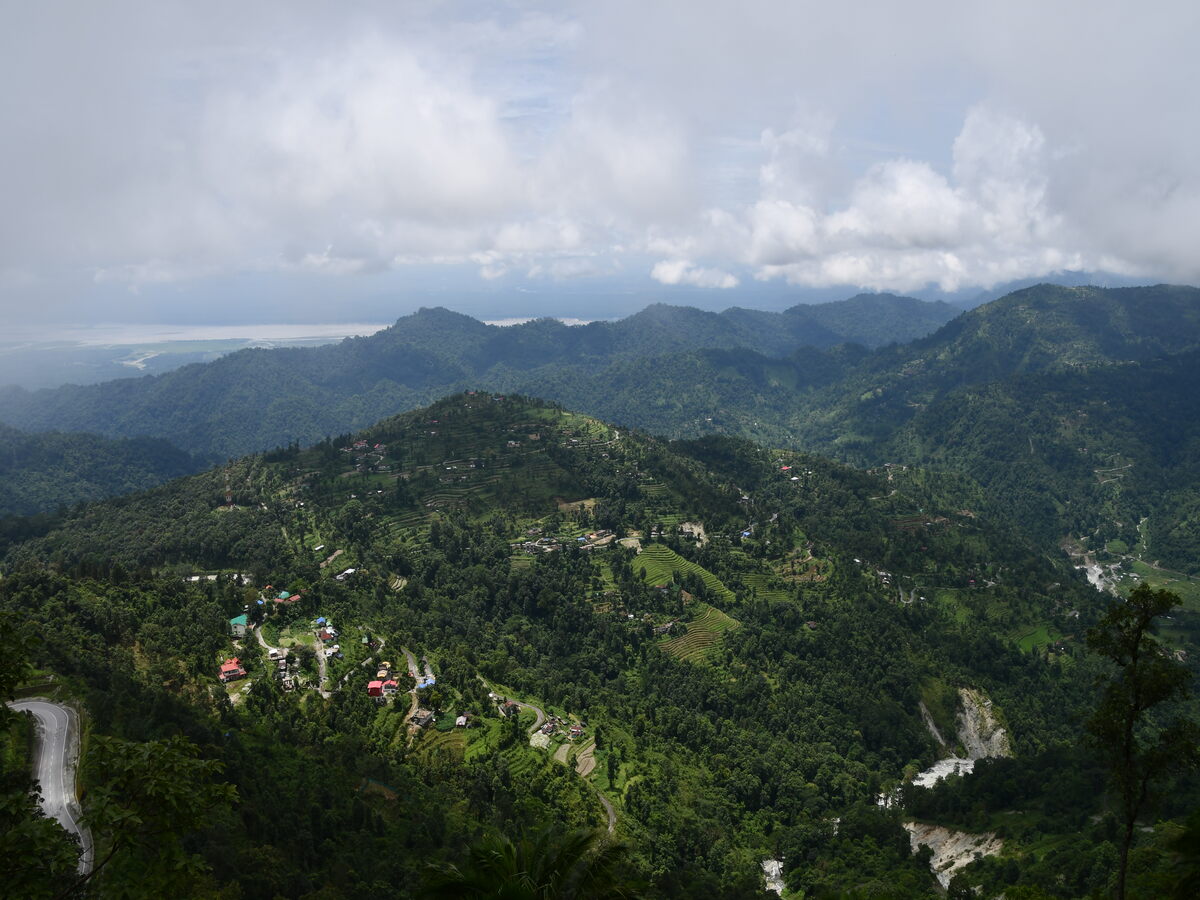 Traditional agroforestry – forest mosaic of the Eastern Himalaya, illustrating the socio-ecological landscapes central to my doctoral and ongoing research
I am currently working as a Research Associate under the NMHS-funded collaborative project titled “From Forests to Farms: Utilizing Sustainable Agroforestry to Enhance Resilience to Climate Change Impacts and Promote Biodiversity Conservation in the Sikkim-Darjeeling Himalaya”, jointly implemented by the Department of Zoology, Sikkim University and Ashoka Trust for Research in Ecology and the Environment (ATREE). My role involves designing biodiversity assessment frameworks, assisting the young Junior Research Fellows in conducting avifaunal and habitat samplings across traditional agroforestry systems, coordinating field teams, analyzing ecological data, and contributing to technical reports and scientific publications. I am also involved in evaluating agroforestry systems as nature-based climate solutions and supporting capacity-building initiatives with local farming communities to integrate biodiversity conservation and climate resilience into traditional land-use practices.
I love what I do because…
What I love most about my work is that it allows me to witness, document, and interpret the subtle relationships between birds, landscapes, and people. I deeply enjoy being in the field: walking through forests, farms, and mountain villages, exploring new places, and experiencing the seasonal rhythms of these landscapes. Fieldwork offers moments of quiet discovery: early morning bird calls echoing through valleys, mixed-species flocks moving through agroforestry transects, and the arrival of migratory species that constantly remind me why ecological research matters.
Equally fulfilling is the opportunity to engage with local communities, farmers, and students; learning from their traditional ecological knowledge and sharing scientific insights about birds and their ecological roles. These interactions enrich my understanding of socio-ecological systems and help build trust and awareness around biodiversity conservation. Knowing that birds function both as indicators of ecosystem health and as providers of ecosystem services such as natural pest control gives me a sense of purpose that goes far beyond academia.
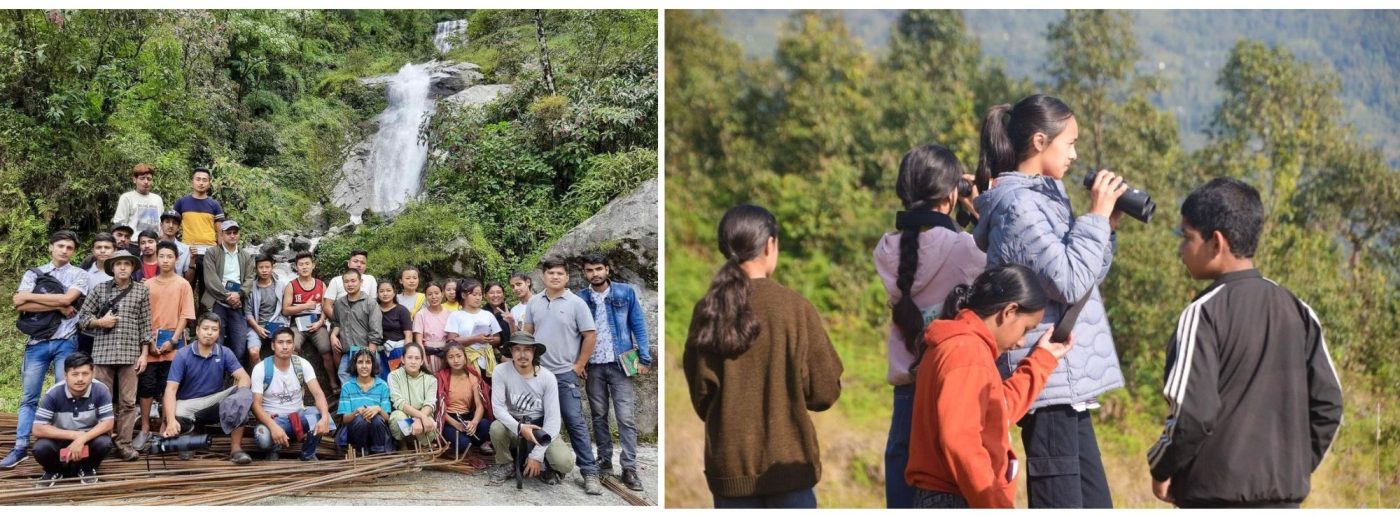 Engaging local communities and students during bird awareness and citizen science outreach programme in Sikkim-Darjeeling Himalaya (Photo: Pawan Rai; Bishal Thakuri)
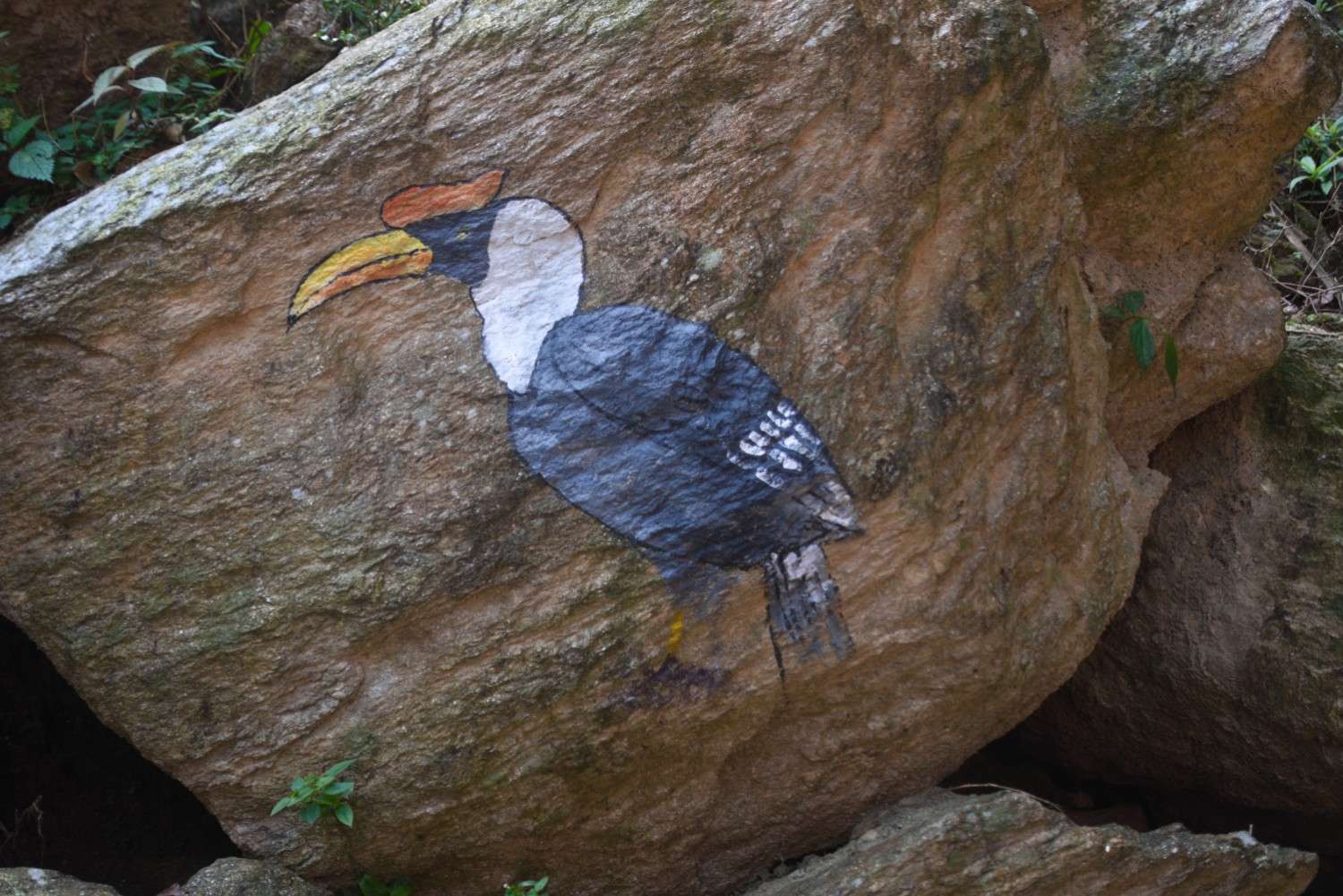 Community-painted Hornbill artwork reflecting local conservation awareness in the Pemling, Kalimpong
Challenges I have faced…
Working in mountainous and human-dominated landscapes has presented several practical and scientific challenges. Reaching remote field sites often requires long travel, steep treks, and adaptation to unpredictable weather, which can limit sampling windows and affect data consistency. In addition, many traditional agroforestry systems are highly heterogeneous, making it methodologically challenging to design standardized sampling protocols that remain statistically robust. Managing large multi-season datasets, addressing uneven sampling efforts, and applying advanced ecological models have required continuous learning and refinement of analytical approaches. Beyond field and analytical challenges, securing sustained funding, coordinating with multiple stakeholders, and maintaining long-term monitoring programs in resource-limited settings have been persistent difficulties.
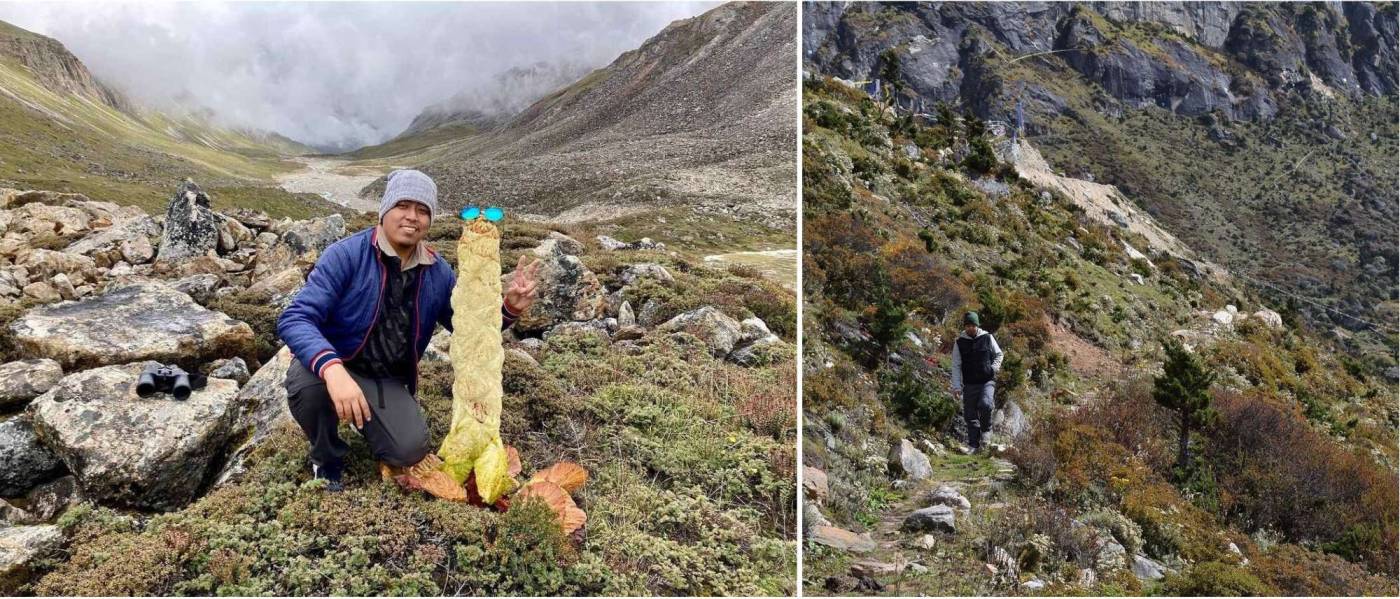 Traversing alpine landscapes during avifaunal samplings in the high-altitude Himalaya (Photo: Roshan Tamang)
My advice to young researchers is…
Young researchers should first invest time in developing strong foundations in natural history: learning to observe, identify, and understand species in their ecological context. At the same time, it is equally important to build quantitative skills and become comfortable with statistical analyses and scientific writing. One should not rush into publishing without robust data, thoughtful interpretation, and ethical field practices. Field ecology requires patience, physical endurance, and respect for both wildlife and local communities. I would also encourage young ornithologists to actively engage in citizen science, collaborative research networks, and interdisciplinary learning, as these experiences broaden perspectives and improve research quality. Most importantly, remain curious, be honest in your science, and stay resilient in the face of setbacks.
Dr. Bishal Thakuri
[email protected]
Research Associate
Department of Zoology, Sikkim University, India
ResearchGate
Instagram
Thank you for sharing your experience…nice one brother..
Inspiring!