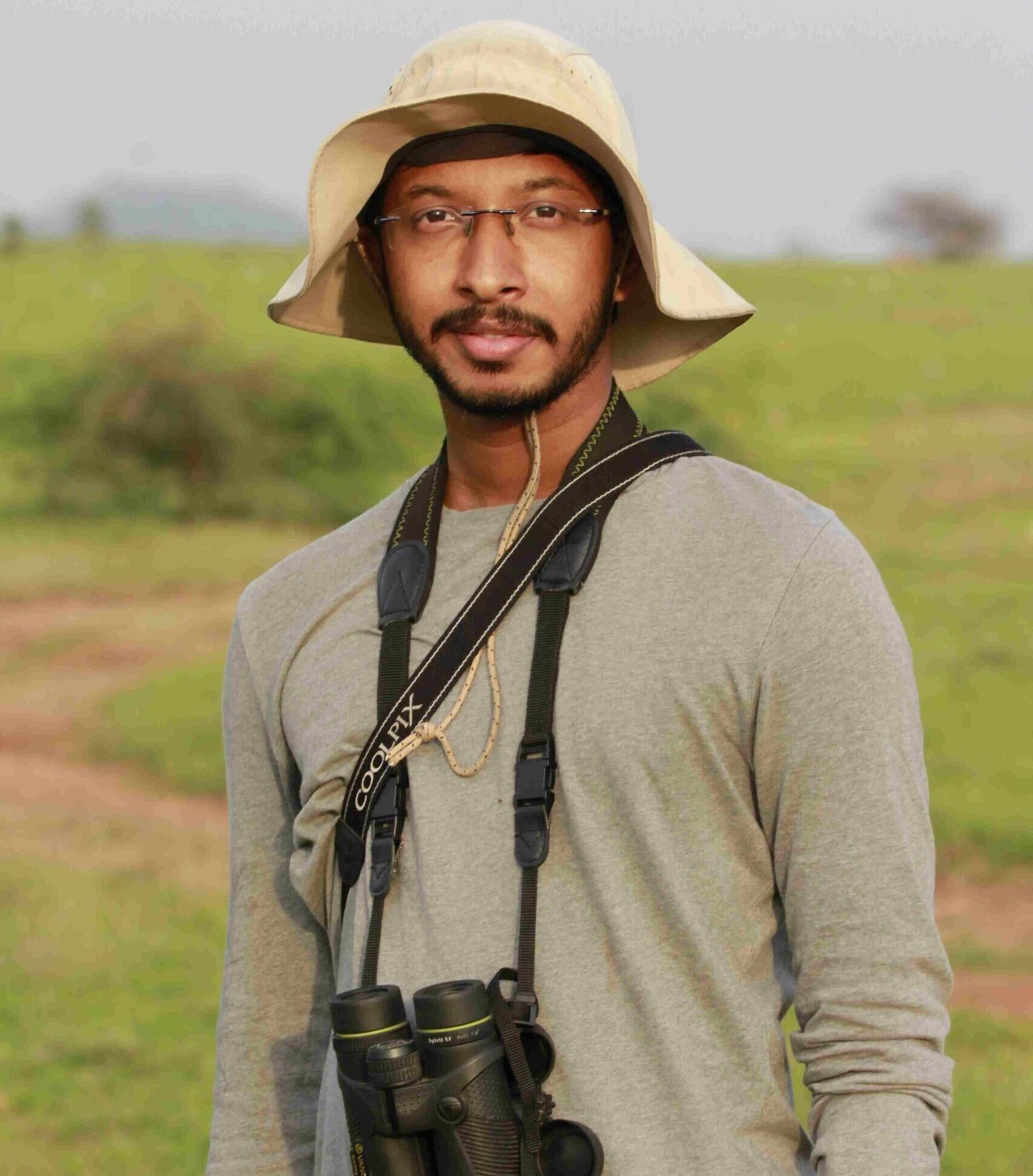
It was late in the evening at one of the watch towers at Velavadar National Park in Gujarat. Known to harbour the largest roost of Harriers in the world, Dr. Roger Clarke recorded around 3000 individuals roosting here in the 1990s. Dr. T Ganesh, Prashanth, and I were stationed to count the Harriers coming to the roost. At around 4:30 pm, there were already a few individuals in the grassland, some of them foraging, showing their typical behaviour of flying close to the ground, somersaulting, and diving into the grass to catch their favourite meal: grasshoppers. As the sunlight faded, numerous Harriers started flying into the park from the cropland-grassland mosaics in the west and south. It became challenging to count them, and one of us had to keep calling out – “1 Pallid Harrier male, 1 Monty (a diminutive we commonly use for the Montagu’s Harrier) female, and so on. As the evening light faded to its last glimmer, the Harriers took off into the air near their roosting area and started circling synchronously, 500-600 of them! It is a spectacle that can only be seen at Velavadar. “Milling behaviour,” as it is termed, is a common behaviour shown by Harriers just before they roost in the grass. I was excited, as after working on Harriers for 3 years as part of my PhD work, this was my first visit to Velavadar, and it was indeed an unforgettable sight!
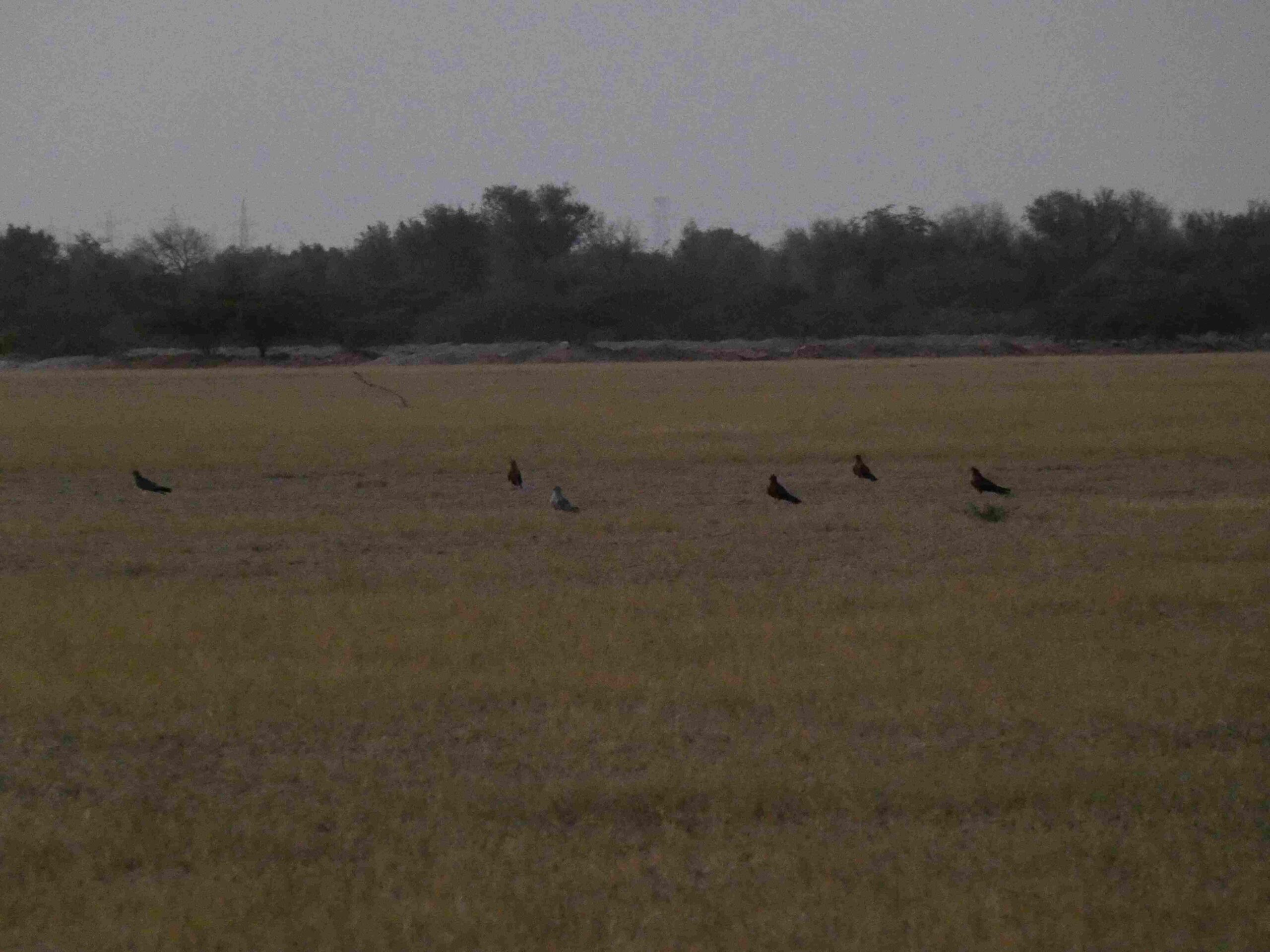 An evening communal roost of Harriers in Rajasthan (Photo Credit: Arjun Kannan)
This is how my love for birds and nature took shape…
To be frank, I was never really interested in birds or nature during my early childhood or school days. However, I did have a strong interest in biology, which eventually motivated me to enroll in an undergraduate degree in Zoology at Sacred Heart College, Mahatma Gandhi University, Kerala. The idea of becoming a scientist/researcher has fascinated me since my high school days. But at that time, my young mind imagined a scientist as someone who works in a lab wearing a white coat and mixing chemicals and reagents. It was towards the end of my undergrad that we had to decide on our final projects. Although I chose a typical lab-related work, a batchmate of mine said he was going to study the diversity of birds in the city of Kochi, Kerala. I wondered why my friend wanted to roam outside to do a project instead of doing a lab-based project like any other “scientist”. However, I was also curious and asked whether I could accompany him for his so-called “field visits”.
These field visits to observe and identify birds turned out to be a major turning point in my scientific interests. Until then, I never knew there were birds other than crows and egrets (which of course I thought were storks!). The next couple of years after my undergrad degree I spent looking at birds across the coastal wetlands of Kochi and this was a major learning experience for me. Ironically, my friend has turned out to be a molecular ecologist specialising in entomology, spending a large part of his time in the lab while I continue to spend most of my time in the field looking at birds!
Although my love for birds and their natural history developed late into my undergrad and the year after that, it was not until I joined a Master’s degree in Ecology at Pondicherry University that I started thinking seriously about research. The course really helped me broaden my knowledge in ecological sciences and I started thinking about broader questions related to animal behaviour and their various interactions in nature. I was also lucky to have a peer group from whom I could learn a lot through discussions and also through frequent field visits with them.
Since I became more interested in animal behaviour, I chose to do my final year dissertation on personality traits in agamid lizards at IISc, Bengaluru supervised by Dr. Kavita Isvaran and Dr. Devica Ranade. Even though I couldn’t work on a project related to birds, this was an important phase where I learnt about serious field data collection that translates to research. I also spent my free time at the field site in Rishi Valley looking at birds whenever possible. Towards the end of my Master’s degree, the bird lover in me was awakened when I came to know about an opportunity from Dr. Santharam (Director of the Institute of Bird Studies and Natural History at Rishi Valley School), to do a PhD on the migration ecology of Harriers at ATREE. I didn’t even wait to think twice and immediately applied for the position, and to my luck, I was chosen as a Junior Research Fellow.
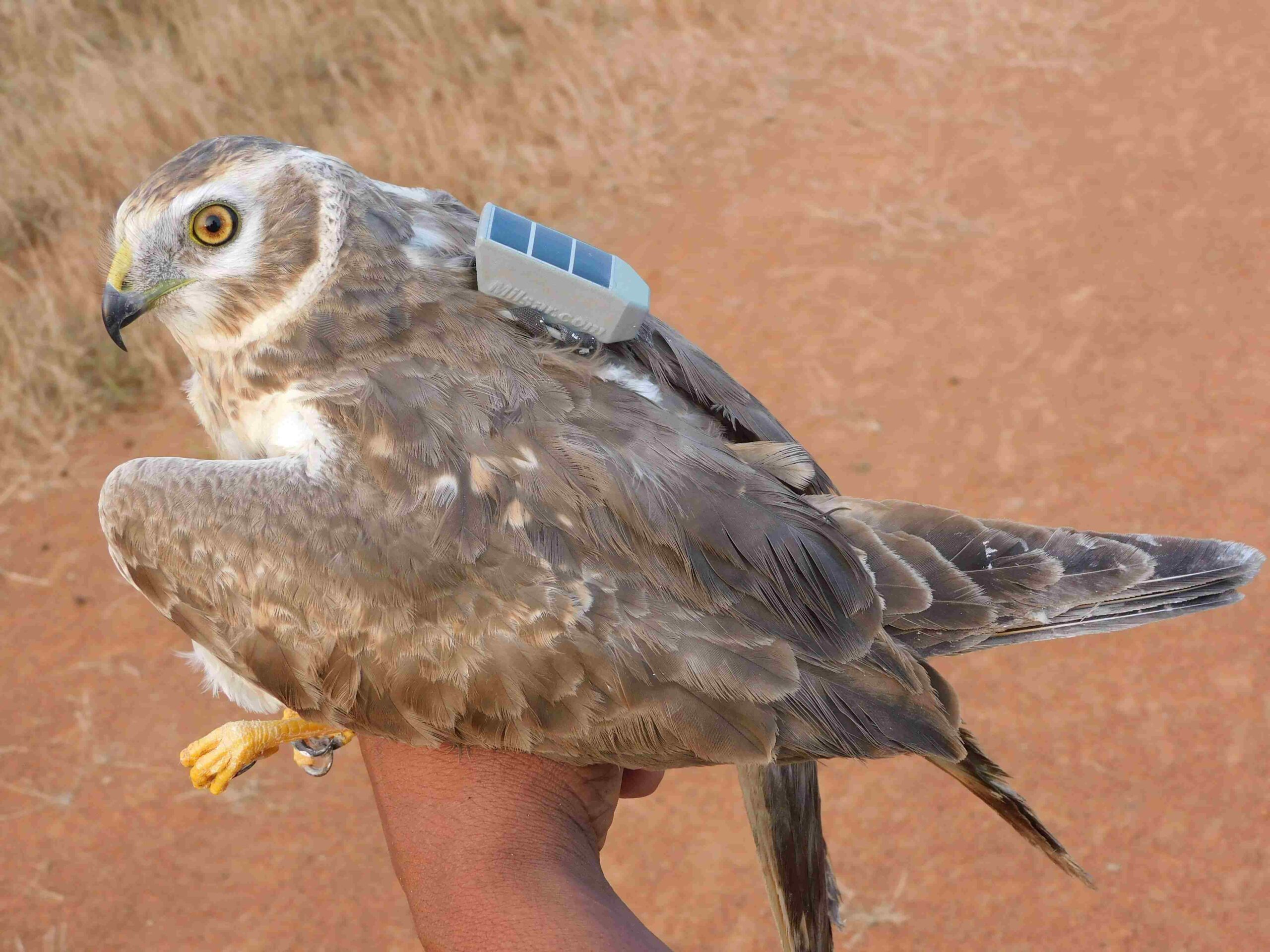 A Pallid Harrier with a GPS tagged attached to it at Tirunelveli, Tamil Nadu (Photo Credit: Arjun Kannan)
I’m currently doing my PhD at ATREE with Dr. T Ganesh and my work focuses on the migration and wintering ecology of Montagu’s Harriers. The work involves tagging individuals using GPS-GSM tags that record locations at a fine spatial and temporal scale. The location data is related to variables such as prey availability, habitat availability and climatic factors. Over the last couple of years, the team and I have also expanded the tagging study to other Harrier species, mainly the Pallid Harrier and the Pied Harrier. The latter species specialises in the terai grasslands across northeast India. The overall goal of the study is to identify migration routes, stopover sites and important breeding and wintering sites for the species in the Central Asian Flyway.
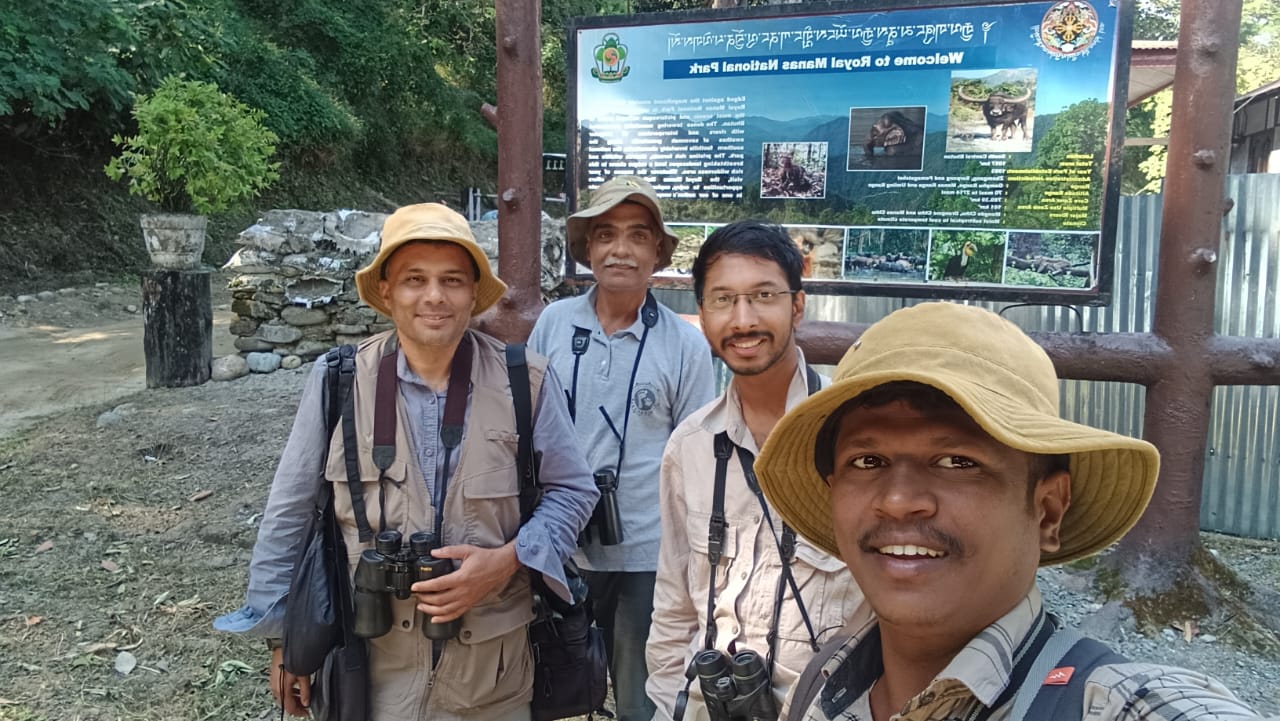 The Harrier Watch team at Manas National Park. Starting from left: M. B. Prashanth, Dr. T. Ganesh, Me and S. Tamizhazhagan (Photo Credit: S. Tamizhazhagan)
I love what I do because…
Following Harriers in the field is of course the most exciting part of my work. In addition, the work also involved looking at open habitat birds across grasslands, savannas and croplands. Since I also got to tag Harriers, it became possible to follow them real time even when I was not in the field! This meant I could know what Harriers were up to across their full annual cycle ranging from the steppe habitats of Central Asia to the savanna grasslands of the Indian subcontinent. Other than just tagging individuals, doing natural history observations of Harriers especially at their evening roosts and foraging observations in the morning has helped me decode their behaviour in detail. It is exciting when these observations are compared with the tracking data collected.
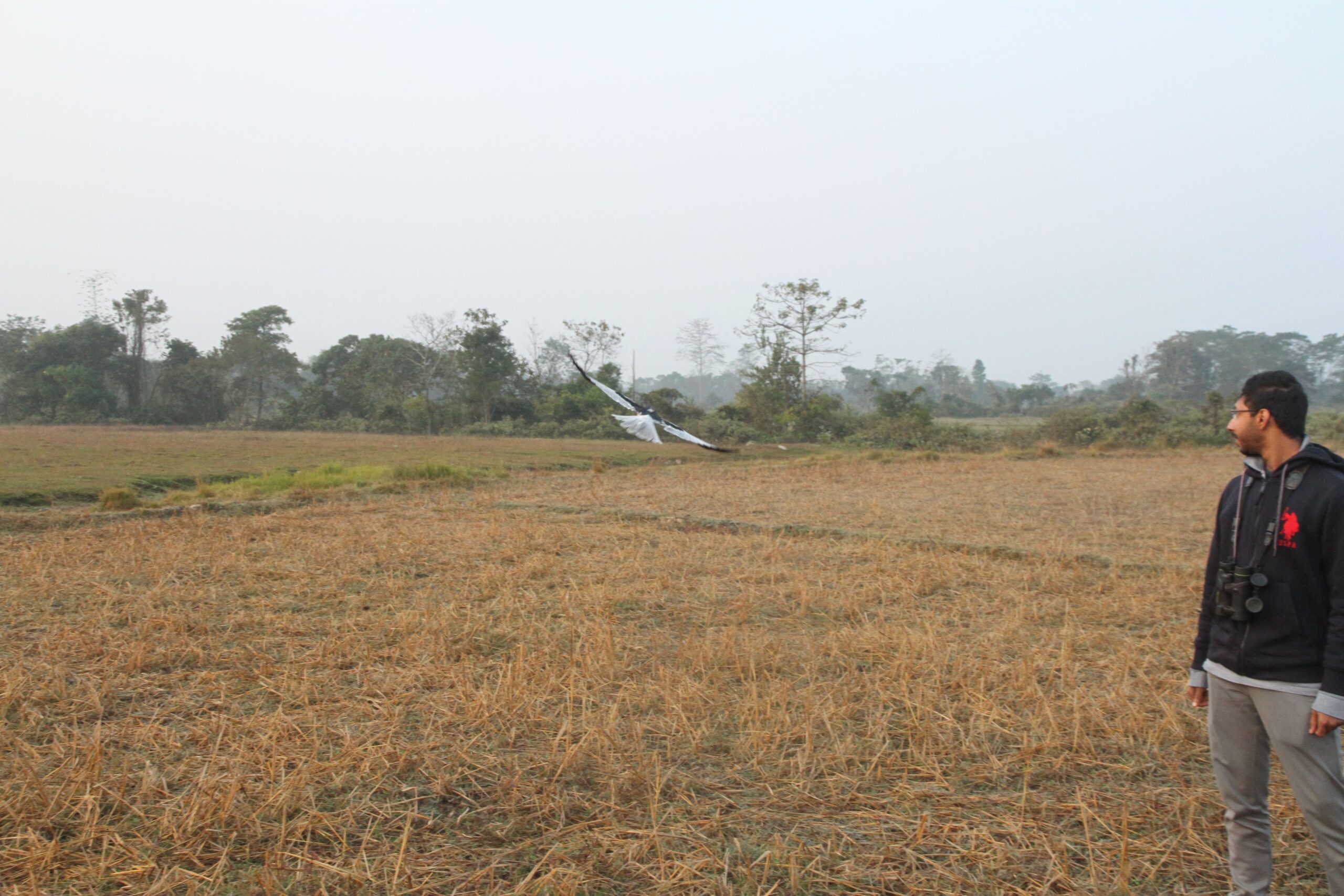 A Pied Harrier released after attaching a GPS tag at Manas National Park (Photo Credit: Kjell Janssens)
Challenges I have faced…
As much as I love field work, it was also challenging to cover the large number of Harrier monitoring sites spread across western India to south India. Since it was important to continuously monitor populations across the wintering season of Harriers, this meant multiple trips to each site within a span of 6-7 months. These trips were sometimes coupled with other logistical issues such as getting forest department permits on time to start the field work each season. Field work along with multiple deadlines for writing reports, manuscripts and progress presentations was in fact tiring at times. In addition, capturing and tagging Harriers, a major part of my research objectives, was not easy with a capture rate of less than 20%! This would sometimes stress me out with the thought of whether I would have ample data for completing my PhD. However, with support from the HarrierWatch team most of the work did go smoothly over the course of 5-6 years.
My advice to young researchers is…
For young researchers interested in a research career, I would advise them to start doing short internships early on (ideally in between or towards the end of your undergraduate degree). This can help a lot to focus on one’s interest, be it field work, lab work or a mix of both. It is also okay to not have everything figured out during any phase of your career. Learning is a continuous process and it is the motivation that matters rather than knowing everything beforehand.
Those who wish to pursue their PhD, I would suggest they speak to the potential advisor/guide/mentor in detail beforehand. Be frank about the kind of guidance you expect and make sure to ask the supervisor about their expectations from a student. A PhD work is a long-term commitment (often 5-6 years) and it is important to have a good relationship with your supervisor throughout this journey.
Arjun Kannan
[email protected]
PhD Student
Ashoka Trust for Research in Ecology and Environment (ATREE), Bengaluru
Instagram
X profile
Project Website