
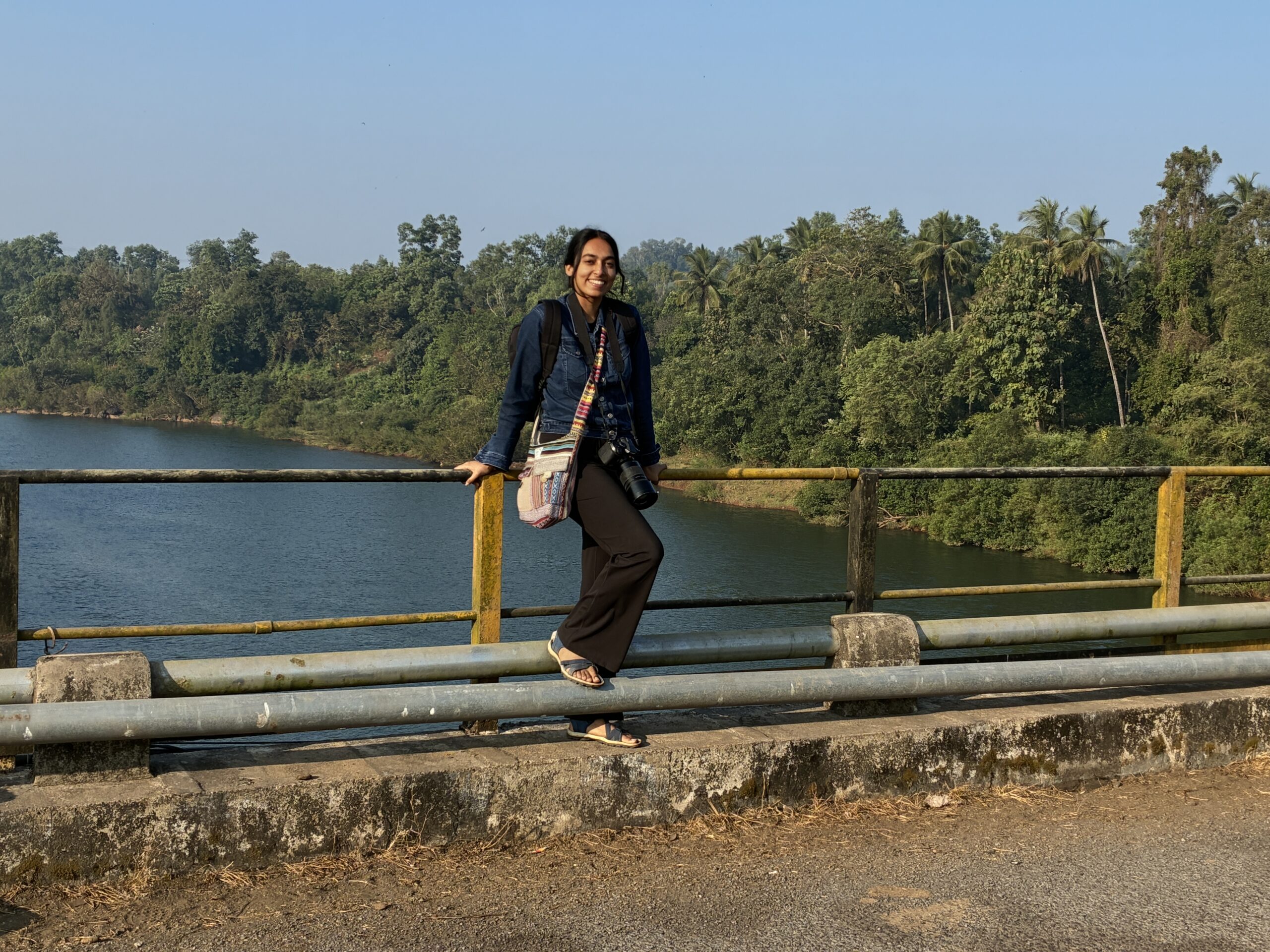
I’ve been very lucky to have an unconventional childhood – while my friends went to hill stations or for vacations abroad, I often spent my school holidays exploring the forests of India. My parents, both being wildlife biologists, took me along with them for all their field projects. With my toys and books in tow, I became a de facto addition to the team, tagging along for field surveys, line transects, village meetings and other tasks.
My best childhood memories are of those spent in forests, of afternoons splashing around in streams, of reading books under musky Mahua trees and of spending nights on the machaans under a starry sky.
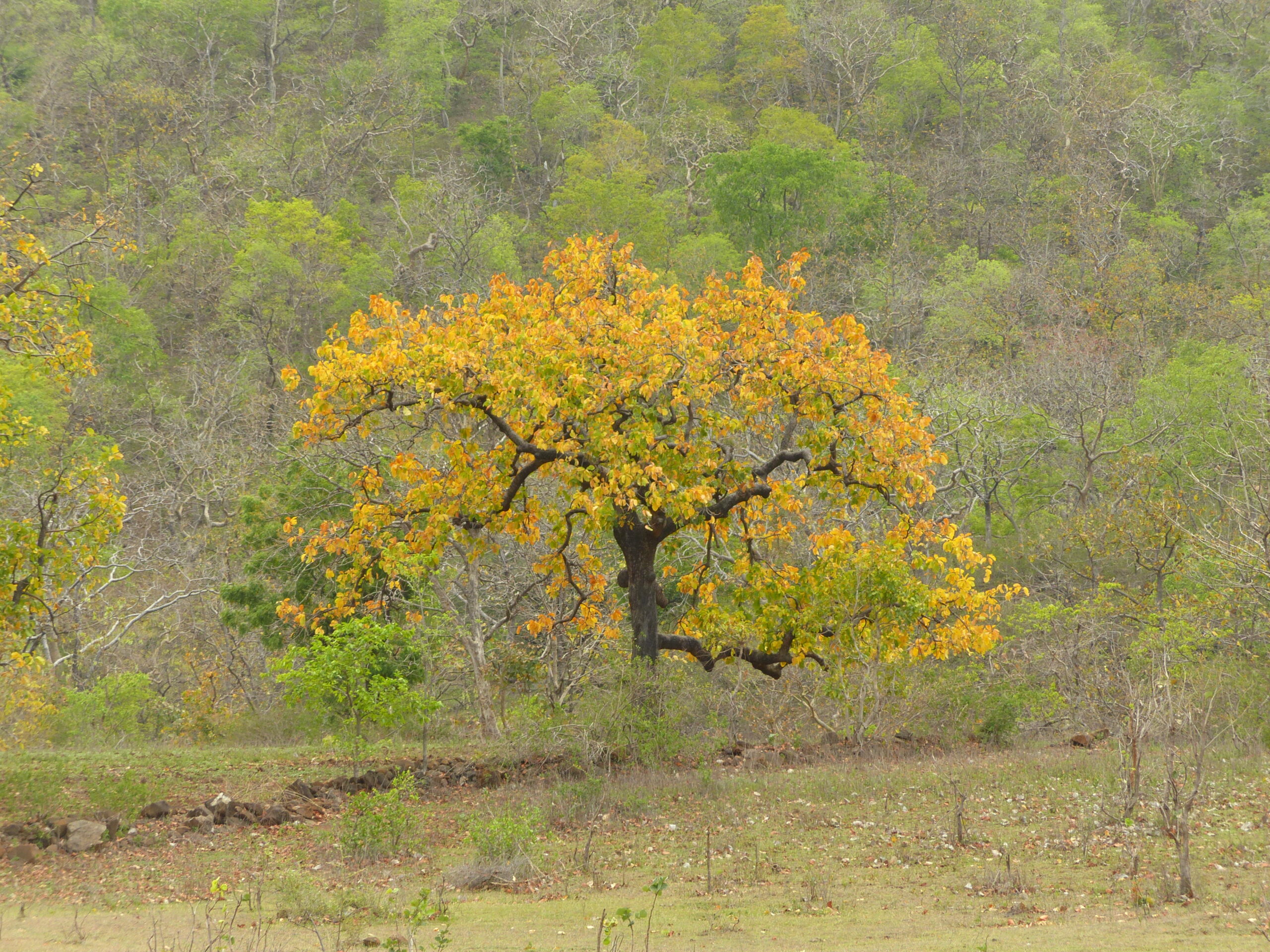 The gorgeous, sunset-coloured foliage of the Mahua tree, the most recognisable tree from my childhood
The difference in my upbringing was not apparent to me in those days, making the forests my idea of “normal”, much like being accustomed to sights of your hometown. I was vaguely interested in birds, but I mostly just enjoyed being outdoors. A family birding trip took me to the Rann of Kutch in Gujarat, and I remember looking out at the landscape that seemed to stretch out as far as the eye could see – the cracked ground of the Rann interspersed with golden-yellow grasses glinting in the evening sunlight glow. Suddenly, two majestic white wings landed somewhere in that grass – tracking it down, my eyes searched the area for the camouflaged bird and all of a sudden I found myself catching two amber-yellow eyes that stared back at me. Locking eyes with the intense gaze of the Short-Eared Owl took my breath away; I couldn’t believe that I was so close to something as majestic as the bird in front of me. Before then, I had paid vague attention to birds, but the Short-Eared Owl really opened up my eyes (and ears ;)) to all the birds around me.
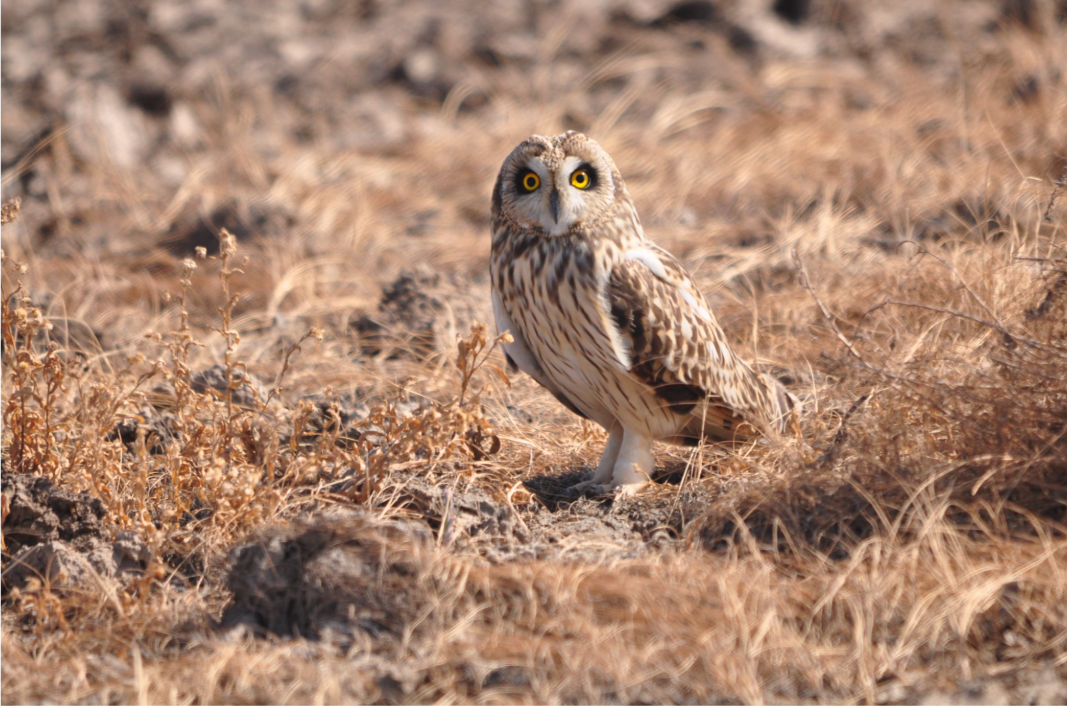 Eye-to-eye with the charismatic Short-eared Owl made everything else fade away
During the rest of my trip, I made sure to pay attention to everything, even the multitudes of wheatears and prinias, drab as they seemed, that flitted across the stark desert landscape. Since then I have just kept looking more and more!
Looking back on it, my research interests are a culmination of all the projects I have assisted on. I always enjoyed science growing up, mostly because it added an extra dimension to how I observed the outside world, and being in the forests gave me another unique classroom! I remember learning about light refraction in school, and then observed how kingfishers dove headfirst into the water to precisely catch their prey without being mistaken by the same refractive properties. Somehow these birds were using science without ever having been to school! The application of classroom science to the world outside was something that I really began to enjoy. As my familiarity with the forest grew, I also began to understand it better – was that a tree creaking or a woodpecker drumming? Did the urgent calls of chital and langoors signify a tiger on the prowl? Understanding and speaking the language of the forest felt like I could look at it through a whole new lens!
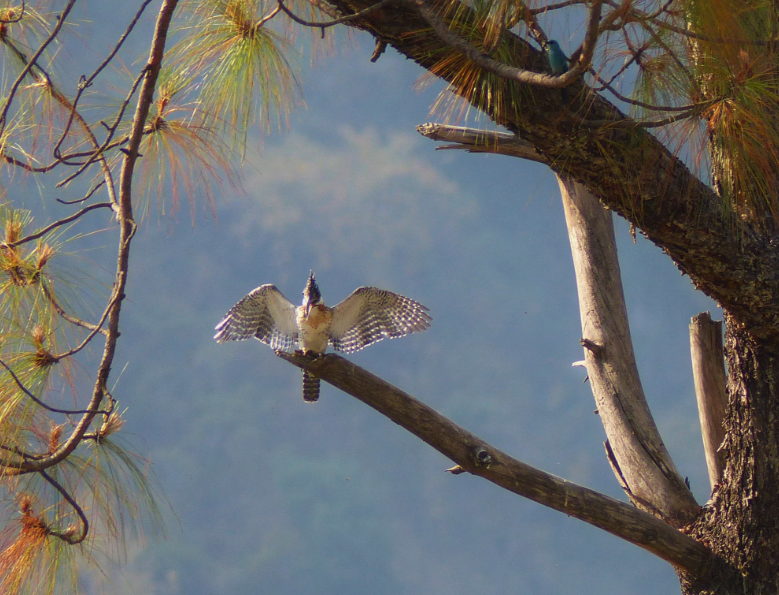 A Crested Kingfisher suns itself on a branch between dives into the water
I joined IISER Bhopal for a BS-MS degree to further explore my options in biology, when a behavioural ecology class taught me about phenomena such as mate selection and the theories that governed it. It surprised me that something as seemingly individualistic as behaviour could be shared across entire species and condensed into elegant theories which could fit into adaptation, selection and eventual evolution.
The three-month summer vacation was perfect for me to intern on a diverse range of projects to understand the process of research in the field of ecology. One of my most memorable internships was the opportunity to join Dr Trevor Price and his student Kristina Fialko to record the aggression displays in Phylloscopus warblers in the Western Himalayas. Camping out in the Himalayas for a month was one of the most physically demanding fieldwork I have ever done, but it has also been one of the most memorable experiences I’ve had!
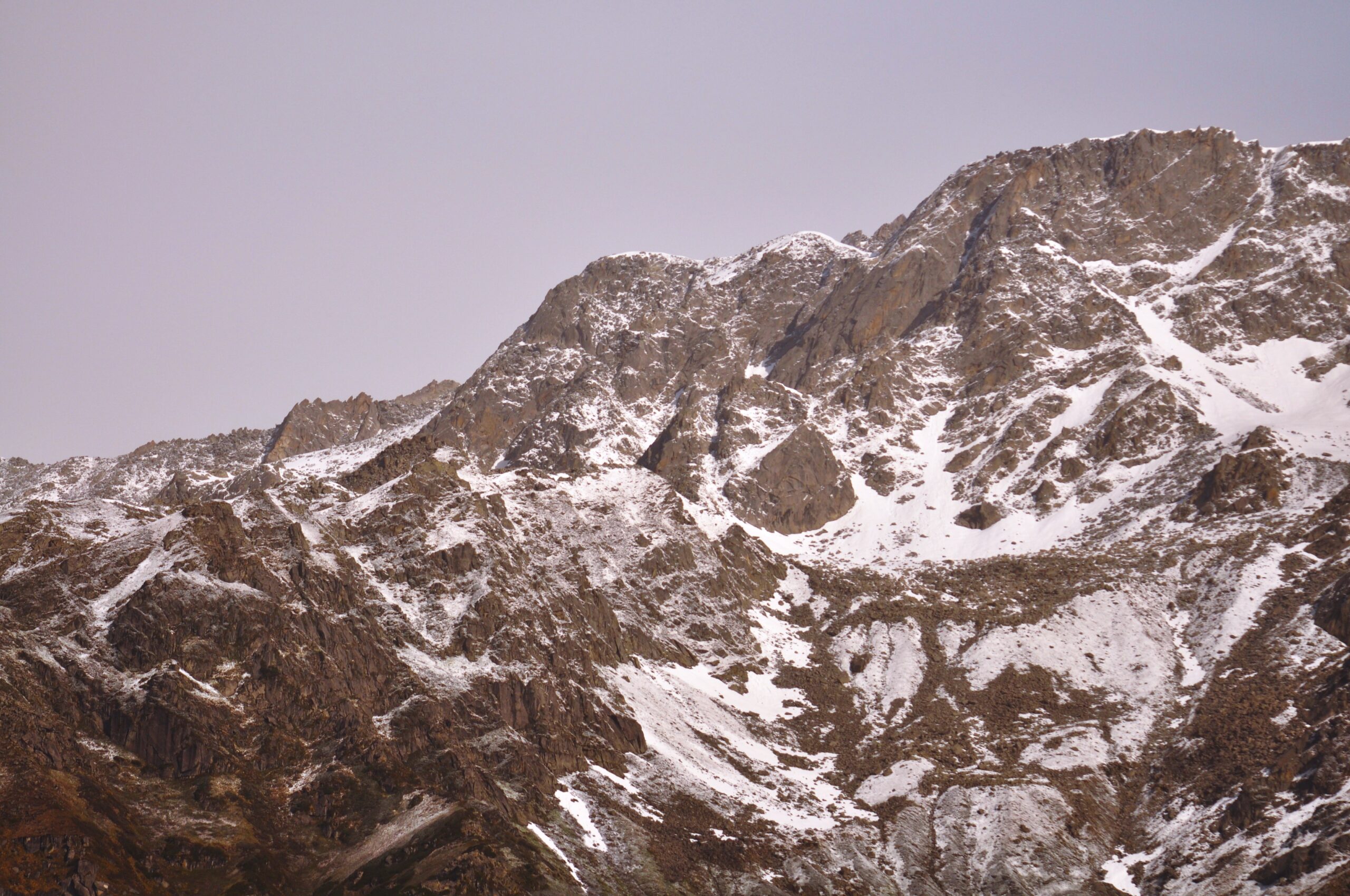 The strenuous hiking during my fieldwork was made sweeter with views like these!
My master’s thesis was with Dr Anand Krishnan, where I used passive acoustic recording to monitor the avian biodiversity between croplands and scrublands, in the context of land-use change. Learning from Anand made me realise the importance of mentorship, right from conceptualising a study, to experimental design, to even just discussing scientific concepts as a lab; I felt like I was finally able to become more confident in my abilities as a scientist.
Not all of my work has been with birds, though – I was also fortunate to work with Dr Uma Ramakrishnan in NCBS on tiger pedigrees both in zoos and in the wild, in Ranthambore National Park. The opportunity to use molecular ecology was something I was keen to learn, and it opened up a whole new trove of questions I could ask about my study systems! Molecular analysis in ecology is an extremely powerful toolkit to understand phenomena that are not easily visible to the eye. Visualising the DNA of a majestic tiger simply from a hair sample blew my mind towards what non-invasive sampling could do to understand a species better. Working in Ranthambore was a dream come true, and adding to the pre-existing data of tiger pedigrees built by the lab drove home the importance of maintaining long-term research in sensitive ecosystems.
I am currently pursuing a PhD at Pennsylvania State University where I work with Dr David Toews on a project that seeks to understand the effect of diet on carotenoid colouration in parulid warblers in the northeastern US. The red and yellow colours we see in birds are due to carotenoids, which cannot be synthesised in vertebrates (including us!). Birds also form a relevant system with regard to colour, especially since mate selection in birds involves males that are bright and vibrantly coloured. Because of this, carotenoids have also been considered an “honest” signal, since they potentially signal an individual’s ability to forage and feed themselves.
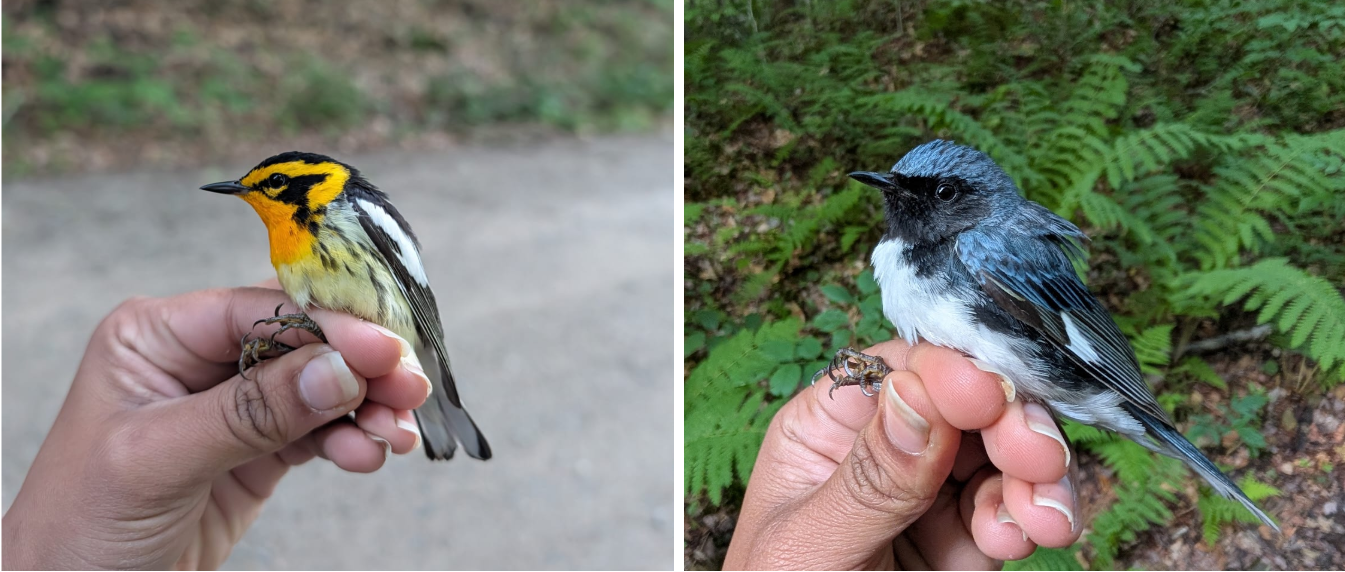 A Blackburnian Warbler (left), and a black-throated blue warbler (right), two of my study species
By comparing diets of parulid warblers with and without feather carotenoids, I hope to figure out if there are any dietary essentials for a brighter and yellower colour. For this, I aim to compare diet diversity as well as an aspect of prey quality between bird species that display carotenoids and those that don’t. Something else I am interested in understanding is whether carotenoids are diet-derived, and if a change in diet also leads to a change in colour intensity. I collect faecal samples from warblers across an urbanisation gradient along with feathers and compare diet change to change in feather colouration. Through my PhD thesis, I hope to understand the genetic, behavioural (feeding habits), as well as environmental effects on carotenoid colouration in parulid warblers.
I love what I do because:
Being outdoors is my job! That’s my favourite part :P. Field data collection has taught me to think on my feet, be malleable to unpredictable situations and work creatively with whatever I have. The wonderful camaraderie shared between field teams is truly special. Smiling through a challenging field day together is character-building and team-building. I have been lucky to meet people from different cultures and backgrounds, giving me so much more context and understanding for the depth and complexity of human-wildlife as well as human-human interactions! Most importantly, fieldwork and research have given me access to places I never thought I would see, with each field trip becoming a cherished memory and an essential learning experience I hold close to my heart.
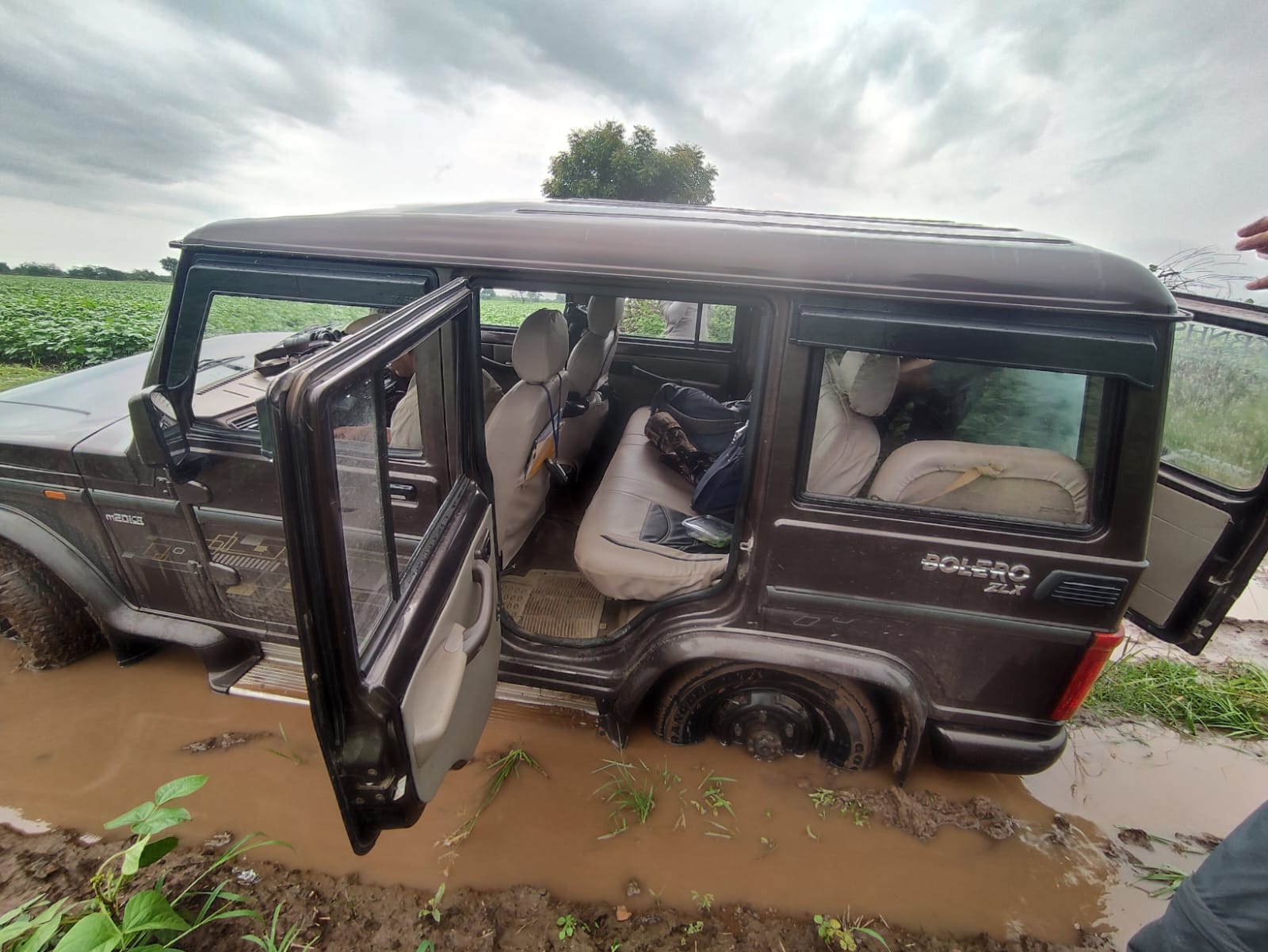 Muddy soil and dredging through it is a part of fieldwork!
I have spent the summer mist-netting parulid warblers (a little more colourful than Phylloscopus warblers!) across the states of Pennsylvania, New York and New Hampshire. It has been a memorable experience and has given me the ability to not only collect tons of data for my thesis, but also to gain behavioural context on the foraging and mating behaviour of the warblers. Since the birds I am focussing on are primarily insectivorous during their breeding season, my work also involves insect trapping, collections and ID-ing. Living systems cannot be understood in isolation, and I’m glad my PhD gives me the opportunity to work at the interface of ecology, evolutionary and molecular biology to understand the questions posed from multiple perspectives.
Being in a foreign country can also have its own novel challenges, but learning the forest anew has been a refreshing experience – every bird a lifer, every plant a unique species. Learning about temperate-boreal ecosystems after primarily being in dry deciduous forests has given me the chance to be a beginner once again!
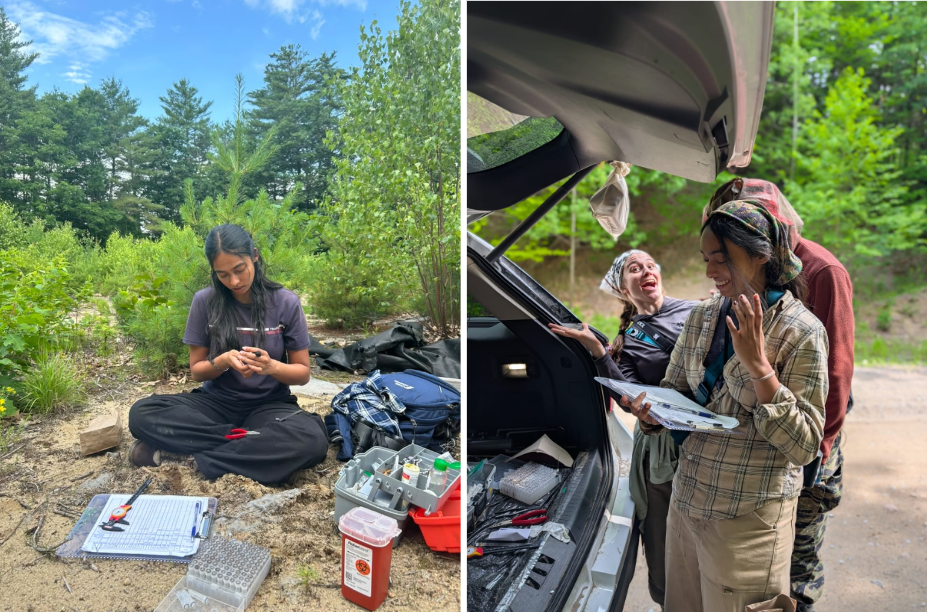 My field set-up while mist-netting warblers along with members of my team this year!
Beyond fieldwork, I also love the freedom I have over the research I do. My advisor’s input has been crucial in developing my thesis, but I also get intellectual control and ownership over the work I do, making it more of a passion project to me than just a job or a degree. Being able to focus on a niche subject that is purely of my interest is a privilege and I try my best to learn as much as I can from it. I also love that the research that I am doing has helped me acquire a large variety of skills. I have learnt how to camp out in the wild, plan and lead a field project, while also setting up molecular experiments with new biological and chemical techniques, giving me a good grasp across the field.
Challenges I have faced..
The shrill sound of the alarm at 4:30 am! That’s probably the only part I don’t love about bird-based fieldwork, haha. That being said, being enveloped in the morning glow of the forest, surrounded by the dawn chorus of birds more than makes up for it! Fieldwork also means living and working with a lot of different people for extended periods of time, with little to no contact with the outside world. I have now learnt the importance of communicating and understanding the needs of those working with you while leading fieldwork. Being out in the wild, it is important to expect the unexpected, but being flexible with plan changes and discussing options as a team is something I’m learning to do in order to deal with the unpredictability better.
For my fieldwork this year in the US, I learnt to camp in a remote area with no network, drive across three states (on the other side of the road!) and also worked in areas full of mosquitoes, black flies and deer flies (my newest nightmare). I have had a lot of first times in this field season where I have done things with little to no supervision or experience, but it has also given me more confidence in my ability to manage completely new experiences. While the thought really daunted me in the beginning, the people I was with made the field season much easier to navigate and gave me some really special memories. If something seems really difficult to do, chances are that it’s also really worth it, so always step up to that challenge; you’ll definitely come out on the other side much stronger and more capable!
Research as a woman in remote areas can be daunting, considering that in addition to the inaccessible nature of the fieldwork, there is also an added concern of safety. However, creating working environments where gender is not a hindrance should be a collective goal of the wildlife community. I like to think that being exposed to working women in STEM may also bring about eventual social change through conversation and interaction in remote parts of India. Field-based jobs have historically been male-dominated, but I think that’s slowly changing! I am happy to see a lot more women showing up in field projects; in fact, I was most recently in a woman-dominated field station and have also been a part of women-led expeditions, which is always very empowering to be a part of.
My advice to young researchers is..
Research does not have to be a linear path. Although my path has been fairly straightforward, from a Master’s degree to a PhD, I have not necessarily started with an education purely in ecology. That being said, I would always recommend a master’s degree along with other independent research experience to truly gauge if you work well within the self-motivated and independent framework of a PhD degree. The field of ecology and even evolutionary biology, to an extent, is extremely multifaceted, so anyone out there not from a biology background can also acquire the skills to make it! It is also important not to take setbacks personally, which is something I am still working towards. A lot of my “missed opportunities” have led to some great learning experiences I would otherwise not have access to. Joining and volunteering at diverse field projects can also help broaden your research perspectives and help you “skill up” – you never know what might come useful in your future endeavours!
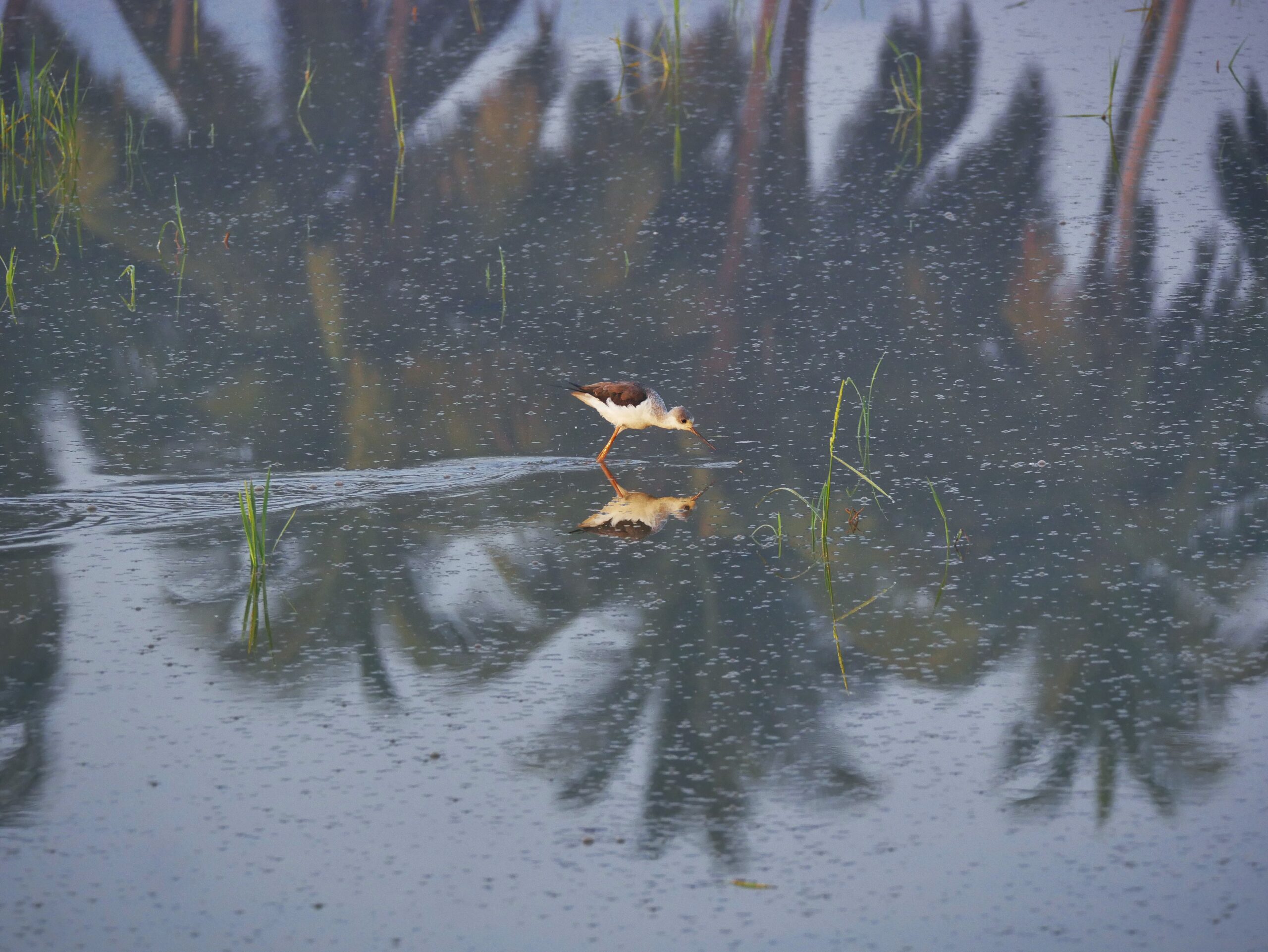 Be self-reflective! 😛
It is very easy to get excited and immersed in the forest; that is, after all, why a lot of us are in the field of ecology. However, I always try to remember my main motivations for being in the forest, which is to conduct research. It is a professional commitment, and ensuring that you treat it as such is important; try to prioritise research and data collection, even when you’re only interning or volunteering. Closely and singlemindedly focussing on a system is also a privilege we rarely afford ourselves in our excitement to see as much of the forest as possible. I try to make time to explore the forest, hike around or birdwatch during my off hours so that I don’t feel like I’m missing out!
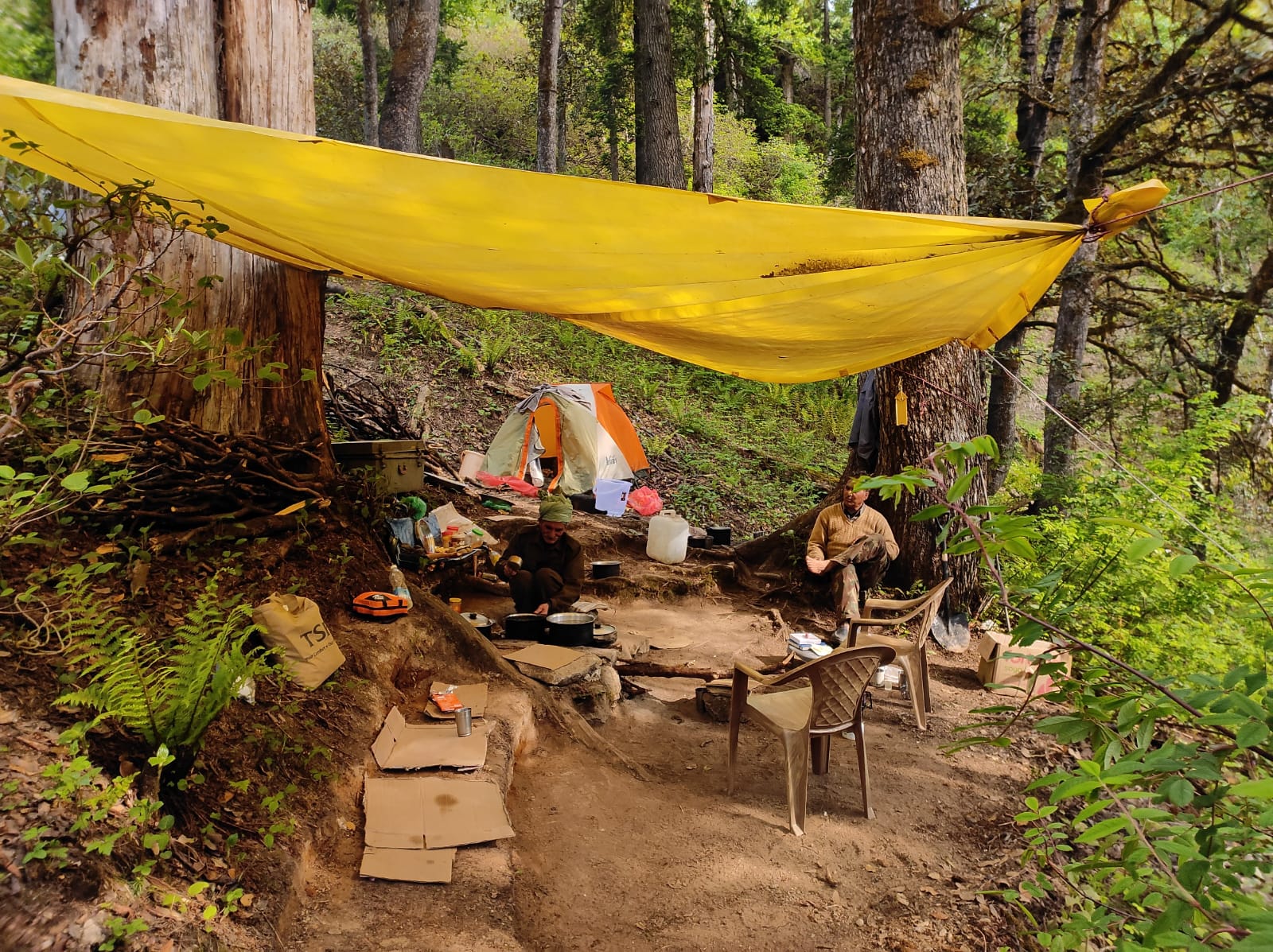 The charming makeshift kitchen in the Himalayas with field assistants Chaman Lal ji and Jaisingh ji
Lived experiences are powerful and intuitive. Learning to combine theory with local knowledge can help us become more effective scientists in the long run. Some of the greatest teachers and mentors I have had are my local field assistants, who seem to understand every corner of the forest – I am still in touch with most of them! Forests are not singular systems; they are large interwoven networks which we ourselves are a part of. Although I work with birds, I try my best to also learn about the other biodiversity in the area, the vegetation, insect diversity and even the human communities that interact with or rely on the forest. The more you try to adopt a multi-system approach, the more accurate an understanding you begin to develop of the ecology and evolution of your surroundings, which can even help you understand your own study system better!
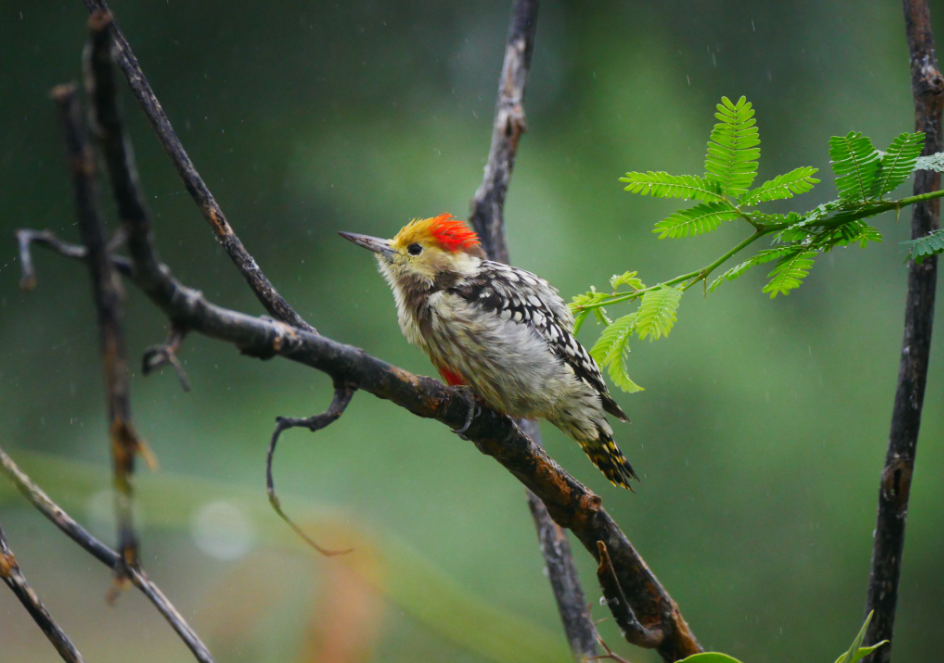 An adorable yellow-crowned woodpecker from my field site in Shokaliya
Antara Kulkarni
PhD candidate, Pennsylvania State University
[email protected]
Thank you for sharing this inspiring article. Antara’s journey from childhood forest experiences to pursuing PhD research in ornithology is truly remarkable and inspiring. Wishing her great success ahead
May I know Antara, what is the most surprising thing you have learned about bird behaviour during your PhD research?”
“How exactly does a bird’s diet influence the brightness of its feather colours?”
“Which bird species has been the most memorable or fascinating for you so far, and why?”
“How can ordinary birdwatchers contribute useful observations or data to ornithological research?”
“What are the biggest differences you have noticed between bird research in India and the USA?” It’s for my general knowledge
Very engaging article,amazed at your journey Antara,keep up the good work
Such a vivid story of your experiences since childhood. It’s really a challenging field to work in, kudos to you. Wishing you the best for your research and more such experiences .
Very well written and illustrated piece – Antara!
Very well written.
Excellent. Keep it up