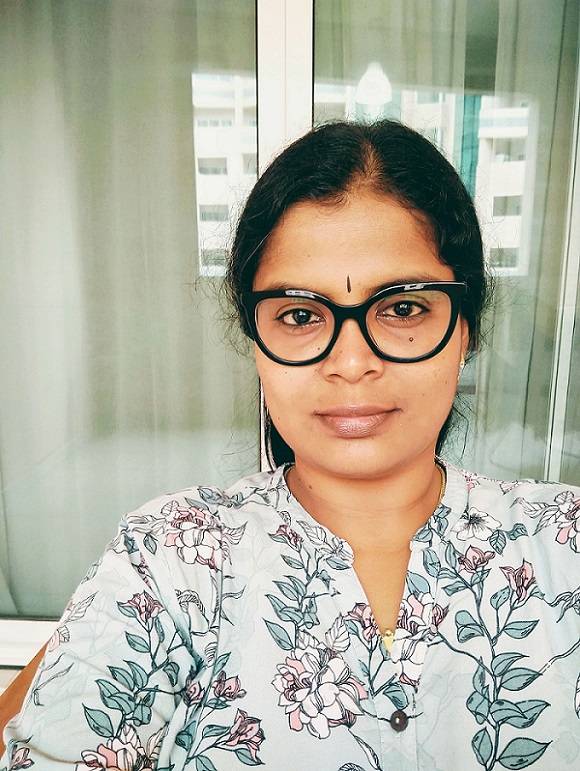
During my initial months at the Salim Ali Centre for Ornithology & Natural History (SACON) in 2013, I went birding daily. On one such morning, I heard a new bird call. As I was beginning to learn the calls of birds in the SACON campus, this one surprised me. Intrigued by this new bird sound, I tried to locate the tree. Soon, I spotted an actively hoping male Common Iora bird. I tried to memorise its call note, hoping to recognise it the next time I hear it again.
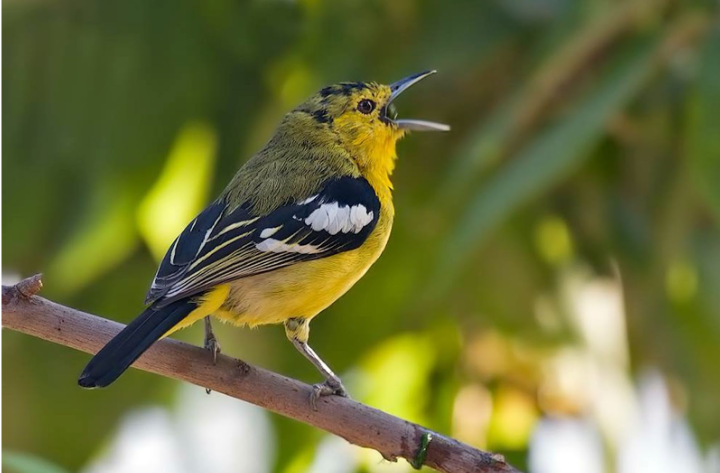 Male Common Iora (Photo: Jeevith S)
After a couple of days, I heard another new sound, which challenged me! I was unable to even make a guess! Upon searching in the direction of the call, it turned out to be a male Common Iora again. What?! It didn’t sound anything like the one I had heard a few days back. I convinced myself that these are the two different types of calls of the Iora. By this time, I had learnt to recognise birds to the level of their group, whether it was a bulbul or a sunbird. I felt confident that I can recognise Common Iora when I hear it again.
A few days later, I heard yet another unfamiliar call. When I located the origin, it was once again a Common Iora. My confidence in recognising bird calls fell flat! That was when I decided to take up doctoral research on the acoustic communication of the Common Iora in the Anaikatty Hills. Now, I am confident that I can recognise the calls of this bird! 😀
This is how my love for birds and nature took shape…
Though I had always been inclined towards nature and conservation, working at SACON allowed me to establish a direct connection with nature. I come from a life sciences background, having studied BSc Microbiology from Jaya College of Arts & Sciences, Chennai, and MSc Biomedical Genetics from Dr. ALM PG IBMS, University of Madras (Taramani campus). Wildlife and genetics have fascinated me since my school years. However, I came to know about SACON and a research opportunity in wildlife only in 2013, when I applied for a position there.
I joined as a Field Programme Manager/Nature Education Resource personnel in 2013. Residing in the SACON hostel allowed me to venture into nature and learn bird identification. I used to wake up surrounded by bird calls in the morning. I learnt about birds, went bird watching and learnt about their ecology. In my job, I created nature awareness among students. During this phase, I developed a fascination towards bird behaviour and bird-habitat interactions.
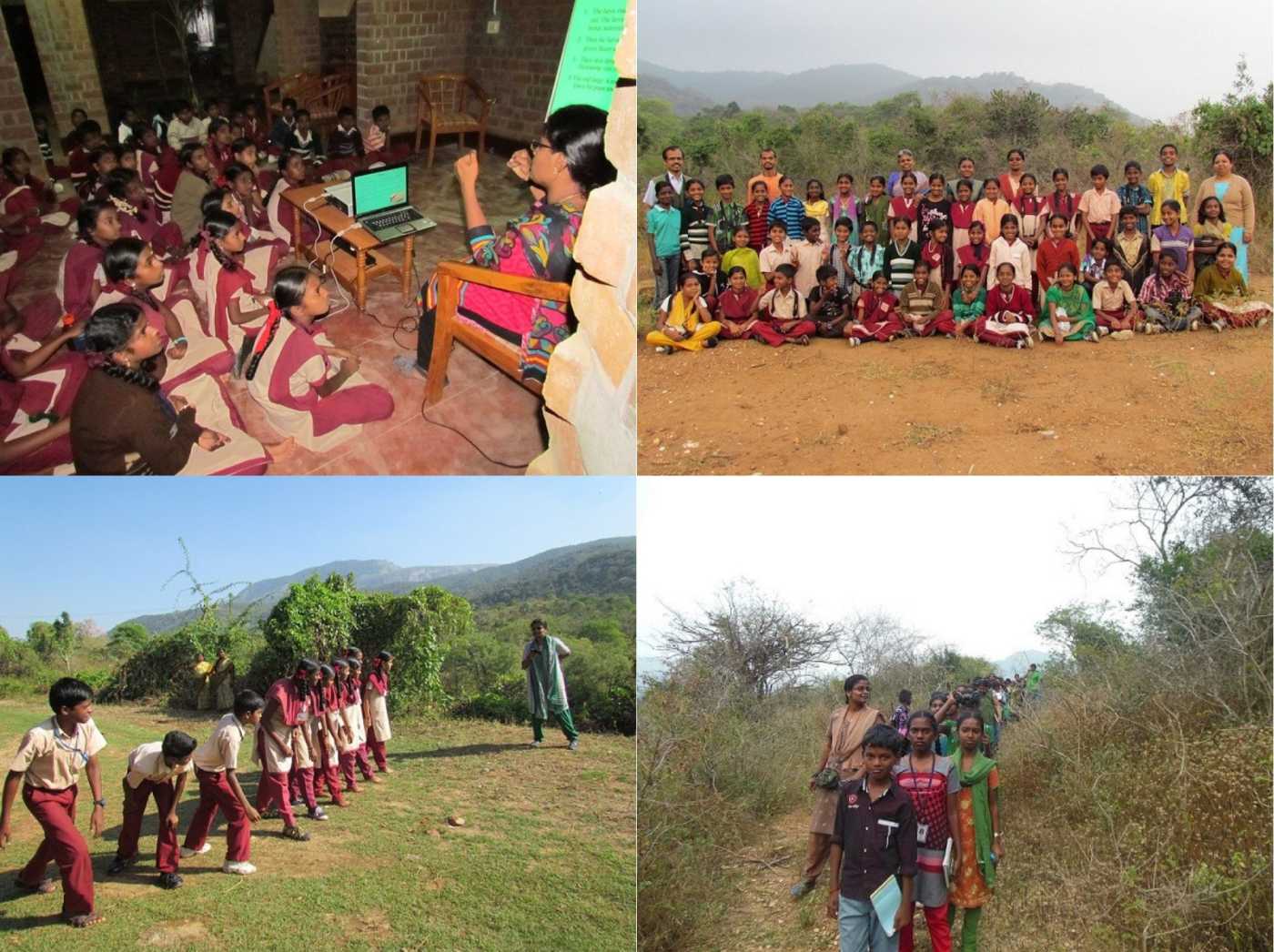 Clockwise from top left: Delivering a talk on birds to government school children at the SACON campus; Participants of National Nature Camping Program (Photo: Chaithra Shree J); School children participating in a bird-watching session at the SACON campus; Government school children taking part in an interactive nature game at the SACON campus (Photos: SACON)
I began bird identification through calls, unaware that I would eventually pursue a research career in bird acoustics. My inclination towards studying wildlife got streamlined to study birds, soon after I started understanding bird sounds. My work in educating students about nature and birds has further fuelled my interest. I spent hours observing bird behaviour and recognising their calls. In due course, I realised that I wanted to understand bird behaviour profoundly.
In 2014, I registered for my doctoral degree in Zoology at Bharathiar University, Coimbatore. I studied the acoustic communication of birds in Anaikatty Hills from SACON under the guidance of Dr. P. Pramod. During this phase, I explored the acoustic space or soundscape of Anaikatty Hills to understand the acoustic activity of birds. I also examined the sound signatures of closely related bird groups, such as three bulbul species (Red-vented Bulbul, Red-whiskered Bulbul, and White-browed Bulbul), three sunbird species (Purple-rumped Sunbird, Purple Sunbird, and Loten’s Sunbird), and three prinia species (Grey-breasted Prinia, Plain Prinia, and Jungle Prinia), and found that they share similar sound characteristics and specific nuances that differentiate them from other species. Additionally, I investigated the behaviour of the Common Iora to substantiate the context of their acoustic signals. I obtained a PhD with all the trials and triumphs in 2021.
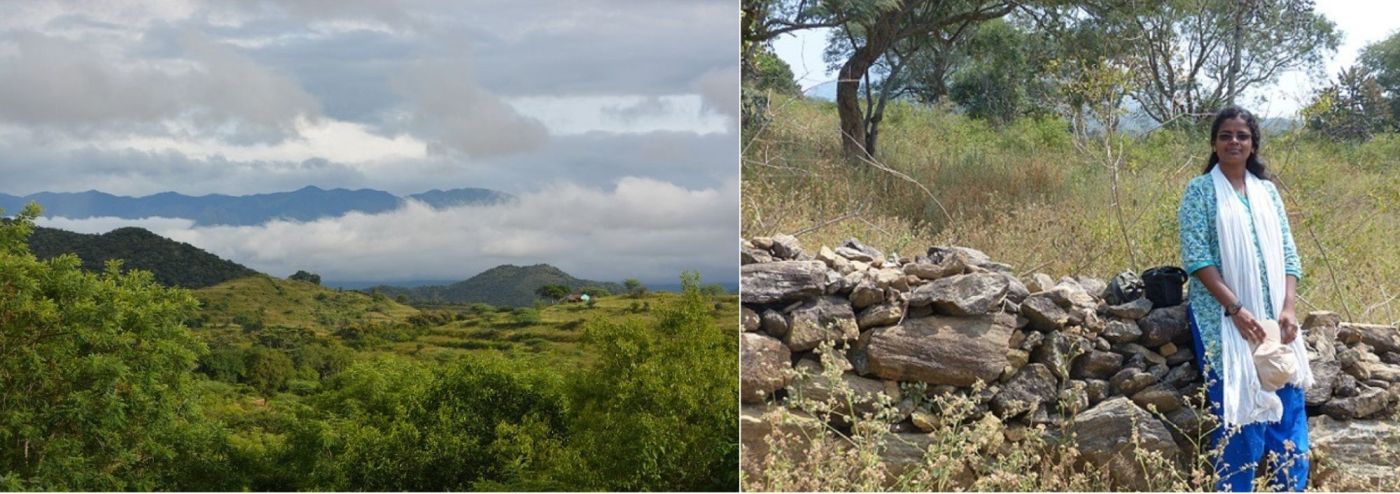 Fieldwork at Anaikatty hills, Coimbatore (Photos: Suhirtha Muhil M)
I was also interested in studying social behaviour in birds, but I liked the challenge of understanding their acoustic communication. This required observing bird behaviour as well as recording them in the wild. I particularly liked to explore the challenging calls of Common Iora and other species in the Anaikatty hills. As passive recorders were not used back in 2014, I enjoyed observing birds and recording their calls directly.
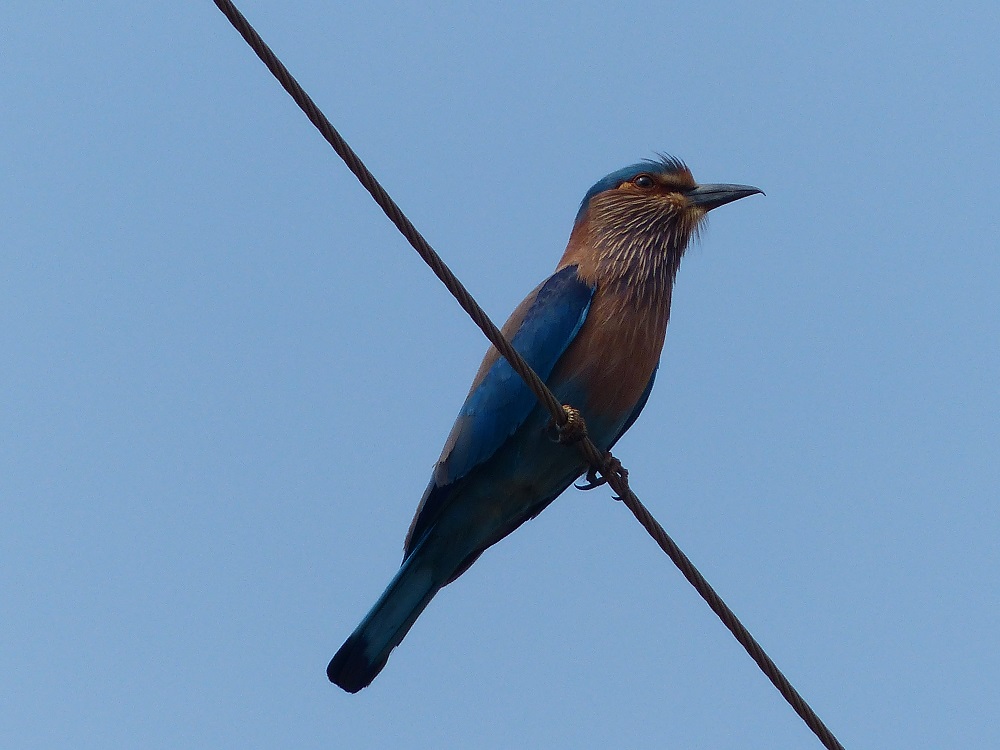 An Indian Roller
I joined as a Scientist at the Centre for Species Survival, Advanced Institute for Wildlife Conservation (AIWC), Chennai, in November 2025. I am currently working on the newly launched Tamil Nadu Raptor Research Foundation (TNRRF), which aims to understand the ecology of raptors in Tamil Nadu, identify threats, and devise conservation strategies. We are initiating a yearly, state-wide raptor assessment as a first step to help us understand the raptor distribution across Tamil Nadu. I am also planning to initiate a few research projects on vultures and avian acoustics.
I love what I do because…
‘Birds fly away, so how will you study them?’, ‘Do mobile towers cause a decline in sparrow population?’, ‘Are birds beneficial?’ and ‘Do we have dangerous birds?’ These are some of the common questions I receive from the general public. I am sure that science communication helps to address such recurring questions. Communicating science in simple language is vital for a scientist/researcher, and with my expertise as a nature educator, science writer and communicator, I strongly believe the same. As a scientist, I love to understand bird behaviour and their ecology. Equally, I am committed to translating complex research to the public through my writings and talks.
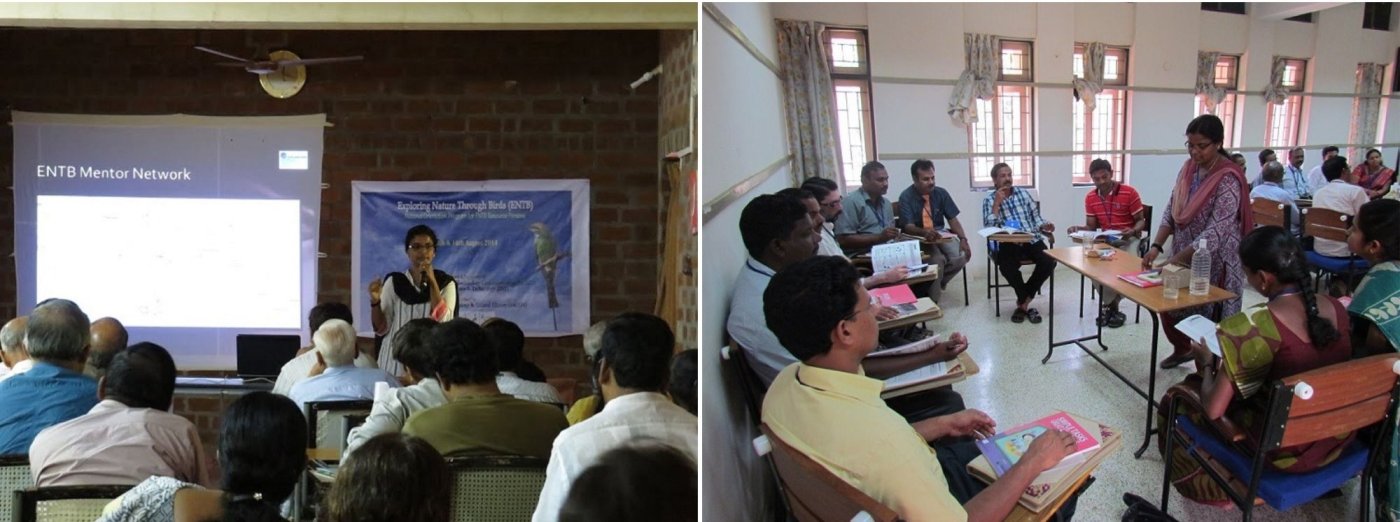 A nature education event for the bird watchers and bird enthusiasts (left) (Photo: Aditi M); A classroom session for school teachers on fun ways of teaching science (right) (Photo: Suhirtha Muhil M)
Challenges I have faced…
I am sure that facing difficulties is a part and parcel of a research career. During the earlier phase of my doctoral research, I faced a significant challenge. I wanted to understand the soundscape – the sound composition of Anaikatty hills. For this, I needed to quantify sound data. I had to come up with a feasible acoustic sorting method that could capture most bird sounds and also be repeatable. When one is stuck during research, it is common to seek answers in publications and discuss with one’s PhD supervisor. I did both to find a solution. This question completely occupied my thoughts and feelings for a few days, something I still relive and remember even now in 2026. Eventually, I exhausted myself and stopped searching for an answer. I literally closed my books and sat in silence.
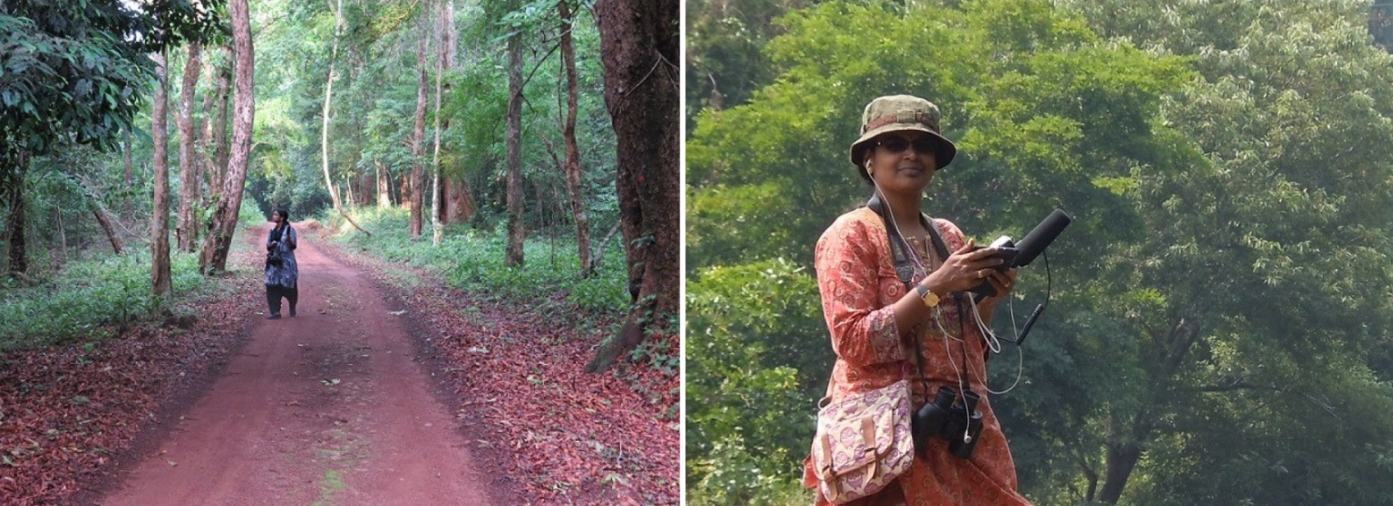 Me doing fieldwork in Aralam Wildlife Sanctuary (left) and in Coimbatore (right) (Photo: Suhirtha Muhil M)
Suddenly, I came up with a plan, though I was unsure of its feasibility. I jotted down my ideas and went to Dr Pramod to discuss them. That’s how I came up with the idea of sorting the acoustic data into a 2-second analysis window, a simple, repeatable and feasible method to analyse bird calls. The findings were published later. I began to appreciate the true meaning of the phrase, ‘All answers arise in silence!’
A research career is bound to have a lot of challenges, and such trials make one even stronger!
My advice to young researchers is…
‘Open to learn’ and ‘care to share’ are my mantras for the young researchers. I believe that when one is open to learning new skills and methods, one can stay up-to-date. Sharing one’s knowledge is another vital skill as it fosters collective intelligence, which in turn leads to collective action. Opting for ornithology as a research career in India is extremely challenging. One needs patience, skills, and the right opportunities to kick-start a career. I wish young researchers all three!
Dr Divyapriya Chandrasekaran
[email protected]
Scientist
Centre for Species Survival
Advanced Institute for Wildlife Conservation (AIWC), Chennai
ResearchGate
LinkedIn
Instagram
Blog
Congratulations..It’s not an easy journey, and you did it beautifully. So happy for you.